
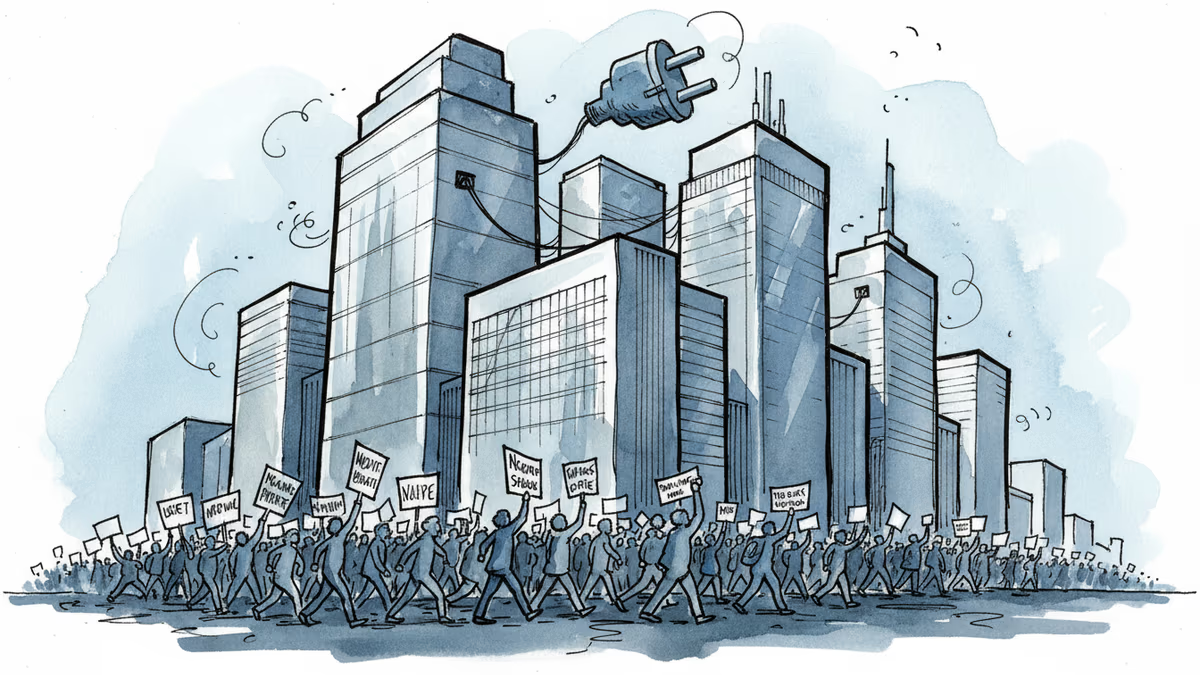
Hundreds March Through London: "Pull the Plug on AI!
London's King's Cross saw its largest anti-AI protest yet, targeting OpenAI, Google, and Meta headquarters. What this citizen uprising reveals about AI's democratic deficit.
When Tech's Backyard Became a Battleground
A few hundred protesters transformed London's King's Cross into an unlikely battleground last Saturday. The tech hub—home to UK headquarters of OpenAI, Meta, and Google DeepMind—echoed with chants of "Pull the plug! Stop the slop!" as demonstrators marched through streets lined with gleaming office towers.
This wasn't just another protest. Organized by Pause AI and Pull the Plug, it marked what organizers called the largest anti-AI demonstration in history. But size isn't what made it significant—it's what it represents.
For years, warnings about generative AI have largely remained confined to academic papers and conference halls. Researchers have documented the harms, both real and hypothetical, of models like ChatGPT and Gemini. What's changed is that these concerns have now mobilized ordinary citizens to take to the streets.
From Boardrooms to Streets: The New AI Resistance
The crowd was strikingly diverse. Artists worried about their livelihoods mixed with privacy advocates concerned about data scraping. Parents questioned AI's impact on their children's education. Tech workers—some employed by the very companies being protested—quietly joined the march.
"They're using our data without consent to build systems that will replace us," said one protester, a freelance graphic designer. "How is that fair?"
The sentiment reflects a growing disconnect between Silicon Valley's AI ambitions and public concerns. While tech executives speak of revolutionary breakthroughs, many citizens see potential job displacement, misinformation, and loss of human agency.
The Corporate Response: Silence Speaks Volumes

As protesters gathered outside their offices, the targeted companies maintained studied silence. OpenAI reiterated its commitment to "AI safety and beneficial outcomes." Google and Meta offered no immediate response.
This muted reaction is telling. Tech companies have mastered the art of managing investor relations and regulatory compliance, but they seem less prepared for grassroots opposition. The protest highlighted a gap many hadn't anticipated: the need for social license to operate.
Industry insiders worry that public sentiment could influence regulatory decisions. "Europe already has the AI Act," noted one tech executive who requested anonymity. "If public opinion turns decisively against us, the regulatory environment could become much more restrictive."
Beyond London: A Global Awakening?
The London protest isn't an isolated incident. Similar concerns are bubbling up worldwide. In the US, artists have filed class-action lawsuits against AI companies. In South Korea, webtoon creators are organizing against AI-generated content. In Japan, manga artists are demanding stronger copyright protections.
What unites these movements isn't technophobia—it's a demand for democratic participation in decisions that will reshape society. The protesters aren't necessarily anti-technology; they're pro-choice about how technology develops.
The Democratic Deficit in AI Development
The protest exposed something uncomfortable: AI development has largely bypassed democratic input. A handful of companies in Silicon Valley and a few other tech hubs are making decisions that will affect billions of people. Citizens, workers, and communities have little say in these choices.
This raises fundamental questions about technological governance. Should AI development be driven purely by market forces and technical possibilities? Or should it be subject to broader social deliberation?
Some protesters carried signs reading "Nothing About Us, Without Us"—a slogan borrowed from disability rights movements. The message was clear: those affected by AI should have a voice in its development.
Authors
Related Articles
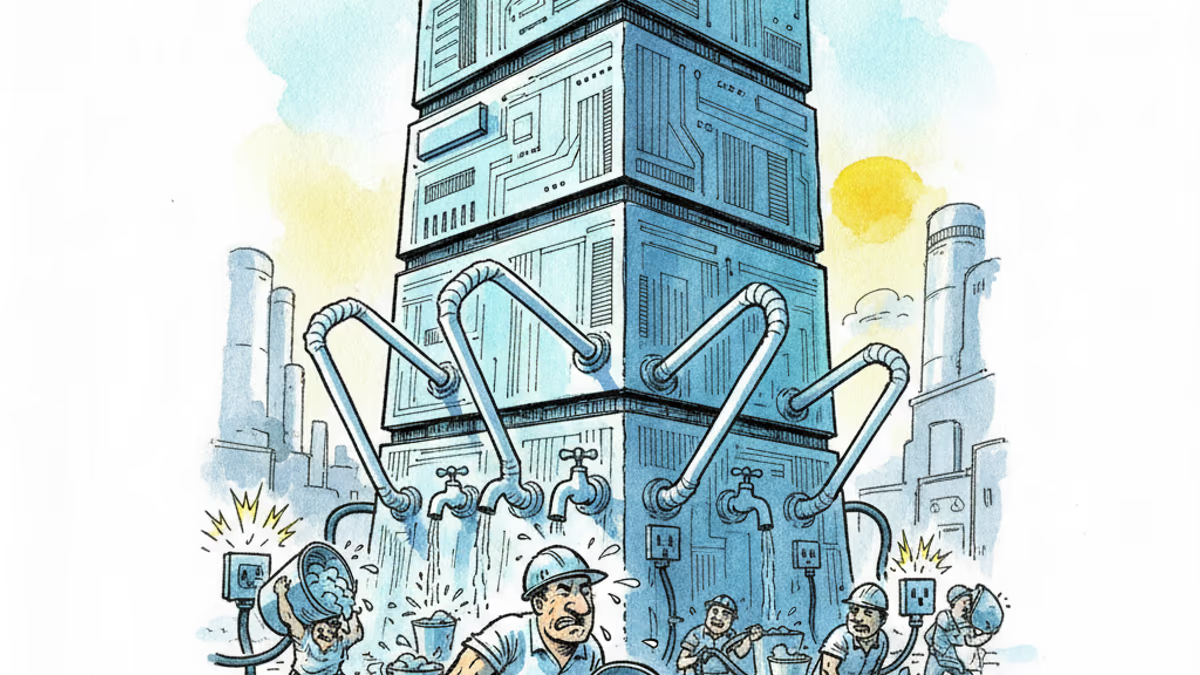
Samsung and SK unveiled a chip and AI investment package worth thousands of trillions of won on June 29. The headline number swings wildly by outlet, but the real contest isn't capital — it's water and power.
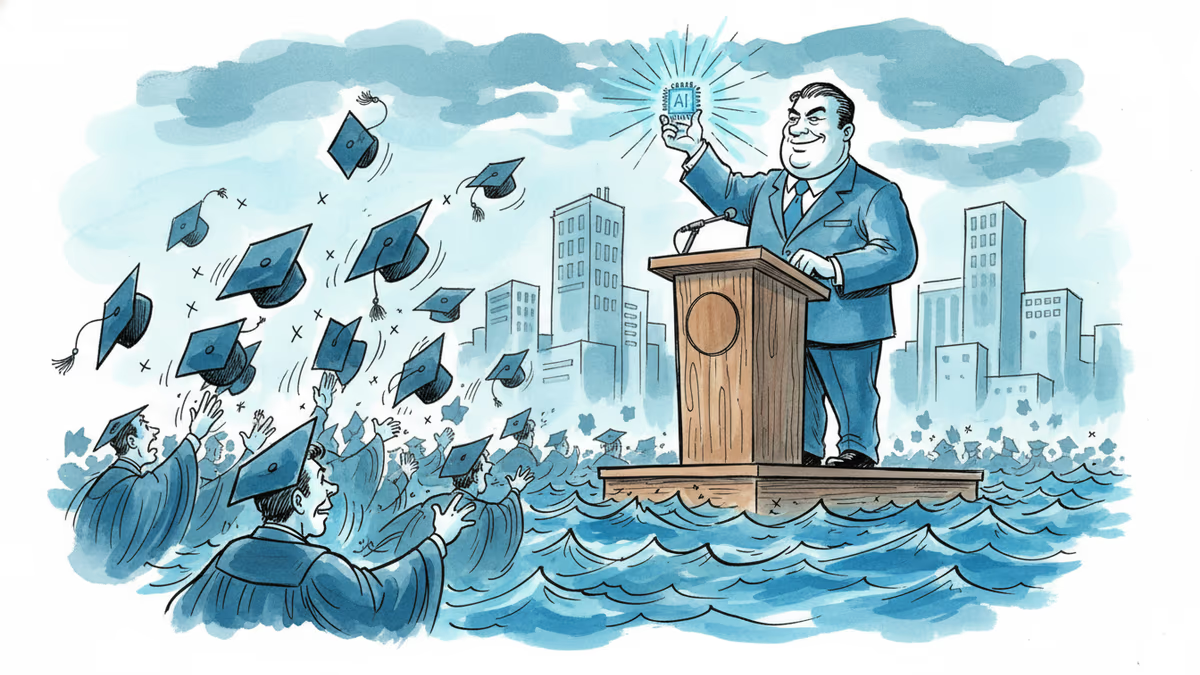
Viral videos show 2026 graduates jeering executives who praise AI at commencement ceremonies. It's not just rudeness — it's a signal about who pays for technological optimism.
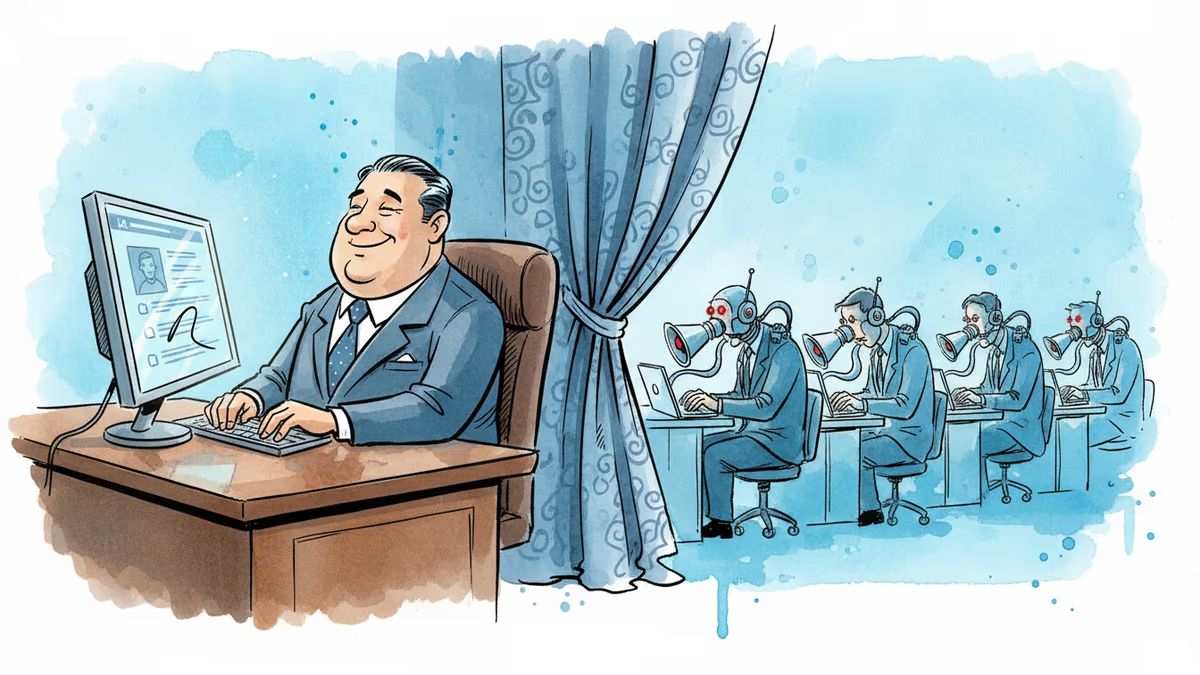
Filipino virtual assistants using AI to ghost-manage LinkedIn profiles for executives is now a structured industry. 30 comments a day, fake engagement rings, and a platform struggling to tell real from fabricated.
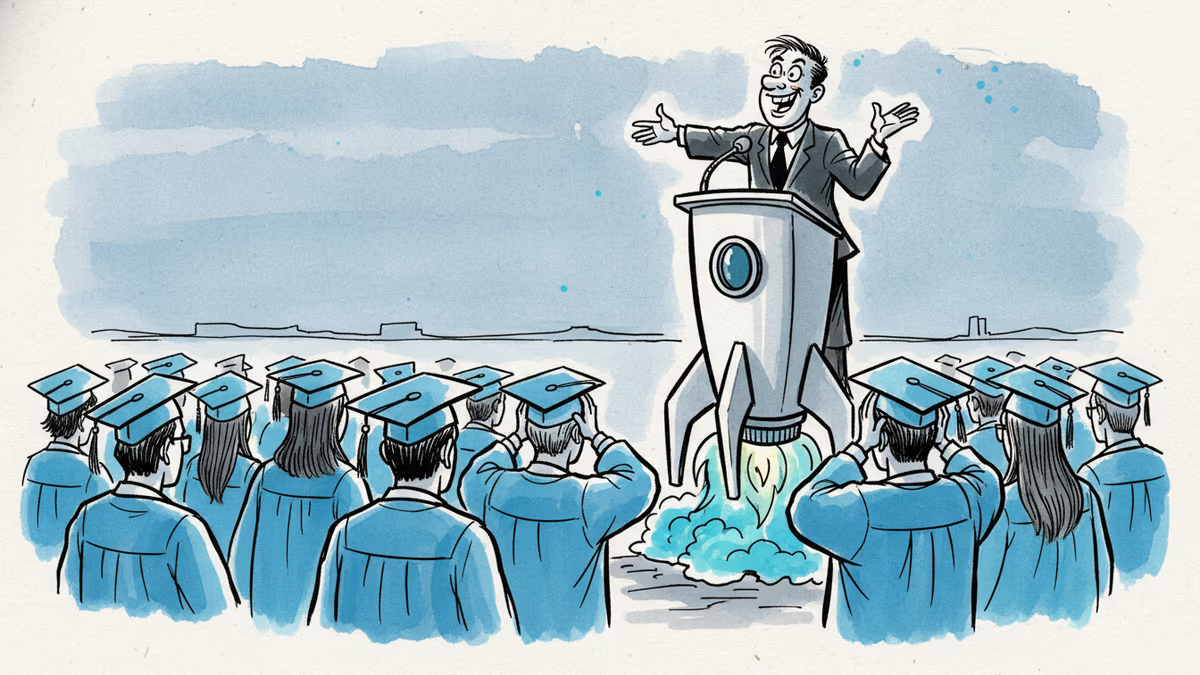
Two commencement speakers learned the hard way that AI enthusiasm doesn't land well with today's graduates. The backlash reveals a widening gap between tech optimism and Gen Z's economic reality.
Samsung and SK unveiled a chip and AI investment package worth thousands of trillions of won on June 29. The headline number swings wildly by outlet, but the real contest isn't capital — it's water and power.
Viral videos show 2026 graduates jeering executives who praise AI at commencement ceremonies. It's not just rudeness — it's a signal about who pays for technological optimism.
Filipino virtual assistants using AI to ghost-manage LinkedIn profiles for executives is now a structured industry. 30 comments a day, fake engagement rings, and a platform struggling to tell real from fabricated.
Two commencement speakers learned the hard way that AI enthusiasm doesn't land well with today's graduates. The backlash reveals a widening gap between tech optimism and Gen Z's economic reality.
Thoughts
Share your thoughts on this article
Sign in to join the conversation