

773,000-Year-Old Morocco Fossils Rewrite the Human Evolutionary Timeline
Archaeologists in Morocco have identified 773,000-year-old hominin fossils that shed light on the divergence of modern humans and Neanderthals.
The roots of our species may run deeper and more complex than we once thought. A group of 773,000-year-old hominin fossils recently unearthed in Morocco is providing a fresh look at the critical era when modern humans branched off from the ancestors of Neanderthals and Denisovans.
Uncovering the 773,000-Year-Old Morocco Hominin Fossils
Anthropologists examined a collection of jawbones, teeth, and vertebrae found in Grotte à Hominidés, a cave southwest of Casablanca. These fragments belonged to two adults and one young child. They represent a pivotal moment in our evolutionary history—the period very close to when our lineage diverged from our extinct cousins.
Tracking the Last Common Ancestor

The discovery is significant because it touches on a "murky" but essential chapter of human development. While researchers have long debated when the split from Neanderthals occurred, these fossils suggest that the common ancestor was active in North Africa nearly 800,000 years ago, offering a tangible link to our ancient origins.
A Grim Struggle for Survival
It wasn't an easy life for these early hominins. A femur found in the same sediment layer showed clear gnaw marks from sharp carnivore teeth. This suggests that these individuals were not just hunters but also prey, falling victim to the powerful predators of the Pleistocene epoch.
Authors
Related Articles
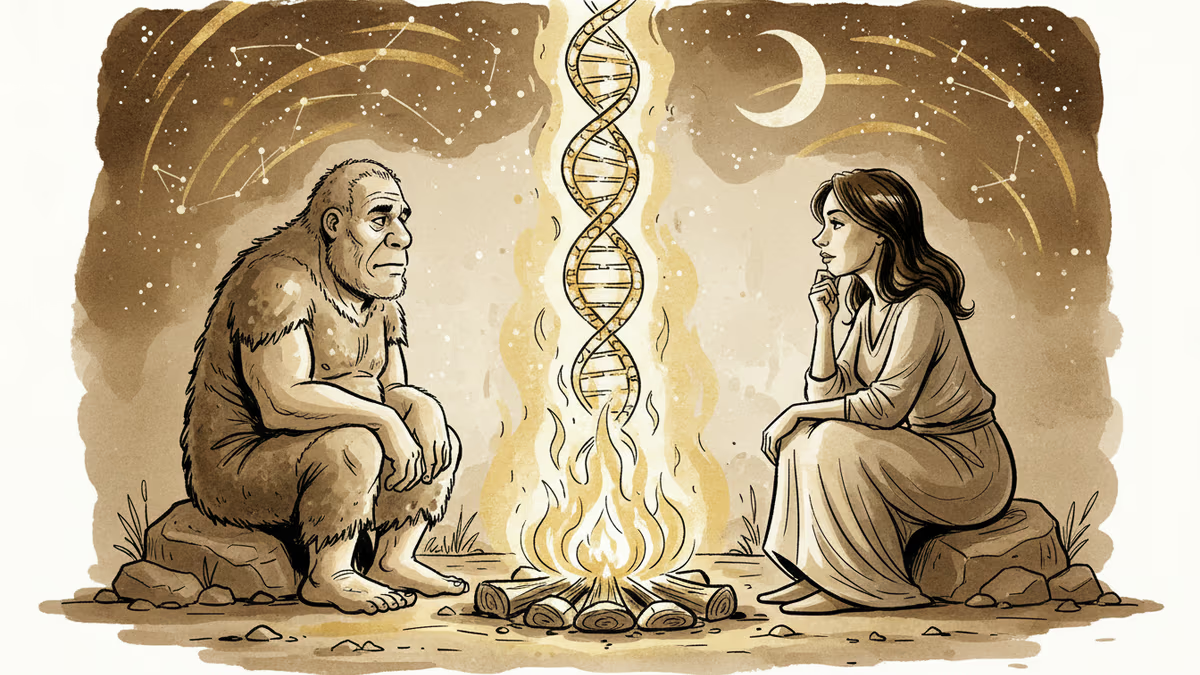
New genetic research reveals selective mating patterns between Neanderthals and modern humans, with X chromosome analysis showing unexpected preferences that shaped our evolutionary history.

Samsung Electronics' union branch revealed that 84% of survey respondents oppose the government's roughly $290 billion (₩400 trillion) semiconductor megaproject in Gwangju. Government, management, the union and shareholders are all reading the same national project in sharply different ways.
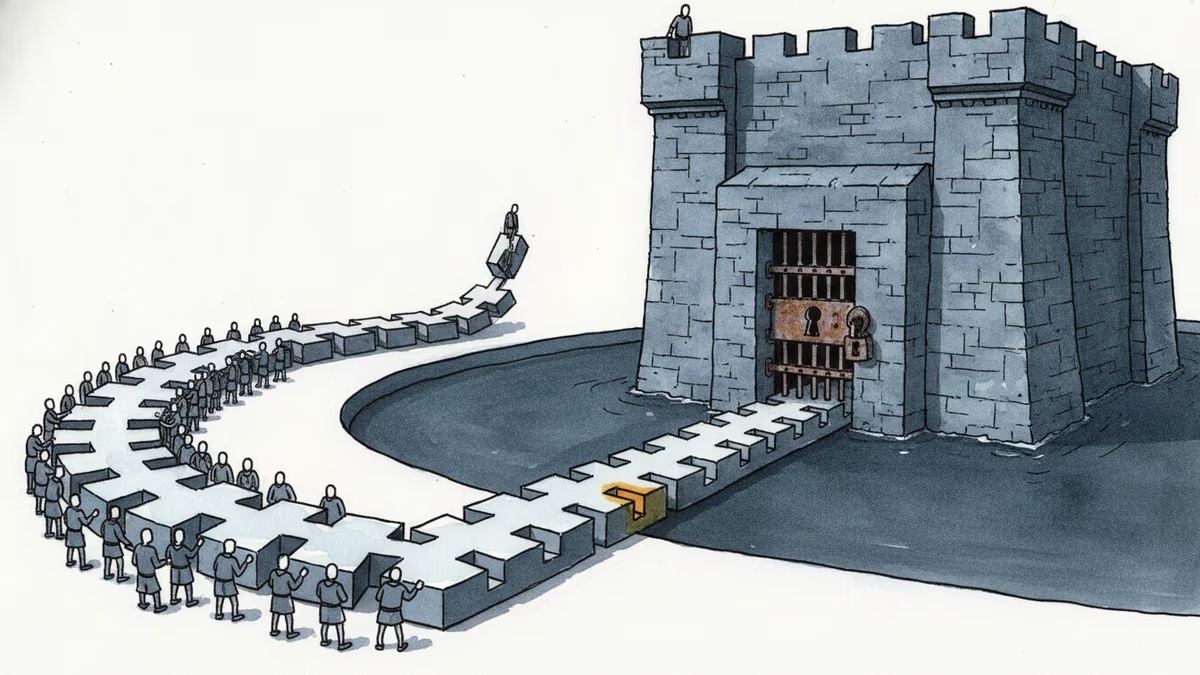
Nvidia shipped roughly a billion RISC-V cores in 2024, then announced it would run CUDA on the open standard. We break down how royalty-free instruction sets and open software stacks are trying to route around CUDA's lock-in. Part 2 of the Semiconductor Sovereignty series.
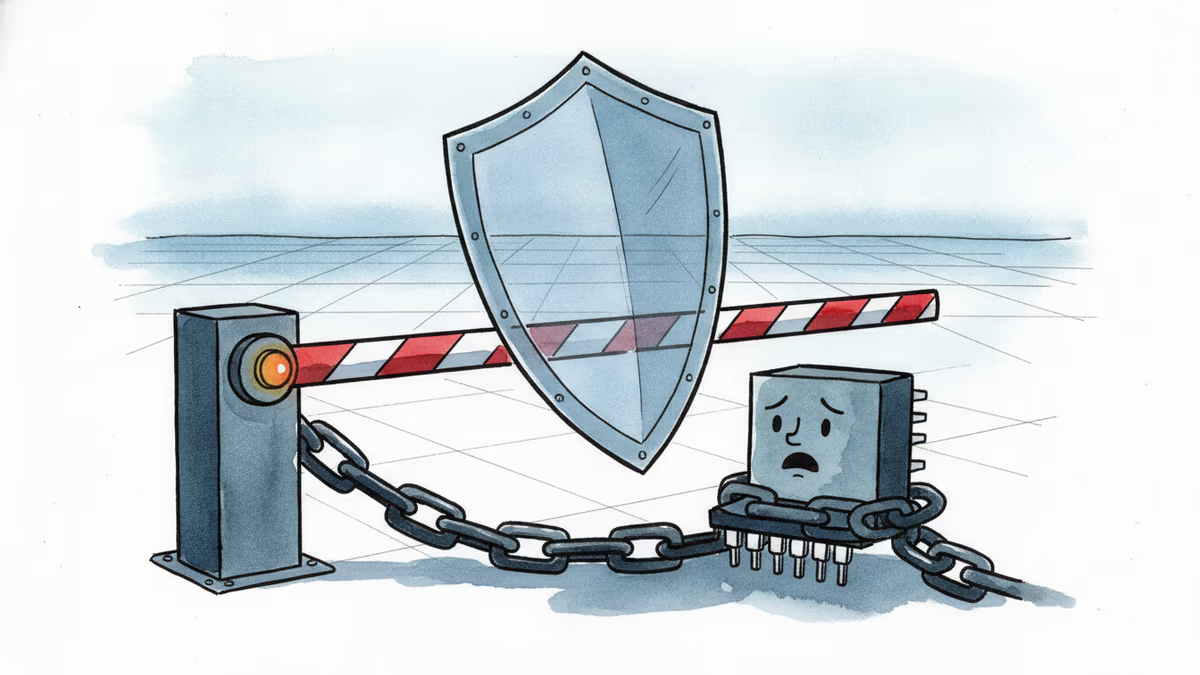
US AI-chip export controls split into three layers in the first half of 2026 — January easing, a May crackdown on circumvention, and a pending bill. Nvidia erased China from its guidance and still posted a record $81.6 billion quarter. A look at the export policy that both shields and cages it.
New genetic research reveals selective mating patterns between Neanderthals and modern humans, with X chromosome analysis showing unexpected preferences that shaped our evolutionary history.
Samsung Electronics' union branch revealed that 84% of survey respondents oppose the government's roughly $290 billion (₩400 trillion) semiconductor megaproject in Gwangju. Government, management, the union and shareholders are all reading the same national project in sharply different ways.
Nvidia shipped roughly a billion RISC-V cores in 2024, then announced it would run CUDA on the open standard. We break down how royalty-free instruction sets and open software stacks are trying to route around CUDA's lock-in. Part 2 of the Semiconductor Sovereignty series.
US AI-chip export controls split into three layers in the first half of 2026 — January easing, a May crackdown on circumvention, and a pending bill. Nvidia erased China from its guidance and still posted a record $81.6 billion quarter. A look at the export policy that both shields and cages it.
Thoughts
Share your thoughts on this article
Sign in to join the conversation