
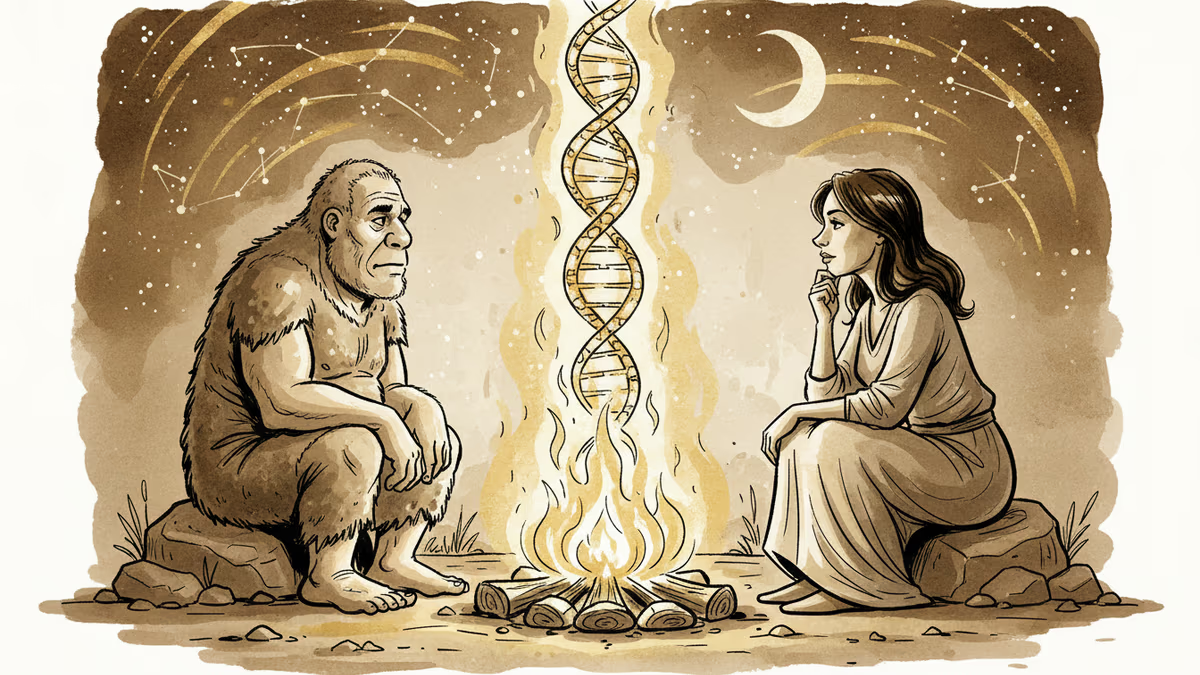
Neanderthal Men Had a Thing for Modern Human Women
New genetic research reveals selective mating patterns between Neanderthals and modern humans, with X chromosome analysis showing unexpected preferences that shaped our evolutionary history.
70,000 Years Ago, Someone Made a Choice
When modern humans first ventured out of Africa and into Europe, they weren't walking into empty territory. Neanderthals had been there for hundreds of thousands of years, perfectly adapted to the harsh Ice Age conditions. What happened when these two human species met wasn't just coexistence—it was romance.
But new research from the University of Pennsylvania suggests this prehistoric love story had a plot twist: Neanderthal men showed a systematic preference for modern human women.
The X-Factor in Ancient DNA
Alexander Platt, Daniel N. Harris, and Sarah Tishkoff took a different approach to studying ancient interbreeding. Instead of looking at modern human genomes for Neanderthal traces, they examined the handful of complete Neanderthal genomes we have—specifically their X chromosomes.
The results were striking. Just as modern human X chromosomes are largely devoid of Neanderthal DNA (the so-called "Neanderthal desert"), Neanderthal X chromosomes show an equally strong bias toward modern human sequences.
Here's why this matters: X chromosomes follow a specific inheritance pattern. Sons get their X chromosome from their mothers, daughters get one from each parent. If Neanderthal males were mating with modern human females, their sons would carry modern human X chromosomes. The genetic evidence suggests this happened far more often than the reverse.
When Darwin Meets Dating Preferences

The researchers interpret this as evidence of selective mating—not random hookups, but systematic preferences that shaped the genetic landscape of both species.
Why might Neanderthal males have preferred modern human females? Several theories emerge:
Technological advantage: Modern humans brought sophisticated tools and techniques. Neanderthal groups might have sought alliances with these newcomers, with intermarriage as a way to access new technologies.
Genetic compatibility: Perhaps certain directions of interbreeding were more reproductively successful, leading to observable patterns in the archaeological record.
Social dynamics: Power structures, group hierarchies, or cultural practices might have created systematic mating preferences.
The Modern Implications
This isn't just ancient history—it's a window into how human societies form connections across cultural boundaries. The patterns echo in today's globalized world, from international marriages to corporate partnerships.
Consider how tech companies approach expansion: Apple and Google don't randomly enter new markets. They systematically target regions with complementary strengths, often through local partnerships. The same selective approach that shaped our genetic heritage continues in business, culture, and society.
The research also raises questions about genetic diversity and human adaptation. As we develop technologies like CRISPR gene editing, understanding how natural selection operated in the past becomes crucial for making informed decisions about genetic modifications.
Authors
Related Articles

Archaeologists in Morocco have identified 773,000-year-old hominin fossils that shed light on the divergence of modern humans and Neanderthals.
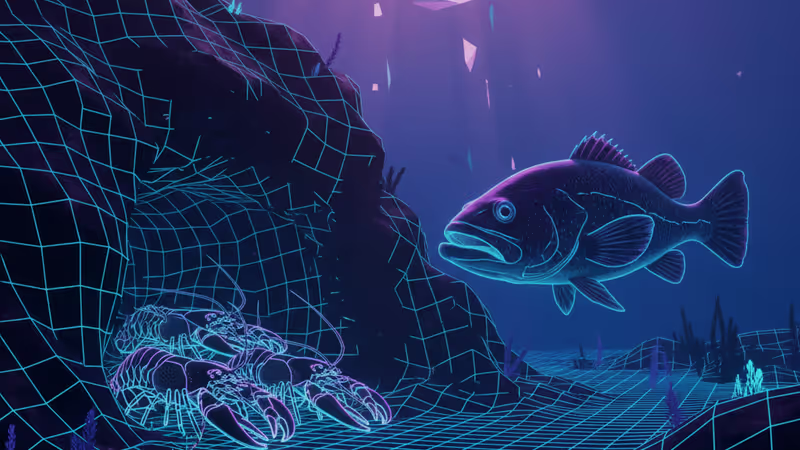
New research shows that Florida's spiny lobsters are falling into an 'ecological trap' where their social instincts lead them to predators in limestone solution holes.

Ants evolved by making workers cheaper, not stronger. This biological principle of swarm economics is a blueprint for designing resilient AI, robotics, and cloud systems.
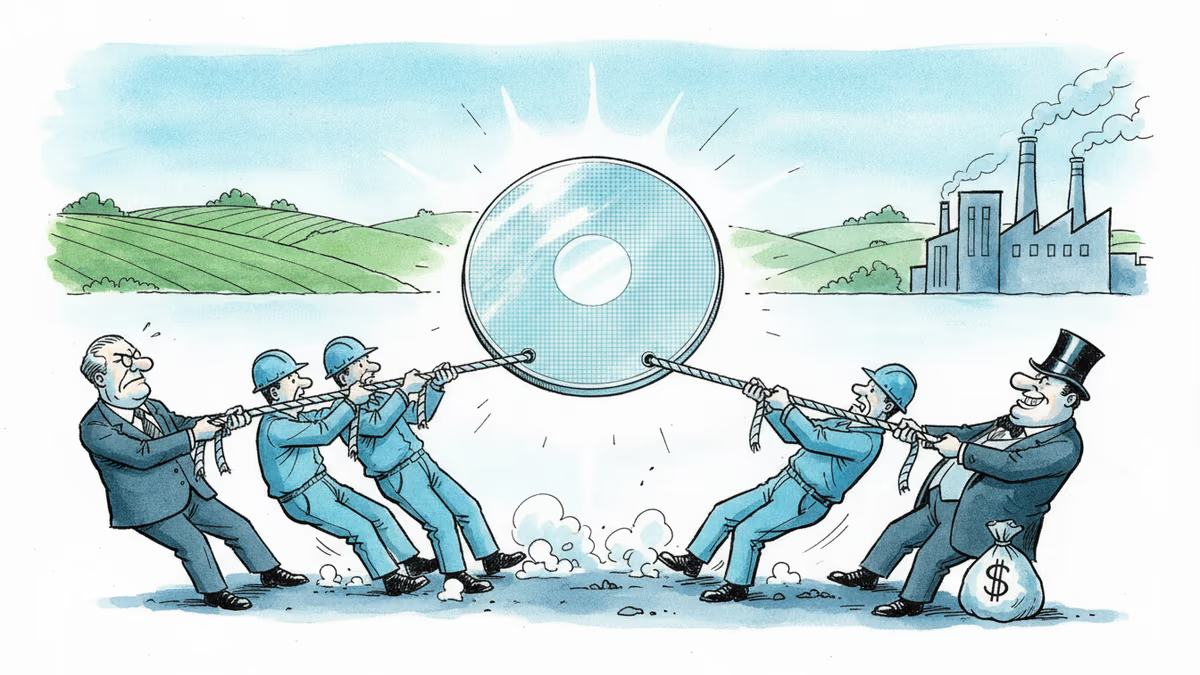
Samsung Electronics' union branch revealed that 84% of survey respondents oppose the government's roughly $290 billion (₩400 trillion) semiconductor megaproject in Gwangju. Government, management, the union and shareholders are all reading the same national project in sharply different ways.
Archaeologists in Morocco have identified 773,000-year-old hominin fossils that shed light on the divergence of modern humans and Neanderthals.
New research shows that Florida's spiny lobsters are falling into an 'ecological trap' where their social instincts lead them to predators in limestone solution holes.
Ants evolved by making workers cheaper, not stronger. This biological principle of swarm economics is a blueprint for designing resilient AI, robotics, and cloud systems.
Samsung Electronics' union branch revealed that 84% of survey respondents oppose the government's roughly $290 billion (₩400 trillion) semiconductor megaproject in Gwangju. Government, management, the union and shareholders are all reading the same national project in sharply different ways.
Thoughts
Share your thoughts on this article
Sign in to join the conversation