
Florida Spiny Lobster Ecological Trap: When Social Instincts Lead to Death
New research shows that Florida's spiny lobsters are falling into an 'ecological trap' where their social instincts lead them to predators in limestone solution holes.
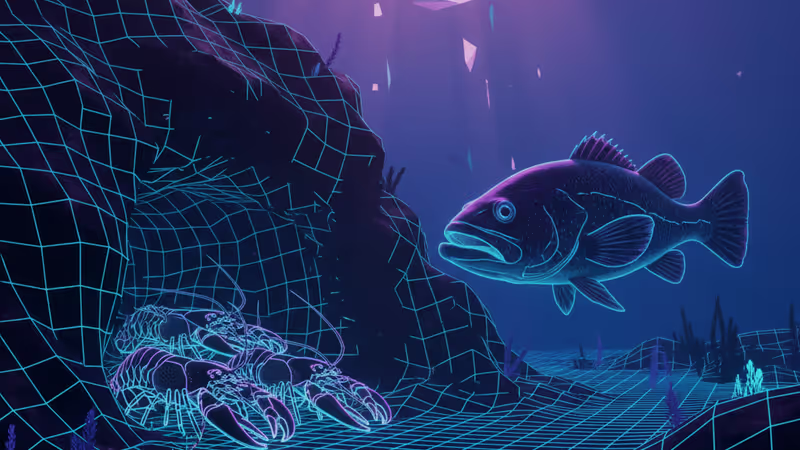
A survival strategy honed over millennia is backfiring. The spiny lobster, known for its lack of claws and reliance on group defense, is falling victim to an ecological trap. A new study off the coast of Florida reveals that the very signals meant to ensure safety are leading young lobsters straight into the jaws of predators.
The Paradox of Social Survival in Florida Waters
Unlike their cousins with massive claws, spiny lobsters ward off enemies by forming large, prickly groups. They use specific molecules emitted into the water to find peers. This social scent is usually a lifeline, but in the limestone crevices of the Florida seafloor, it has become a deadly lure.

During ancient times of lower sea levels, water carved uneven pits known as solution holes into the limestone bedrock. Today, these submerged holes serve as apartments for marine life. Young lobsters sense the presence of older, larger lobsters in these holes and rush to join them, seeking protection in numbers.
Predatory Dynamics and the Non-Human Trap
The danger lies in the resident groupers. These large fish often share solution holes with adult lobsters because the adults are too big to eat. However, the small juveniles that arrive are perfectly bite-sized. This creates a non-human intervention ecological trap where a preferred habitat actually leads to lower fitness and higher mortality.
Authors
Related Articles
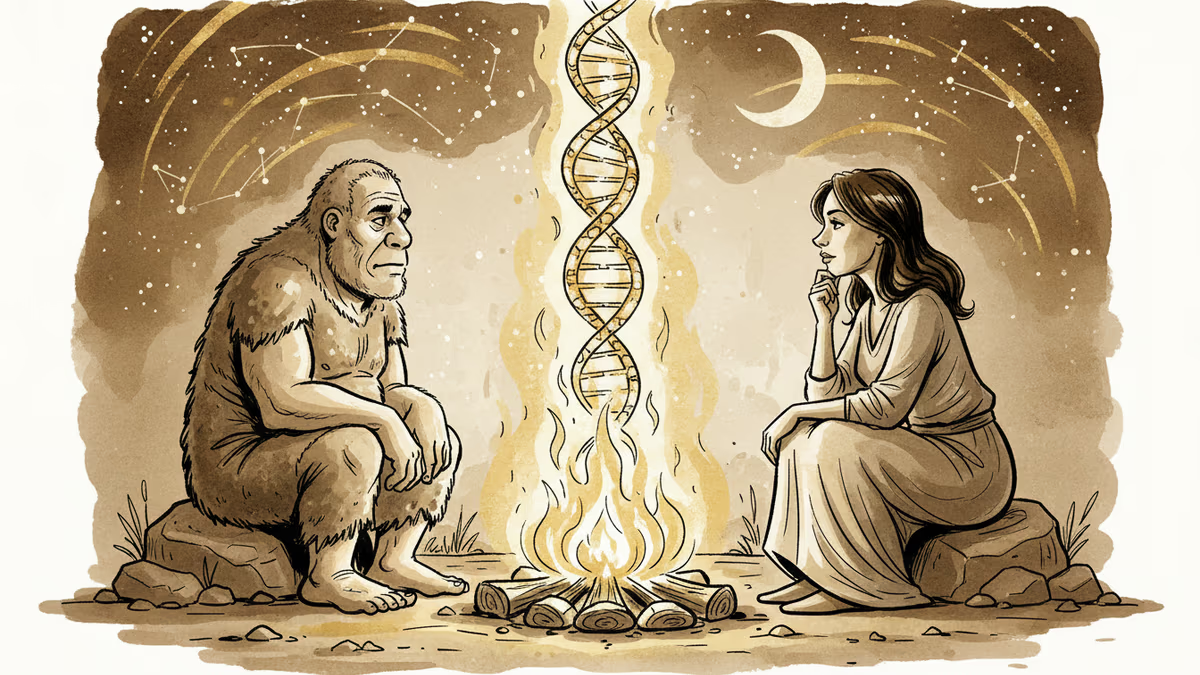
New genetic research reveals selective mating patterns between Neanderthals and modern humans, with X chromosome analysis showing unexpected preferences that shaped our evolutionary history.
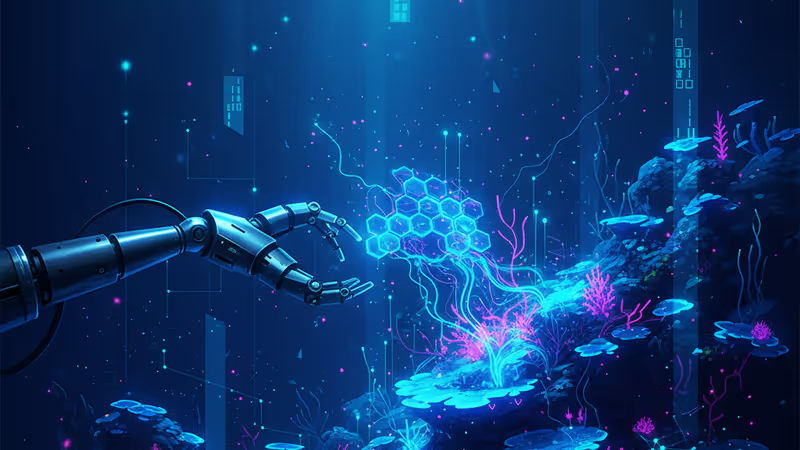
Researchers retrieved monitoring devices from deep coral reefs in Guam, placed 330 feet below the surface. The data could reveal if these 'mesophotic' ecosystems can act as climate change refuges for marine life.

Ants evolved by making workers cheaper, not stronger. This biological principle of swarm economics is a blueprint for designing resilient AI, robotics, and cloud systems.
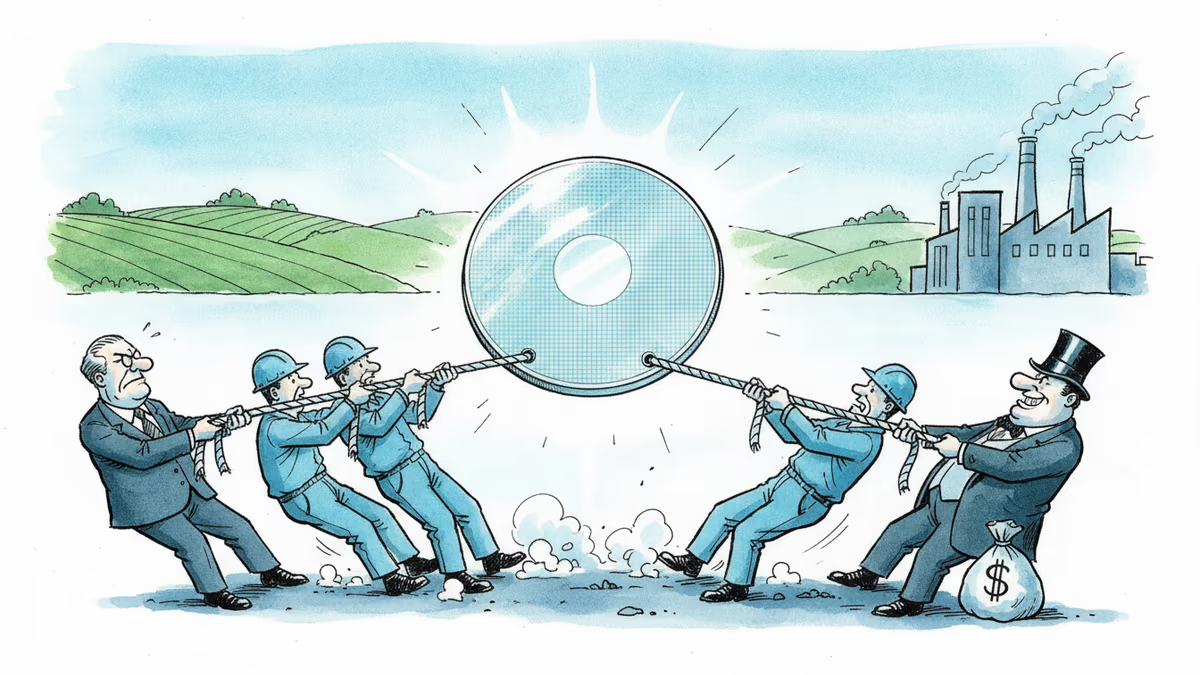
Samsung Electronics' union branch revealed that 84% of survey respondents oppose the government's roughly $290 billion (₩400 trillion) semiconductor megaproject in Gwangju. Government, management, the union and shareholders are all reading the same national project in sharply different ways.
New genetic research reveals selective mating patterns between Neanderthals and modern humans, with X chromosome analysis showing unexpected preferences that shaped our evolutionary history.
Researchers retrieved monitoring devices from deep coral reefs in Guam, placed 330 feet below the surface. The data could reveal if these 'mesophotic' ecosystems can act as climate change refuges for marine life.
Ants evolved by making workers cheaper, not stronger. This biological principle of swarm economics is a blueprint for designing resilient AI, robotics, and cloud systems.
Samsung Electronics' union branch revealed that 84% of survey respondents oppose the government's roughly $290 billion (₩400 trillion) semiconductor megaproject in Gwangju. Government, management, the union and shareholders are all reading the same national project in sharply different ways.
Thoughts
Share your thoughts on this article
Sign in to join the conversation