

Data from the Deep: Monitoring Gear Retrieved from 330-Foot Guam Reefs Could Reveal Climate Sanctuaries
Researchers retrieved monitoring devices from deep coral reefs in Guam, placed 330 feet below the surface. The data could reveal if these 'mesophotic' ecosystems can act as climate change refuges for marine life.
What's Happening
In a promising development for marine conservation, researchers have successfully retrieved critical monitoring devices from the deep coral reefs off the coast of Guam. According to the California Academy of Sciences, the equipment was deployed at depths of up to 330 feet (about 100 meters), an area far below the reach of recreational divers and most scientific surveys.
These devices are technological scouts sent into the ocean's 'twilight zone,' technically known as mesophotic coral ecosystems. It's an environment where sunlight is scarce, but life can still thrive. The goal of this mission is to continuously collect data—like temperature, light levels, and water chemistry—to understand the conditions in these largely unexplored habitats.

Why does this matter? As rising ocean temperatures cause widespread bleaching and death in shallow-water reefs, scientists believe these deeper, cooler reefs could act as vital sanctuaries, or 'refugia,' for threatened coral species. They could potentially reseed damaged shallow reefs in the future. However, very little is known about their resilience or the threats they face. The data retrieved from these devices is a crucial first step in testing that hypothesis.
With the monitoring gear now back in the lab, scientists will begin analyzing the trove of information collected. The findings are expected to provide unprecedented insights into the health, biodiversity, and survival strategies of these deep-water ecosystems, directly informing global strategies for protecting coral reefs in an era of rapid climate change.
Authors
Related Articles
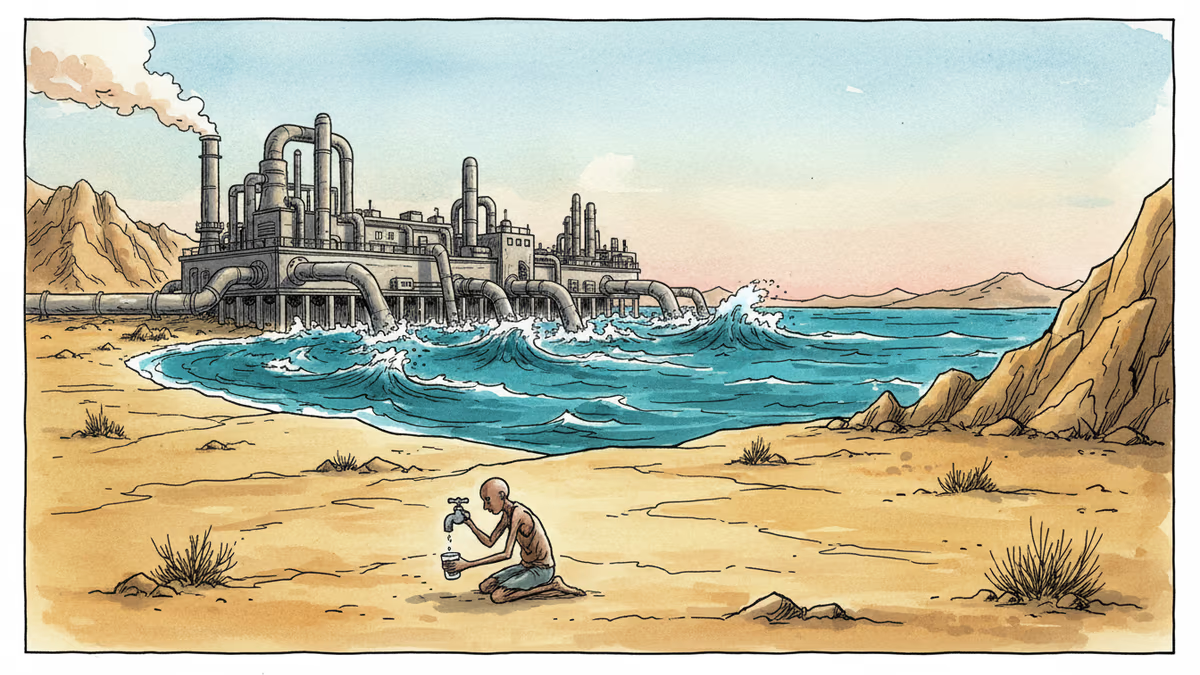
Qatar gets 99% of its drinking water from the sea. As the Middle East prepares to spend $25 billion expanding desalination capacity, this once-niche technology is becoming critical global infrastructure.

Vulnerable nations are suing wealthy countries and corporations for climate damages, backed by increasingly precise attribution science that could reshape global accountability.
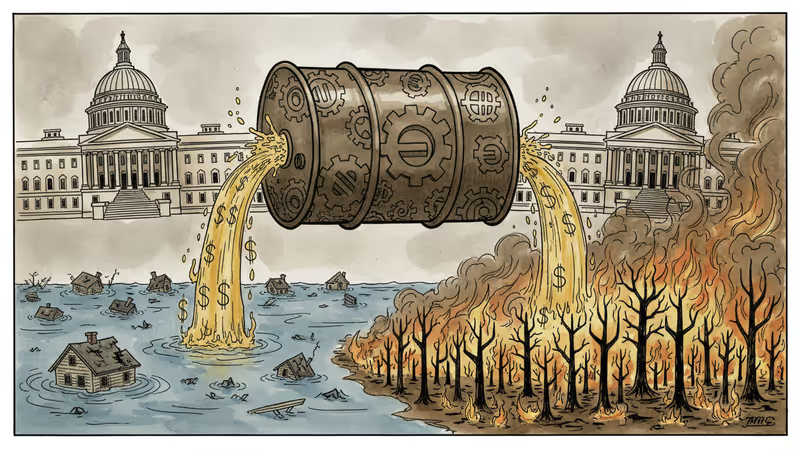
Illinois joins growing movement of US states creating climate superfunds to make fossil fuel companies pay for climate change damages. A new paradigm in climate cost allocation is emerging across America.
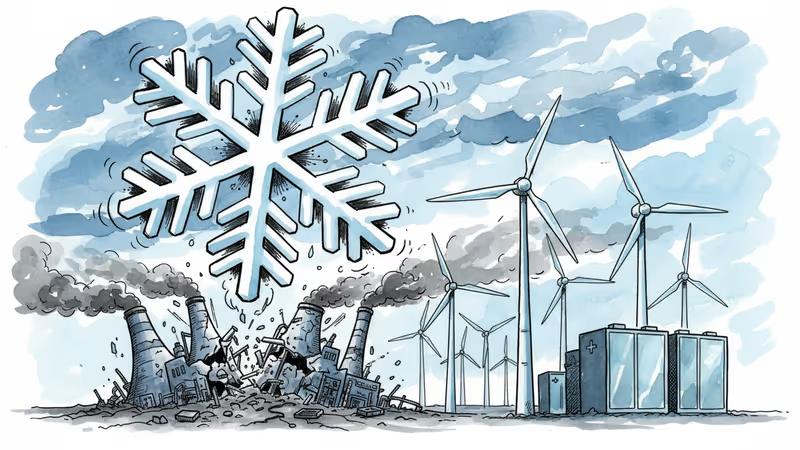
Massive fossil fuel outages during East Coast snowstorm show grid vulnerabilities, while Texas batteries prove their worth. What does this mean for energy security in an era of extreme weather?
Qatar gets 99% of its drinking water from the sea. As the Middle East prepares to spend $25 billion expanding desalination capacity, this once-niche technology is becoming critical global infrastructure.
Vulnerable nations are suing wealthy countries and corporations for climate damages, backed by increasingly precise attribution science that could reshape global accountability.
Illinois joins growing movement of US states creating climate superfunds to make fossil fuel companies pay for climate change damages. A new paradigm in climate cost allocation is emerging across America.
Massive fossil fuel outages during East Coast snowstorm show grid vulnerabilities, while Texas batteries prove their worth. What does this mean for energy security in an era of extreme weather?
Thoughts
Share your thoughts on this article
Sign in to join the conversation