

The $200 Trillion Climate Debt Heads to Court
Vulnerable nations are suing wealthy countries and corporations for climate damages, backed by increasingly precise attribution science that could reshape global accountability.
The Solomon Islands contribute roughly 0.01% of global carbon emissions. Chad emits even less. Yet both nations rank among the world's most vulnerable to climate catastrophe—rising seas that swallow coastlines, heat waves that kill crops, storms that devastate communities.
Meanwhile, the United States and European Union have burned through more than half of the world's carbon budget since the Industrial Revolution, building their prosperity on fossil fuels while exporting the consequences to the poorest, hottest corners of the planet.
The math is stark. The moral case is ironclad. And now, increasingly, the legal case is getting stronger.
The Science of Blame Gets Precise
For decades, climate lawsuits faced a fundamental problem: proving causation. How do you trace atmospheric carbon molecules across oceans and years? How do you pin a specific hurricane on a specific company's emissions?
Those days are ending. A breakthrough study published in Nature last September calculated exactly how much particular companies contributed to 21st-century heat waves. Another study found that climate change made extreme rainfall like that seen in Super Typhoon Odette—which killed over 400 people in the Philippines in 2021—twice as likely.
"We can now determine the provenance of climate damages with unprecedented precision," says Michael Gerrard of Columbia Law School's Sabin Center. "The science of attribution is getting better and better."
This matters because it's demolishing the oil industry's favorite defense: we just sell the stuff, we don't burn it.
Corporate Accountability Meets Human Rights

The legal landscape is shifting in other ways too. The European Court of Human Rights recently affirmed that states have legal obligations to protect people from climate change effects. A German court, while dismissing a Peruvian farmer's case against a power company, established that major carbon polluters could "in principle" be held liable for climate damages.
That principle is now being tested. Dozens of Pakistani farmers whose land was devastated in the 2022 floods have sued two major German companies. Filipino citizens are pursuing Shell over Typhoon Odette. The cases are multiplying.
None has succeeded yet. But the trend is unmistakable: more lawsuits, better science, and courts increasingly willing to consider climate change through a human rights lens.
The $200 Trillion Question
The numbers behind these lawsuits are staggering. One estimate puts the climate debt owed by major economies at nearly $200 trillion in reparations—roughly twice the global GDP.
That figure reflects not just future damages, but historical responsibility. The richest 10% of countries have produced over half of cumulative carbon emissions since 1850. The poorest 50% of countries have contributed just 7%.
"They did it. They knew. They should pay," argues the case for climate reparations. Oil companies have operated "with full knowledge of the massive social, environmental, and human cost imposed by their business while lobbying fiercely against any rules that would force them to pay."
Beyond Moral Arguments
What makes these new lawsuits different isn't just better science—it's strategic legal thinking. Rather than suing nations (which enjoy sovereign immunity), plaintiffs are targeting corporations. Rather than seeking broad climate action, they're demanding specific damages for specific events.
The approach reflects a hard truth: traditional climate diplomacy has moved too slowly for the most vulnerable nations. The Paris Agreement relies on voluntary commitments. The UN Framework Convention on climate change has no enforcement mechanism. Courts, by contrast, can order actual payments.
"We're seeing a shift from climate policy to climate accountability," notes one international law expert. "The question isn't whether companies should reduce emissions—it's whether they should pay for the damages they've already caused."
Authors
Related Articles
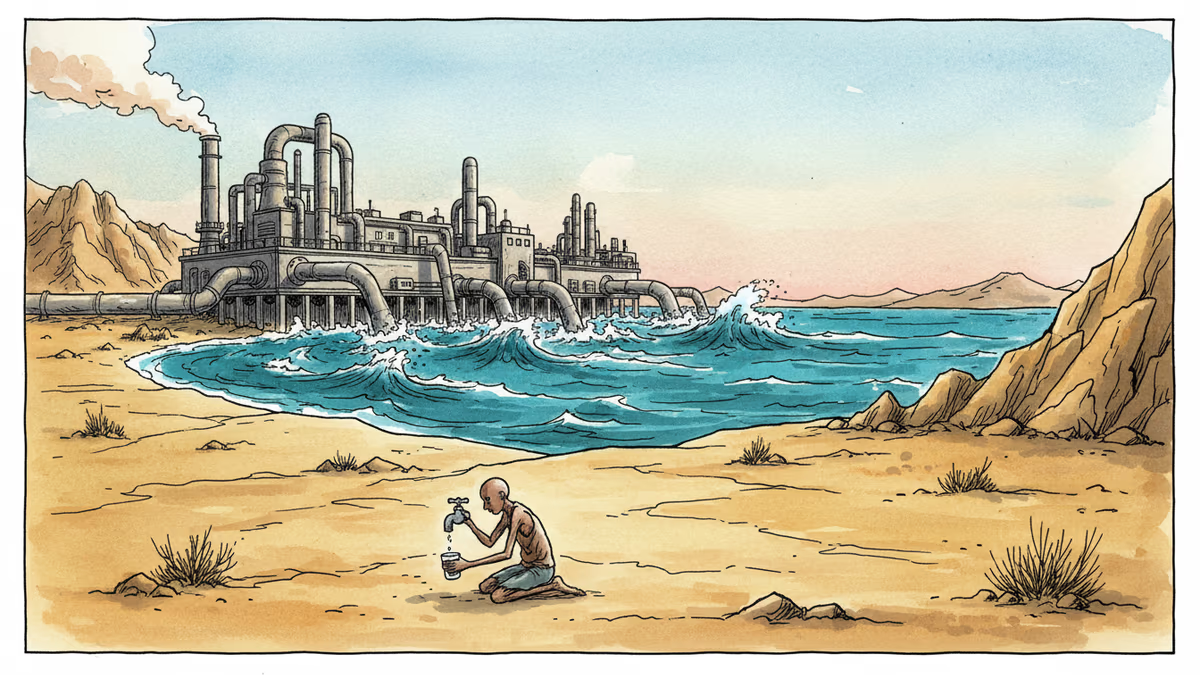
Qatar gets 99% of its drinking water from the sea. As the Middle East prepares to spend $25 billion expanding desalination capacity, this once-niche technology is becoming critical global infrastructure.
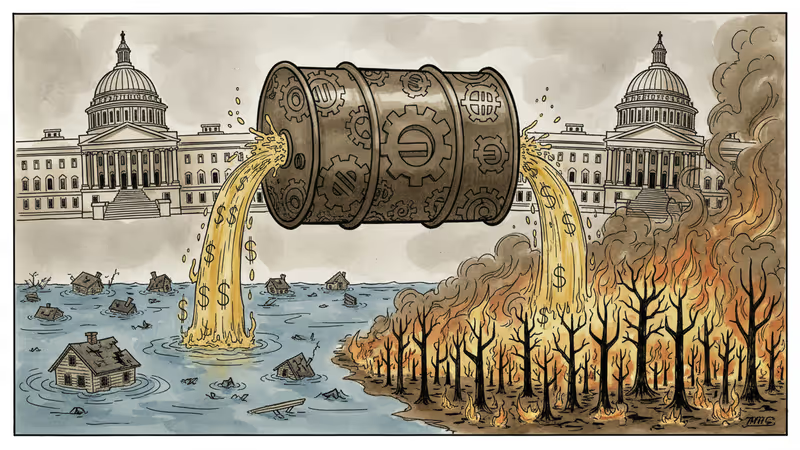
Illinois joins growing movement of US states creating climate superfunds to make fossil fuel companies pay for climate change damages. A new paradigm in climate cost allocation is emerging across America.
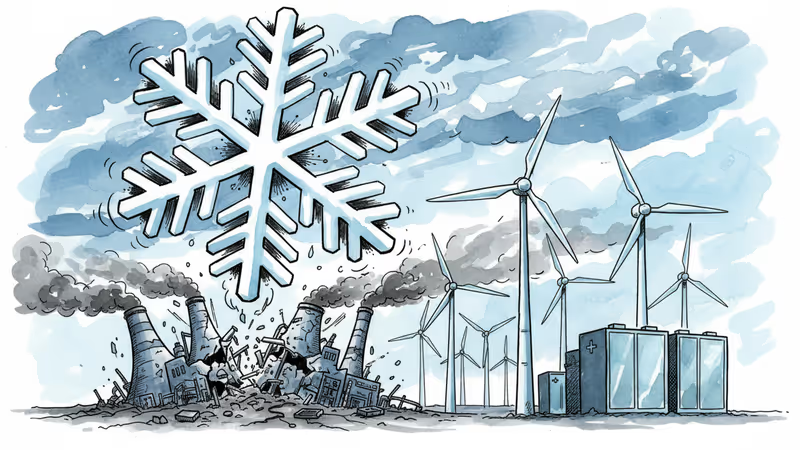
Massive fossil fuel outages during East Coast snowstorm show grid vulnerabilities, while Texas batteries prove their worth. What does this mean for energy security in an era of extreme weather?

170 million Americans face a historic deep freeze. The 2026 US record winter storm brings -50°F wind chills and threatens critical infrastructure.
Qatar gets 99% of its drinking water from the sea. As the Middle East prepares to spend $25 billion expanding desalination capacity, this once-niche technology is becoming critical global infrastructure.
Illinois joins growing movement of US states creating climate superfunds to make fossil fuel companies pay for climate change damages. A new paradigm in climate cost allocation is emerging across America.
Massive fossil fuel outages during East Coast snowstorm show grid vulnerabilities, while Texas batteries prove their worth. What does this mean for energy security in an era of extreme weather?
170 million Americans face a historic deep freeze. The 2026 US record winter storm brings -50°F wind chills and threatens critical infrastructure.
Thoughts
Share your thoughts on this article
Sign in to join the conversation