

Oceans Absorbed Record 23 Zettajoules in 2025: A Planet on Overheat
Earth's oceans absorbed a record 23 zettajoules of heat in 2025, marking the eighth consecutive record-breaking year for the 2025 ocean heat content record.
The planet's largest thermostat is breaking. On January 9, 2026, a global team of researchers revealed that the world's oceans absorbed more heat in 2025 than any year since modern records began. It marks the eighth consecutive year that ocean heat content has shattered previous records, underscoring the relentless progression of climate change.
The Massive Scale of 2025 Ocean Heat Content Record
According to the study published in Advances in Atmospheric Science, the oceans took in an additional 23 zettajoules of heat in 2025. To put that in perspective, 2024 saw an increase of 16 zettajoules. John Abraham, a professor at the University of St. Thomas and co-author of the paper, noted that the warming in 2025 is the energetic equivalent of 12 Hiroshima bombs exploding in the ocean every second of the year.
Why Sea Surface Temps Don't Tell the Whole Story

While global surface temperatures are what people feel directly, they can be misleading due to phenomena like El Niño or La Niña. In fact, sea surface temperatures in 2025 were slightly lower than in 2024. However, the heat content—the total energy stored throughout the water column—continues to climb. The ocean acts as a massive heat sink, absorbing over 90 percent of the excess warming trapped in our atmosphere.
Modern Oceanography: Sensors and Mammals
The researchers utilized a combination of mathematical models and a vast array of data sources. A cornerstone of this data is the Argo float network, which consists of more than 3,500 robotic buoys. In a fascinating twist of technology, scientists also attached instruments to marine mammals that dive under polar ice, allowing for temperature measurements in regions inaccessible to robots.
Authors
Related Articles
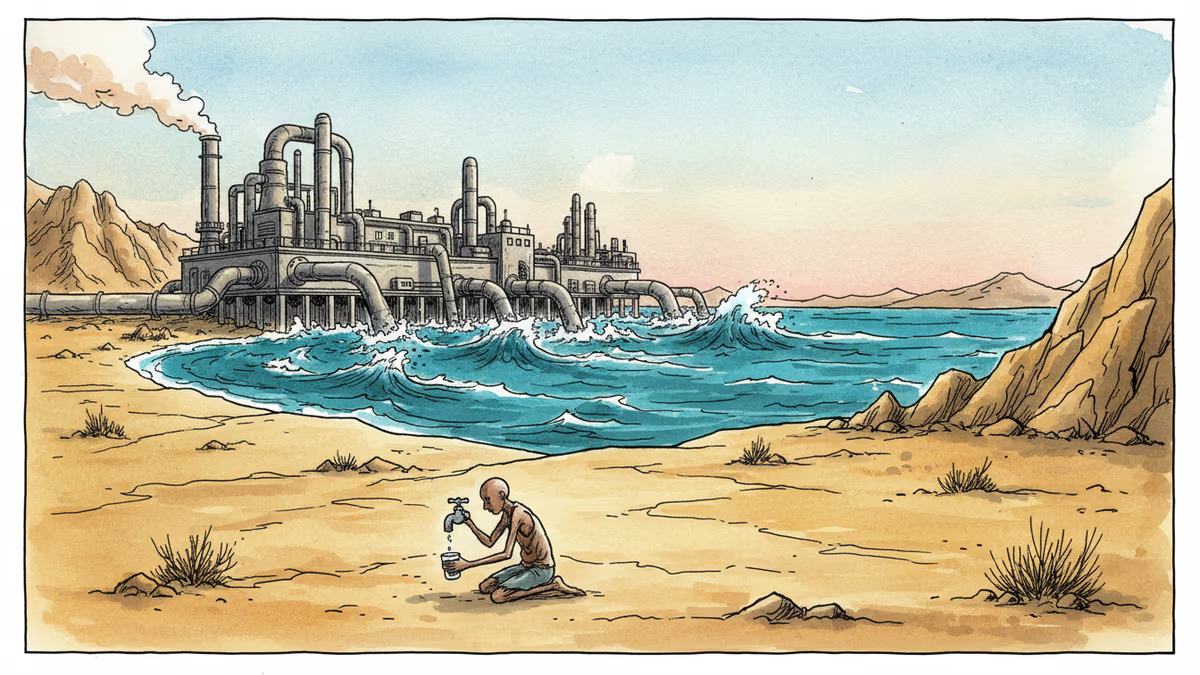
Qatar gets 99% of its drinking water from the sea. As the Middle East prepares to spend $25 billion expanding desalination capacity, this once-niche technology is becoming critical global infrastructure.

Vulnerable nations are suing wealthy countries and corporations for climate damages, backed by increasingly precise attribution science that could reshape global accountability.
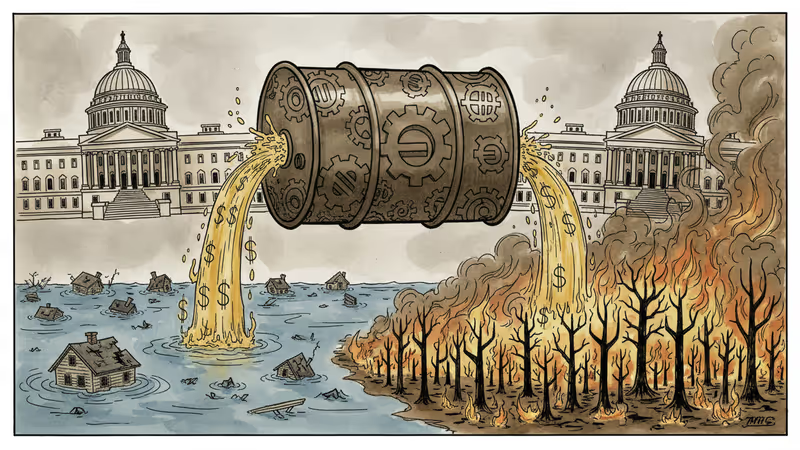
Illinois joins growing movement of US states creating climate superfunds to make fossil fuel companies pay for climate change damages. A new paradigm in climate cost allocation is emerging across America.
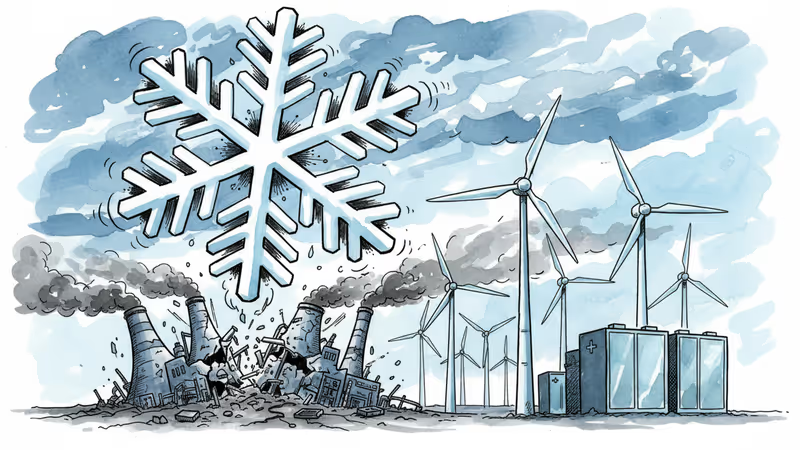
Massive fossil fuel outages during East Coast snowstorm show grid vulnerabilities, while Texas batteries prove their worth. What does this mean for energy security in an era of extreme weather?
Qatar gets 99% of its drinking water from the sea. As the Middle East prepares to spend $25 billion expanding desalination capacity, this once-niche technology is becoming critical global infrastructure.
Vulnerable nations are suing wealthy countries and corporations for climate damages, backed by increasingly precise attribution science that could reshape global accountability.
Illinois joins growing movement of US states creating climate superfunds to make fossil fuel companies pay for climate change damages. A new paradigm in climate cost allocation is emerging across America.
Massive fossil fuel outages during East Coast snowstorm show grid vulnerabilities, while Texas batteries prove their worth. What does this mean for energy security in an era of extreme weather?
Thoughts
Share your thoughts on this article
Sign in to join the conversation