
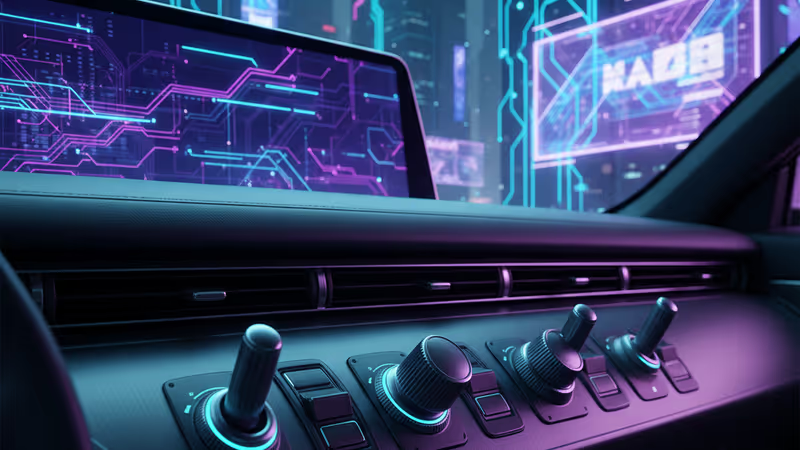
The Return of Physical Buttons: Euro NCAP 2026 Safety Standards
Euro NCAP will deduct points from 2026 for cars without physical buttons. Discover why the automotive industry is shifting away from touchscreens for safety.
The era of burying every car function inside a touchscreen is hitting a massive roadblock. For years, designers have prioritized sleek glass panels over tactile feedback, but safety regulators are finally pushing back. It turns out that fumbling through menus at 70 mph isn't just annoying—it's dangerous.
Euro NCAP Physical Buttons 2026: Why Tactics Matter
According to the Euro NCAP, from 2026, vehicles will lose points in safety assessments if basic controls aren't assigned to separate, physical switches. This move is mirrored by ANCAP in Australia and New Zealand, signaling a global shift toward driver distraction prevention.

The trend of "screenification" saw wheels grow from 16 inches to 20 inches to mask heavy EV batteries, while dashboards became wall-to-wall monitors. However, regulators now demand that critical functions like hazard lights, wipers, and indicators stay right where they've always been: within physical reach.
The Death of Piano Black and Aesthetic Clutter
It's not just buttons coming back; frustrating materials are on their way out. Jochen Paesen, a lead designer at Kia, noted that the industry is moving away from piano black trim. While it looks great in brochures, it's a magnet for dust and fingerprints in the real world. Manufacturers are realizing that customers hate the constant maintenance and glare associated with high-gloss plastics.
Authors
Related Articles
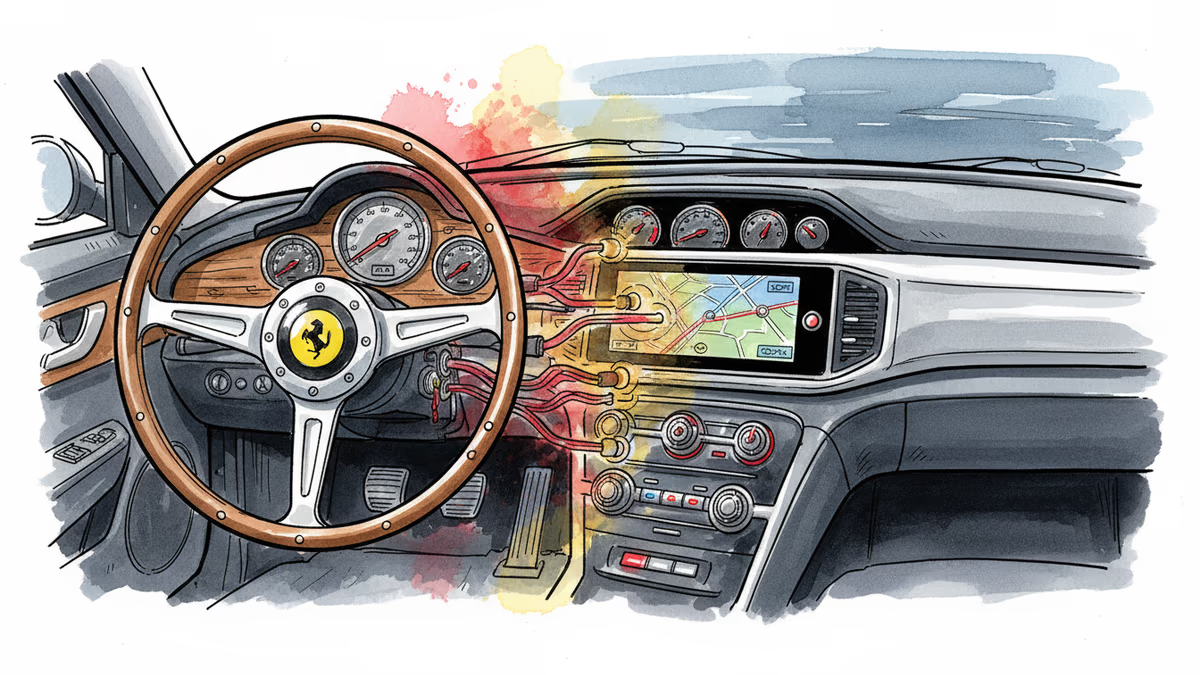
Ferrari reveals the interior of its first electric car, the Luce, designed by Apple's former star Jony Ive. Physical buttons replace touchscreens in a bold rejection of modern EV trends.
Samsung Electronics' union branch revealed that 84% of survey respondents oppose the government's roughly $290 billion (₩400 trillion) semiconductor megaproject in Gwangju. Government, management, the union and shareholders are all reading the same national project in sharply different ways.
Nvidia shipped roughly a billion RISC-V cores in 2024, then announced it would run CUDA on the open standard. We break down how royalty-free instruction sets and open software stacks are trying to route around CUDA's lock-in. Part 2 of the Semiconductor Sovereignty series.
US AI-chip export controls split into three layers in the first half of 2026 — January easing, a May crackdown on circumvention, and a pending bill. Nvidia erased China from its guidance and still posted a record $81.6 billion quarter. A look at the export policy that both shields and cages it.
Ferrari reveals the interior of its first electric car, the Luce, designed by Apple's former star Jony Ive. Physical buttons replace touchscreens in a bold rejection of modern EV trends.
Samsung Electronics' union branch revealed that 84% of survey respondents oppose the government's roughly $290 billion (₩400 trillion) semiconductor megaproject in Gwangju. Government, management, the union and shareholders are all reading the same national project in sharply different ways.
Nvidia shipped roughly a billion RISC-V cores in 2024, then announced it would run CUDA on the open standard. We break down how royalty-free instruction sets and open software stacks are trying to route around CUDA's lock-in. Part 2 of the Semiconductor Sovereignty series.
US AI-chip export controls split into three layers in the first half of 2026 — January easing, a May crackdown on circumvention, and a pending bill. Nvidia erased China from its guidance and still posted a record $81.6 billion quarter. A look at the export policy that both shields and cages it.
Thoughts
Share your thoughts on this article
Sign in to join the conversation