
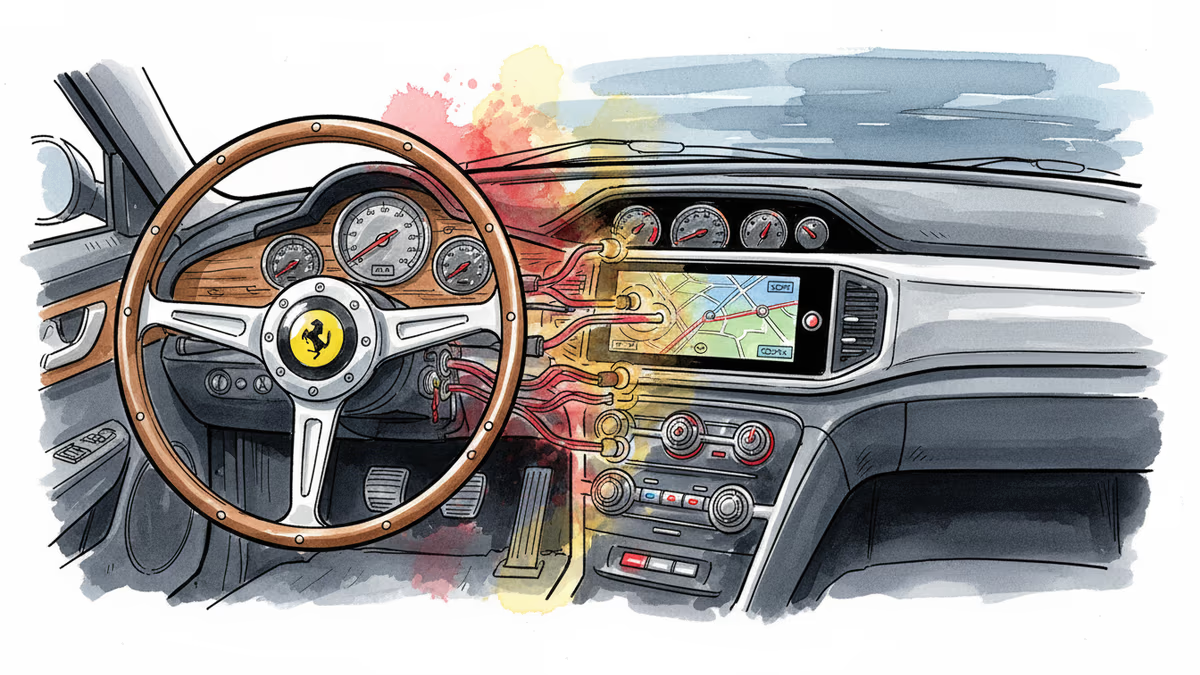
Ferrari's Electric Car Interior Designed by Jony Ive Goes Full Retro
Ferrari reveals the interior of its first electric car, the Luce, designed by Apple's former star Jony Ive. Physical buttons replace touchscreens in a bold rejection of modern EV trends.
400 grams. That's how much lighter Ferrari's new electric steering wheel is compared to their conventional models. But weight isn't the real story here. The interior of the Ferrari Luce, designed by Apple's legendary Jony Ive, looks like it time-traveled from 1960—and that might be exactly what the EV industry needs.
When Less Tech Means More Luxury
The images Ferrari released are startling. Gone are the frustrating capacitive panels that plagued the Ferrari 296. In their place: physical buttons, rocker switches, and clear round gauges paired with brushed aluminum. It's a direct rejection of the touchscreen-everything approach that has dominated electric vehicles.
LoveFrom, the design studio founded by Ive and Marc Newson, channeled Ferrari interiors from the 1950s through 1970s. But this isn't mere nostalgia. The steering wheel, reminiscent of the iconic "Nardi" wheels from classic Ferraris, integrates horn buttons into the spokes and hangs multifunction pods off the horizontal spokes. Made entirely from CNC-milled recycled aluminum, it's both lighter and more sustainable.
The message is clear: the future of luxury isn't about cramming more screens into cars—it's about getting the human interface right.
The Anti-Tesla Statement
Ferrari's design philosophy directly challenges the Tesla playbook. While most EV manufacturers have embraced massive touchscreens and minimalist cabins to signal "future," Ferrari is betting on tactile, intuitive controls that don't require drivers to take their eyes off the road.
This isn't just about preference—it's about safety and usability. The irony is rich: Jony Ive, who eliminated the physical home button from the iPhone, is bringing physical controls back to cars. The contexts are different, and so are the solutions.

Even traditional automakers like BMW and Mercedes have started walking back their touchscreen-heavy interiors after customer complaints. But Ferrari's approach is the most radical departure yet from modern EV conventions.
What This Means for the Industry
Ferrari's retro-future approach could signal a broader shift in luxury automotive design. The company isn't just building their first electric vehicle—they're redefining what electric luxury should feel like.
For consumers frustrated with overly complex infotainment systems, Ferrari's approach offers validation. The best technology might be the technology you don't notice—interfaces so intuitive they become extensions of your intentions.
This philosophy could influence other luxury brands. Porsche, Aston Martin, and McLaren are all watching how Ferrari's electric gamble plays out. If the Luce succeeds, expect more physical controls to return to high-end EVs.
The Broader Question of Progress
Ferrari's design choices raise uncomfortable questions for the entire automotive industry. Have we confused technological capability with user experience? Does every surface need to be a screen?
The company is taking enormous risks with the Luce. Electric powertrains are new territory for Ferrari, and partnering with designers known for minimalism (rather than automotive expertise) adds another layer of uncertainty. But the early reveal of interior details suggests confidence in their approach.
For investors and industry watchers, Ferrari's strategy represents a fascinating test case. Can a brand built on internal combustion engines successfully transition to electric power while maintaining its identity? The interior design suggests they're not trying to become a different company—they're trying to become a better version of themselves.
Authors
Related Articles
Waymo's new Ojai robotaxi isn't just a vehicle upgrade. It's the company's most serious attempt yet at cracking the cost problem that has kept autonomous vehicles from scaling. Here's what's really at stake.
The Ferrari Luce is finally here — 1,000 hp, a 122 kWh battery, and an interior designed by the team behind the iPhone. But the real story is what Ferrari risked to build it.
Ferrari's first EV, the Luce, starts at €550,000 in Italy. Designed inside and out by Jony Ive and Mark Newson's studio LoveFrom, it's Ferrari's first five-seater and a bold bet on design over performance specs.
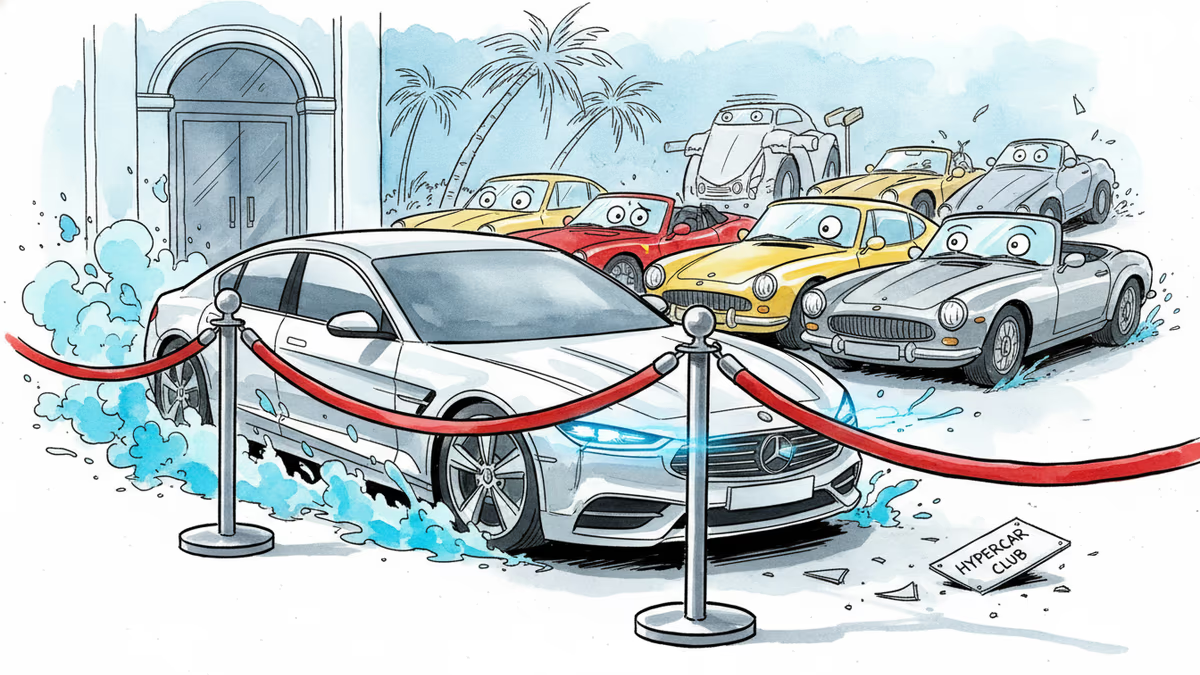
Mercedes-AMG's new GT 4-door coupe packs three YASA axial flux motors producing 1,153 hp and 1,475 lb-ft of torque. Here's what it means for the EV performance race—and who actually wins.
Waymo's new Ojai robotaxi isn't just a vehicle upgrade. It's the company's most serious attempt yet at cracking the cost problem that has kept autonomous vehicles from scaling. Here's what's really at stake.
The Ferrari Luce is finally here — 1,000 hp, a 122 kWh battery, and an interior designed by the team behind the iPhone. But the real story is what Ferrari risked to build it.
Ferrari's first EV, the Luce, starts at €550,000 in Italy. Designed inside and out by Jony Ive and Mark Newson's studio LoveFrom, it's Ferrari's first five-seater and a bold bet on design over performance specs.
Mercedes-AMG's new GT 4-door coupe packs three YASA axial flux motors producing 1,153 hp and 1,475 lb-ft of torque. Here's what it means for the EV performance race—and who actually wins.
Thoughts
Share your thoughts on this article
Sign in to join the conversation