
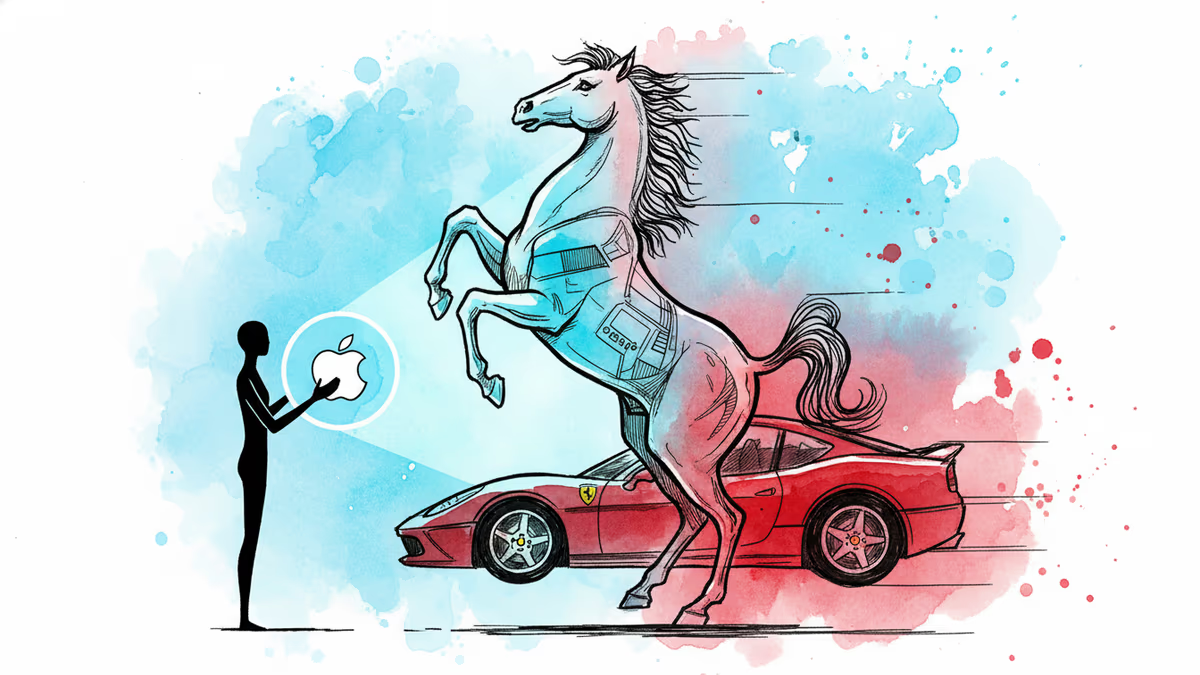
Ferrari Hired Jony Ive. Now What?
The Ferrari Luce is finally here — 1,000 hp, a 122 kWh battery, and an interior designed by the team behind the iPhone. But the real story is what Ferrari risked to build it.
For eight years, Ferrari made you wait. And while you waited, Lamborghini blinked. Bentley retreated. Porsche spent a fortune reversing course. Now Ferrari has finally shown its hand — and it doesn't look like any Ferrari you've ever seen.
Meet the Luce. Italian for "light." Unveiled in Rome on May 26, 2026, it is the most consequential thing Maranello has built in a generation. Whether it's the smartest is a different question.
What Ferrari Actually Built
The numbers are not subtle. Four motors — one per wheel — deliver a combined 1,000+ horsepower in Boost mode. The rear axle alone produces 832 hp and 7,750 Nm of torque at the wheels. Zero to 62 mph takes 2.5 seconds. Top speed: 192 mph. This is a hypercar wearing a grand tourer's suit, with five seats — a first in Ferrari's history.
The 122 kWh battery is among the largest ever fitted to a production EV. It charges at up to 350 kW on an 800-volt architecture and delivers a claimed range of over 329 miles. Curb weight sits at 4,982 pounds — heavy, but only about 200 pounds more than the Purosangue SUV despite the massive battery pack. Each wheel gets its own independently controlled power, braking, suspension, and steering (rear wheels steer up to 2.15 degrees).
And because this is a Ferrari without an engine note, the engineers attached an accelerometer to the rear axle that works like a guitar pickup — sensing motor vibrations, filtering out unwanted whine, and piping the resulting sound into the cabin. Ferrari's sound quality manager Antonio Palermo called it "an instrument." Whether it convinces purists is another matter.
Production begins late 2026. First deliveries: early 2027. Starting price: approximately $640,000.
The Jony Ive Decision
Here's what makes the Luce genuinely unusual: Ferrari didn't design it. Not entirely.
For the first time in its history, Maranello handed creative control of a car — interior and exterior — to an outside team. That team is LoveFrom, the agency founded by Jony Ive after he left Apple in 2019, working alongside designer Marc Newson. The same people who shaped the iPhone, the iMac, and the Apple Watch spent years sculpting a Ferrari.

The interior, previewed in San Francisco in February, reads like a canceled Apple Car concept brought to life: brushed aluminum, glass, leather, rounded corners, circular OLED displays, physical switchgear, a steering wheel described as "a thing of beauty," and a gear-shift knob made of Corning glass with 13,000 laser-etched holes. The center screen mounts on a ball-and-socket joint so it can pivot toward the front passenger. The key fob looks like a miniature iPhone.
The exterior follows the same logic. A continuous glass surface — the "glass house" — sweeps from the windscreen down to the car's nose, delivering what Ferrari claims is "by far the lowest drag coefficient" in Maranello's road car history. Windshield wipers are tucked beside the A-pillars rather than at the base of the screen. Wheel sizes are staggered: 23 inches front, 24 inches rear — the largest on any series-production Ferrari road car.
Ive described the result as "still clearly a Ferrari" but "a different manifestation based on some of the beliefs around simplicity." Ferrari says LoveFrom was given "the creative freedom needed to define the design direction of the project from the outset."
The Nervous Room Behind the Launch
The Luce arrives at a peculiar moment for luxury EVs. The market Ferrari is entering has, by most measures, gotten harder — not easier — since the project began.
Lamborghini has pushed its first EV back to 2029. Bentley moved its all-electric deadline from 2030 to 2035. Porsche, after spending enormously on electrification, has remapped its near-term future back toward combustion engines. Even Ferrari hedged: in June 2025, it delayed its second EV until 2028, citing weak demand for electric luxury cars.
Investors noticed. In October 2025, Ferrari's shares fell more than 16% in a single session on disappointment over long-term financial targets. CEO Benedetto Vigna has been careful ever since to frame the Luce as an addition to the lineup — not a pivot. Ferrari's 2030 targets call for just 20% of sales to be fully electric, with 40% hybrid and 40% combustion.
Industry observers note, quietly, that the Luce may have been too far along to cancel. The launch proceeds not because the market is certain, but because stopping would have cost more than continuing.
Three Ways to Read This Car
For Ferrari loyalists, the Luce is a provocation. The brand's power has always rested on a specific mythology: Ferrari people build Ferraris. The sounds, the proportions, the obsessive internal craft — all of it tied to Maranello's identity. Handing the wheel to the team that designed the iPhone breaks that covenant. Whether the result is evolution or dilution depends on which Ferrari you fell in love with.
For the luxury EV market, the Luce sets a new hardware benchmark — 122 kWh, 350 kW charging, four-motor torque vectoring — that competitors will now have to address. More importantly, it demonstrates that ultra-premium EV buyers may respond to design provenance (who made it, and how) as much as to performance specs.
For the tech-to-automotive crossover, the Luce is the most visible test yet of whether Silicon Valley's design language can translate into a category defined by tactile sensation and mechanical soul. If buyers embrace it, expect more carmakers to recruit from Cupertino alumni networks. If they don't, the lesson will be equally instructive.
This content is AI-generated based on source articles. While we strive for accuracy, errors may occur. We recommend verifying with the original source.
Related Articles
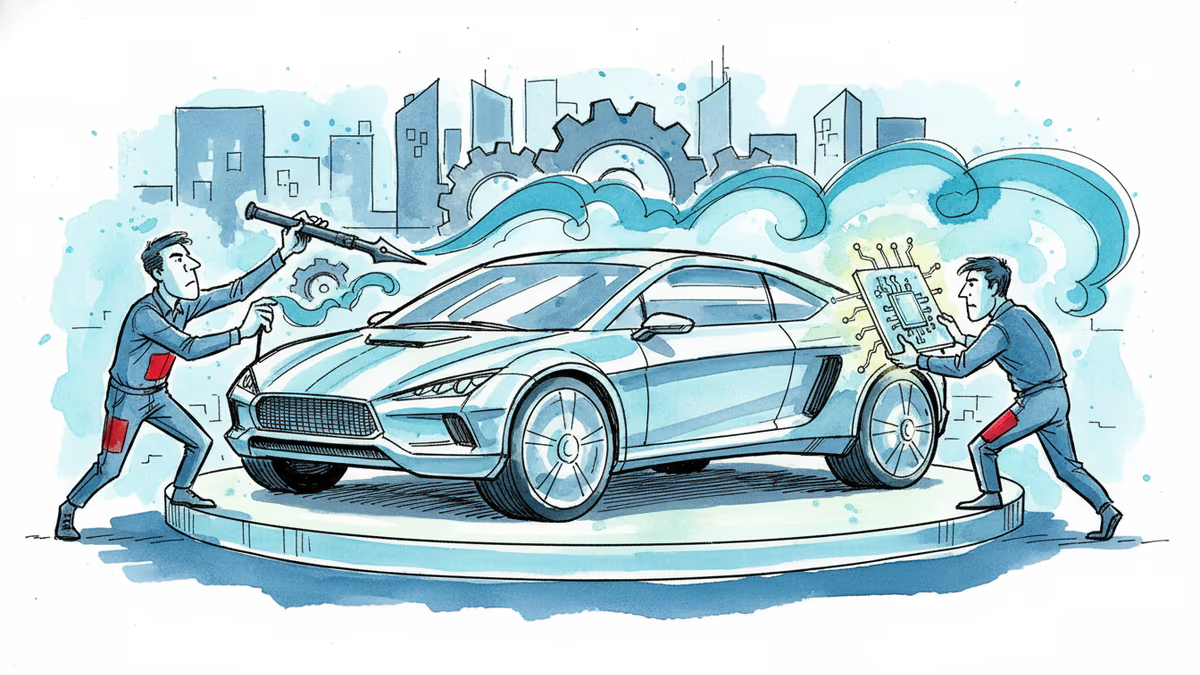
Ferrari's first EV, the Luce, starts at €550,000 in Italy. Designed inside and out by Jony Ive and Mark Newson's studio LoveFrom, it's Ferrari's first five-seater and a bold bet on design over performance specs.

Expiring leases will flood the US used car market with over a million electric vehicles by 2028. Could this do what subsidies couldn't — make EVs genuinely affordable?
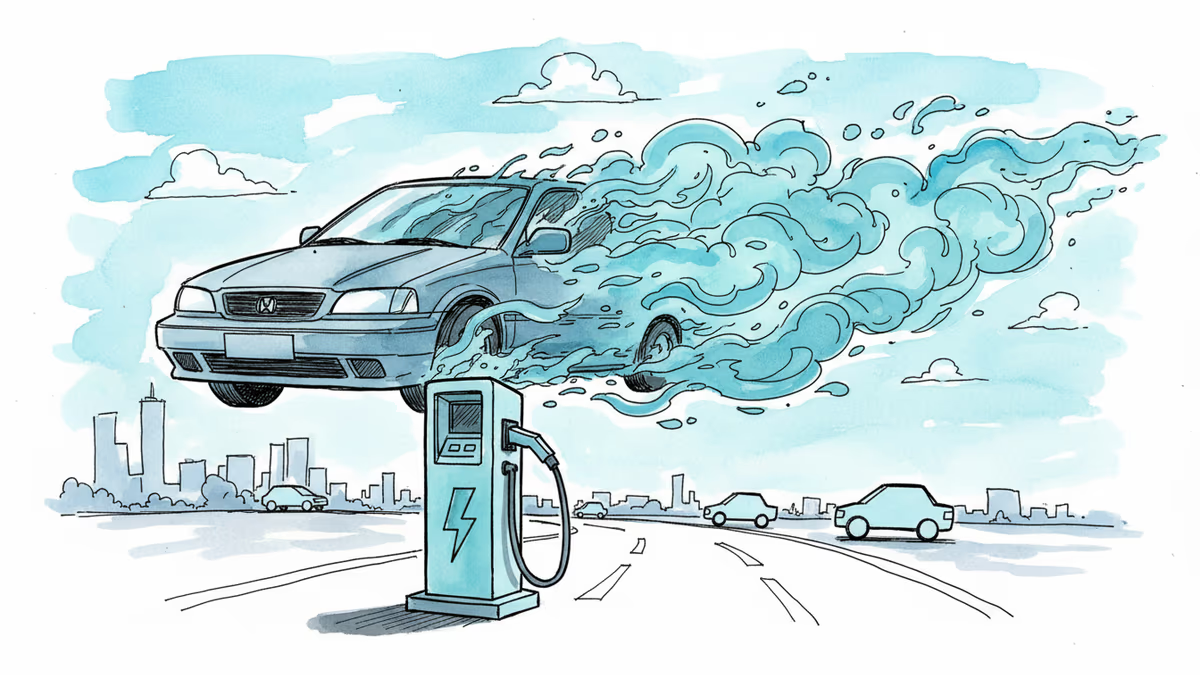
Honda has cancelled three US electric vehicles and Sony Honda Mobility has shelved its EV launch. As legacy automakers retreat, what does this mean for the EV market's future?
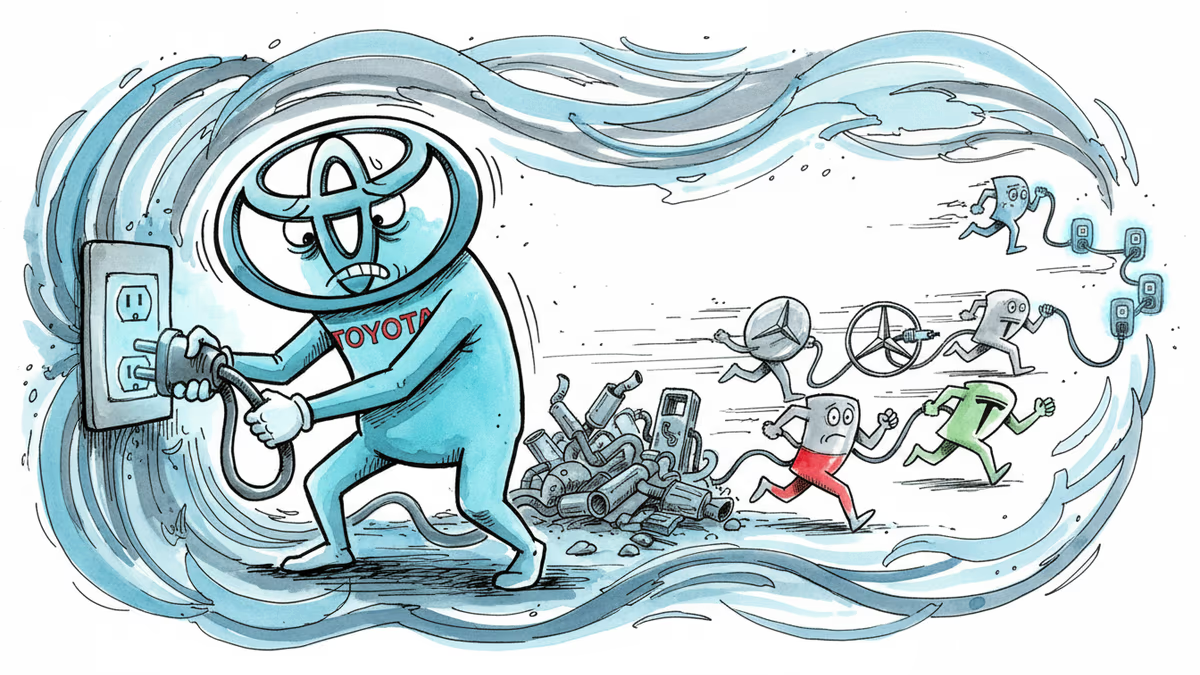
The world's largest automaker just boosted EV range by 25% and adopted Tesla's charging standard. What changed Toyota's mind about electric vehicles?
Ferrari's first EV, the Luce, starts at €550,000 in Italy. Designed inside and out by Jony Ive and Mark Newson's studio LoveFrom, it's Ferrari's first five-seater and a bold bet on design over performance specs.
Expiring leases will flood the US used car market with over a million electric vehicles by 2028. Could this do what subsidies couldn't — make EVs genuinely affordable?
Honda has cancelled three US electric vehicles and Sony Honda Mobility has shelved its EV launch. As legacy automakers retreat, what does this mean for the EV market's future?
The world's largest automaker just boosted EV range by 25% and adopted Tesla's charging standard. What changed Toyota's mind about electric vehicles?
Thoughts
Share your thoughts on this article
Sign in to join the conversation