

Xreal 1S AR glasses CES 2026: The $449 Upgrade That Turns 2D into 3D
At CES 2026, Xreal announced the Xreal 1S AR glasses for $449, featuring 1200p resolution, 700 nits brightness, and a native 2D-to-3D video conversion feature.
It's $449, and it makes your 2D movies jump into the third dimension without any extra effort. At CES 2026, Xreal just unveiled the Xreal 1S, an upgraded version of its entry-level AR glasses that emphasizes content accessibility over pure hardware dominance.
What's New in Xreal 1S AR glasses CES 2026
According to reports from The Verge, the Xreal 1S represents an 'S'-year spec bump. While the physical design remains familiar, the internal hardware sees significant improvements. The resolution has climbed from 1080p to 1200p Full HD, and peak brightness has jumped from 600 to 700 nits. The field of view (FOV) also gets a slight boost to 52 degrees, up from 50 degrees on the previous model.

Native 3D Conversion Capabilities
The standout feature of the Xreal 1S isn't just the pixels—it's how it handles video. Users can now convert standard 2D videos into 3D natively. This means you don't need proprietary players or specialized software to experience depth; the glasses handle the conversion on the fly, making any YouTube video or Netflix show a potential 3D experience.
| Feature | Previous Model | Xreal 1S |
|---|---|---|
| Resolution | 1080p | 1200p |
| Brightness | 600 nits | 700 nits |
| FOV | 50° | 52° |
| Price | - | $449 |
Authors
Related Articles

Xreal and Viture's latest AR glasses all do a few things well and a few things poorly. Here's what the best pair would look like — and why none of them are there yet.

Meta considered launching facial recognition for Ray-Ban smart glasses during political chaos to avoid privacy backlash, revealing big tech's calculated approach to controversial features

Apple plans smart glasses for 2027, competing with Meta's established lineup. We analyze the strategic implications, privacy concerns, and what this means for the wearable market.
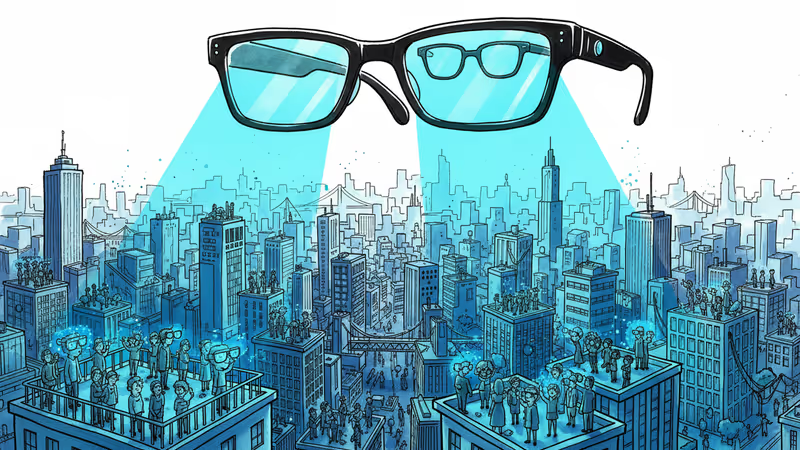
Mark Zuckerberg predicts all glasses will become AI glasses, as Google, Apple, and Snap race to claim the next computing platform after smartphones.
Xreal and Viture's latest AR glasses all do a few things well and a few things poorly. Here's what the best pair would look like — and why none of them are there yet.
Meta considered launching facial recognition for Ray-Ban smart glasses during political chaos to avoid privacy backlash, revealing big tech's calculated approach to controversial features
Apple plans smart glasses for 2027, competing with Meta's established lineup. We analyze the strategic implications, privacy concerns, and what this means for the wearable market.
Mark Zuckerberg predicts all glasses will become AI glasses, as Google, Apple, and Snap race to claim the next computing platform after smartphones.
Thoughts
Share your thoughts on this article
Sign in to join the conversation