
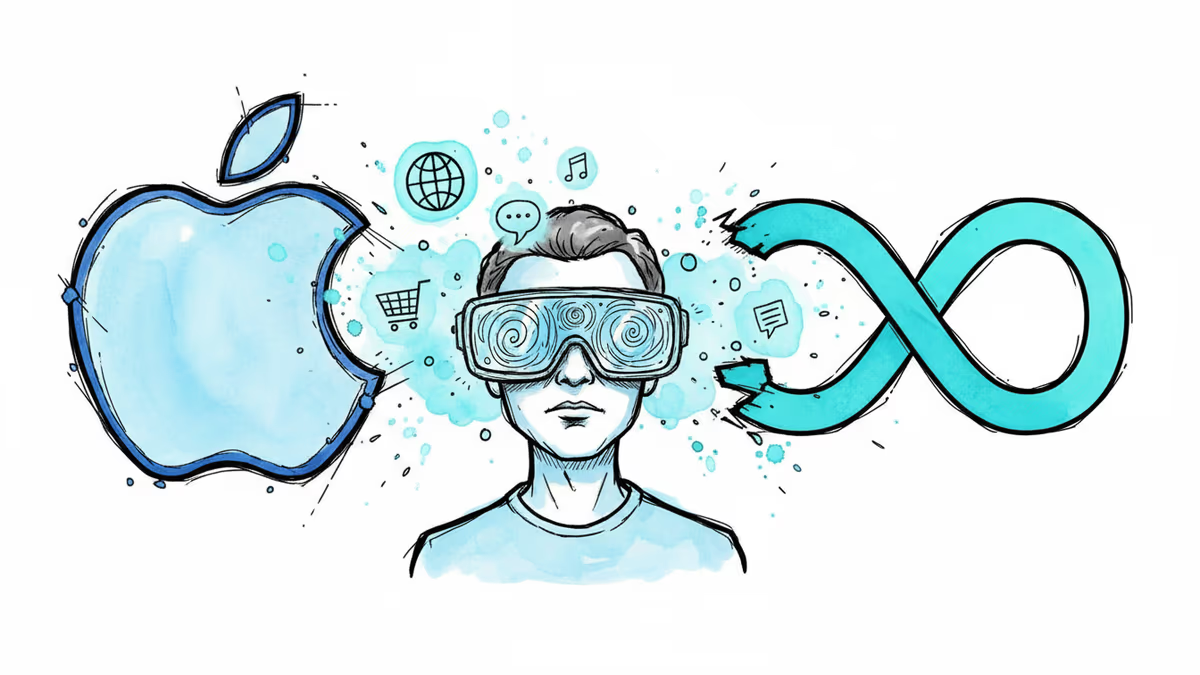
Apple's 2027 Smart Glasses: Late to the Party, But Ready to Own It?
Apple plans smart glasses for 2027, competing with Meta's established lineup. We analyze the strategic implications, privacy concerns, and what this means for the wearable market.
December 2027. That's when Apple plans to begin mass production of its first smart glasses, according to Bloomberg's Mark Gurman. But the glasses aren't coming alone—Apple's preparing an entire ecosystem of camera-equipped wearables, including an AI-powered pendant and camera-equipped AirPods.
This isn't just about adding another gadget to Apple's lineup. All three devices will connect to the iPhone, allowing Siri to use "visual context" to perform actions. Apple's betting that the future of computing isn't just mobile—it's ambient.
Meta's 2-Year Head Start vs Apple's Ecosystem Play
Meta already owns this space with its second-generation Ray-Ban Meta smart glasses. Apple's planned features—speakers, microphones, high-resolution cameras—sound remarkably similar to what Meta already offers.
The difference lies in timing and integration. While Meta focuses on social sharing and metaverse connectivity, Apple will likely leverage its iPhone ecosystem for seamless integration. But 2 years is an eternity in tech. Can Apple's "late but polished" strategy work again, like it did with the Apple Watch?
Industry analysts point to Apple's track record: the company rarely pioneers new categories but often perfects them. The question is whether smart glasses will follow the iPhone playbook or the Apple TV trajectory.
Privacy Concerns: Google Glass Redux?

Camera-equipped wearables inevitably raise privacy questions. Google Glass famously flopped in 2014 partly due to "creepy" surveillance concerns. The term "Glasshole" entered the lexicon for a reason.
But the world has changed. Video calls became normal during COVID-19, and TikTok made constant recording socially acceptable. Gen Z grew up with cameras everywhere—they might actually want "always-ready" recording capabilities.
Still, regulatory scrutiny will be intense. The EU's strict data protection laws and growing surveillance concerns in the US could force Apple to implement unprecedented privacy safeguards. Expect physical camera shutters, recording indicators, and possibly even regulatory approval processes.
The Investment Angle: Wearables as the Next Growth Engine
Apple's wearables division already generates $41 billion annually—more revenue than most Fortune 500 companies. Smart glasses could be the category that finally replaces the iPhone as Apple's primary growth driver.
But success isn't guaranteed. The wearables market is littered with failures: Google Glass, Microsoft HoloLens (for consumers), Magic Leap. The difference? Those companies tried to create entirely new behaviors. Apple's approach seems more pragmatic—enhancing existing smartphone interactions rather than replacing them.
For investors, the key metric won't be first-year sales but ecosystem lock-in. If smart glasses become as essential as AirPods, Apple's services revenue could see another massive boost.
Authors
Related Articles
After 15 years of fragmented mobile messaging, Apple and Google are rolling out end-to-end encrypted RCS messaging between iPhones and Android devices. Here's what changed, why it took so long, and what it means for your privacy.
Apple agreed to pay $250 million to settle claims it misled iPhone 16 buyers about Apple Intelligence features. What this means for consumers, Big Tech marketing, and the AI industry.
Apple quietly removed the entry-level $599 Mac Mini, raising the starting price to $799 — just one day after Tim Cook warned of chip supply constraints on the earnings call.
Apple names John Ternus, its hardware engineering chief, as the next CEO. The shift from operator to product person signals where Apple thinks its next decade of growth will come from — and raises real questions about what comes next.
After 15 years of fragmented mobile messaging, Apple and Google are rolling out end-to-end encrypted RCS messaging between iPhones and Android devices. Here's what changed, why it took so long, and what it means for your privacy.
Apple agreed to pay $250 million to settle claims it misled iPhone 16 buyers about Apple Intelligence features. What this means for consumers, Big Tech marketing, and the AI industry.
Apple quietly removed the entry-level $599 Mac Mini, raising the starting price to $799 — just one day after Tim Cook warned of chip supply constraints on the earnings call.
Apple names John Ternus, its hardware engineering chief, as the next CEO. The shift from operator to product person signals where Apple thinks its next decade of growth will come from — and raises real questions about what comes next.
Thoughts
Share your thoughts on this article
Sign in to join the conversation