
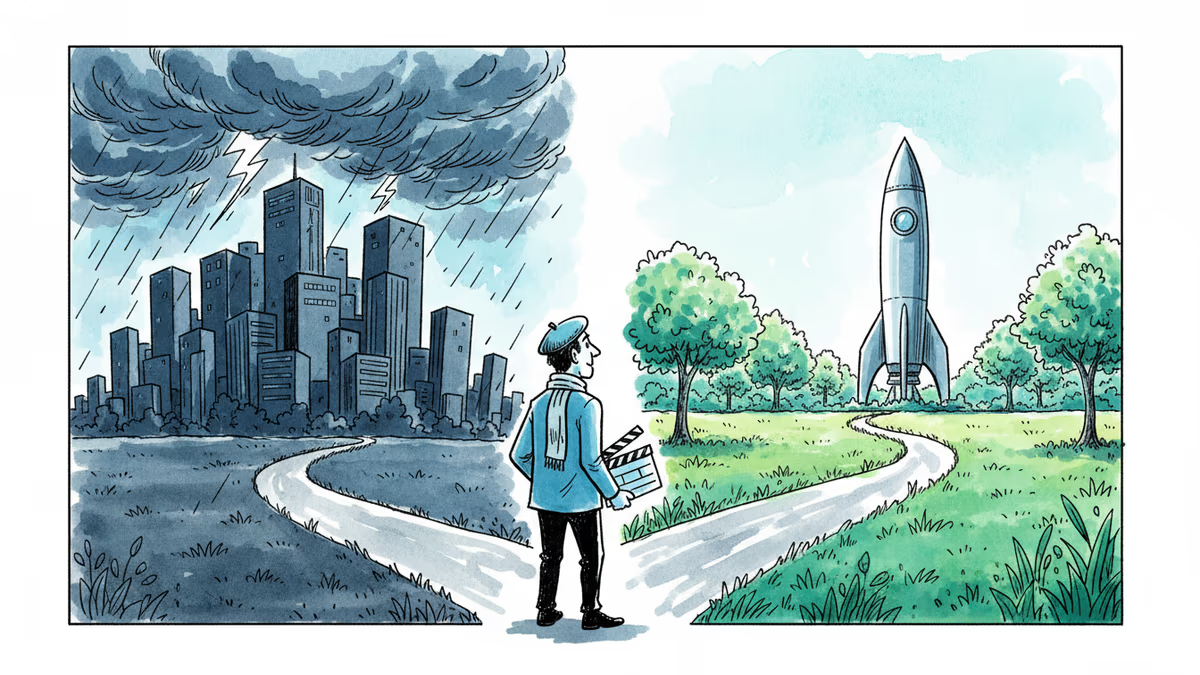
Hollywood Is Hooked on Doom. One Man Is Paying $3.5M to Change That.
XPrize founder Peter Diamandis is launching a $3.5M competition to bring optimistic sci-fi back to screens. Here's why it matters—and why the biggest hurdle isn't funding.
Name the last sci-fi film you watched where technology saved humanity—not from itself, but for itself. Take your time.
The Dystopia Default
If you're struggling to answer, Peter Diamandis noticed the same thing. The XPrize founder, tech investor, and longevity advocate has spent decades at the frontier of what's possible. And lately, he's been bothered by a mismatch: the tools available to solve humanity's biggest problems have never been more powerful or more accessible, yet the stories we tell about the future have never been darker.
"Every science fiction movie I was seeing painted this dystopian vision of the future," he told TechCrunch. "It was always, everything is going wrong, and it's a result of technology. Killer robots, dystopian AIs. It's Black Mirror. It's Terminator. It's Ex Machina. Why would you ever want to live in that future?"
His answer: a $3.5 million competition called the Future Vision XPrize, designed to coax filmmakers into imagining something different.
What the Prize Actually Is
Submissions open March 9 and close August 15, with winners announced September 25. Entrants submit a three-minute trailer. A panel led by production company Range Media Partners will select a shortlist, each receiving funding to produce a 10-minute short film. The grand prize winner gets $2.5 million in production funding toward a feature film, plus a $100,000 cash prize. The winning project will also be featured on crowdfunding platform Republic Film, with the goal of raising an additional $5 million to $10 million for its budget.
The backer list reads like a who's-who of tech optimism: Salesforce CEO Marc Benioff, ARK Invest CEO Cathie Wood, Rod Roddenberry (son of Star Trek creator Gene Roddenberry), and Google. Ben Horowitz of Andreessen Horowitz, Ripple co-founder Jed McCaleb, and actor-producer Seth Green are also among donors. About 15 members of Diamandis's CEO mentorship community, Abundance, contributed nearly half the prize pool.

The competition runs in partnership with the 100 ZEROS initiative—a collaboration between Google and Range Media Partners that helps filmmakers use tools like Google's video generation model Veo and video creation tool Flow.
One notable rule: AI tools are encouraged, but fully AI-generated submissions probably won't win. "I don't want an AI-generated script and an AI-generated film without the human," Diamandis said. "The humanity of it all is really important."
Why Diamandis Thinks Stories Are Infrastructure
This isn't nostalgia for Star Trek reruns. Diamandis credits the show with shaping his entire career—he says watching it as a child gave him the motivation to "go and create and manifest that future." His argument is structural: humans build what they can first imagine. If the only futures on screen are ones worth fleeing, the futures worth building never get built.
He's not speaking abstractly. As co-founder of longevity health tech company Fountain Life (alongside Tony Robbins), he watches AI map the behavior of 40 trillion human cells in real time. He sees the tools of transformation already in people's hands—Google, OpenAI, Anthropic models available to anyone with an internet connection. "The most powerful tools on the planet are free and available to everybody," he said. "We have democratized and demonetized the ability for people to solve problems."
The gap, as he sees it, isn't capability. It's imagination—specifically, the collective failure to picture a future worth working toward.
Three Ways to Read This
For filmmakers and creators, the prize is a rare thing: serious production money attached to a creative brief that pushes against the market's current gravity. Hollywood's dystopia bias isn't arbitrary—dark futures sell. A competition that rewards the opposite is a deliberate market intervention.
For tech investors and the industry, the subtext is harder to miss. The backers here—Andreessen Horowitz, Google, Salesforce, ARK—have a clear interest in a cultural environment that views technology as a force for good. At a moment when AI regulation debates are intensifying globally and public trust in Big Tech sits near historic lows, funding optimistic sci-fi is also, quietly, a form of narrative lobbying.
For audiences, the question is whether the product will actually be good. Optimistic sci-fi has a reputation problem: it can tip into corporate-sponsored utopia, scrubbed of the tension that makes stories worth watching. Diamandis's insistence on human authorship is a hedge against that, but it's not a guarantee.
Authors
Related Articles
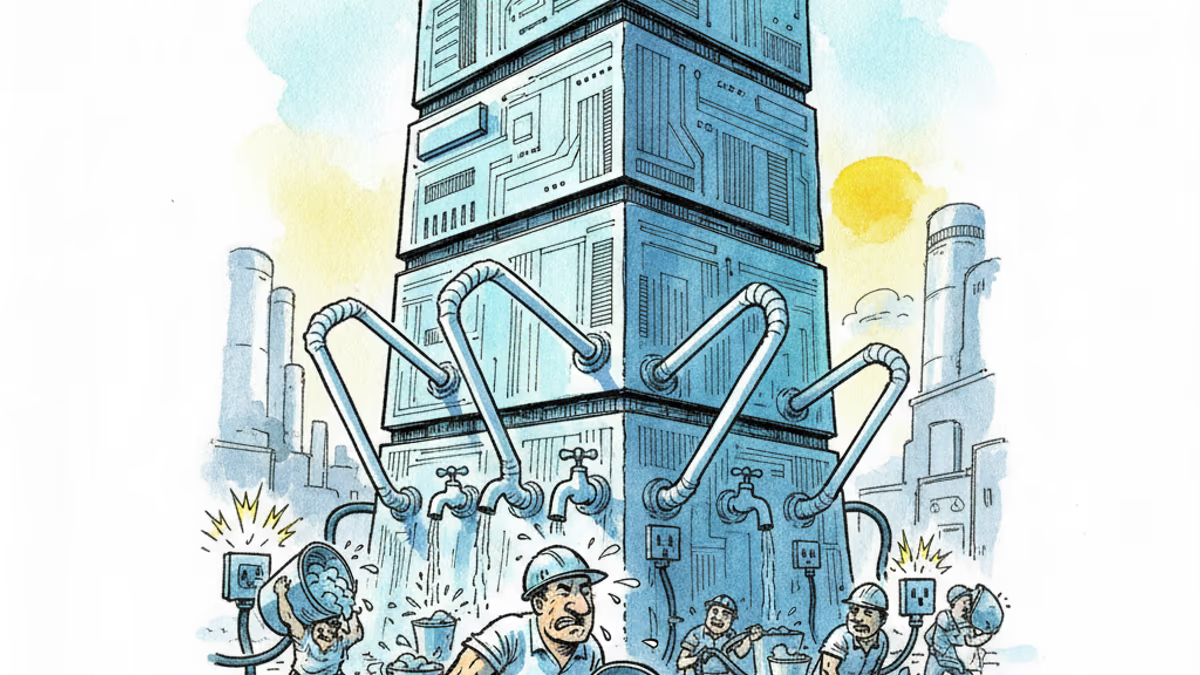
Samsung and SK unveiled a chip and AI investment package worth thousands of trillions of won on June 29. The headline number swings wildly by outlet, but the real contest isn't capital — it's water and power.
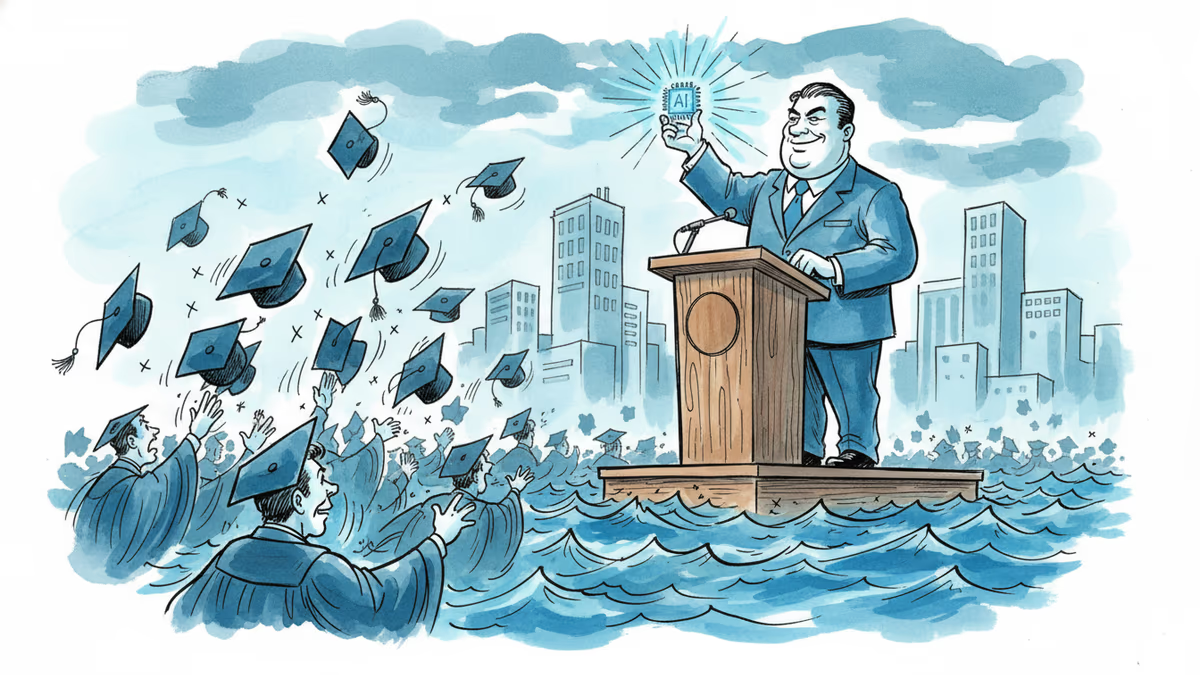
Viral videos show 2026 graduates jeering executives who praise AI at commencement ceremonies. It's not just rudeness — it's a signal about who pays for technological optimism.

Filipino virtual assistants using AI to ghost-manage LinkedIn profiles for executives is now a structured industry. 30 comments a day, fake engagement rings, and a platform struggling to tell real from fabricated.
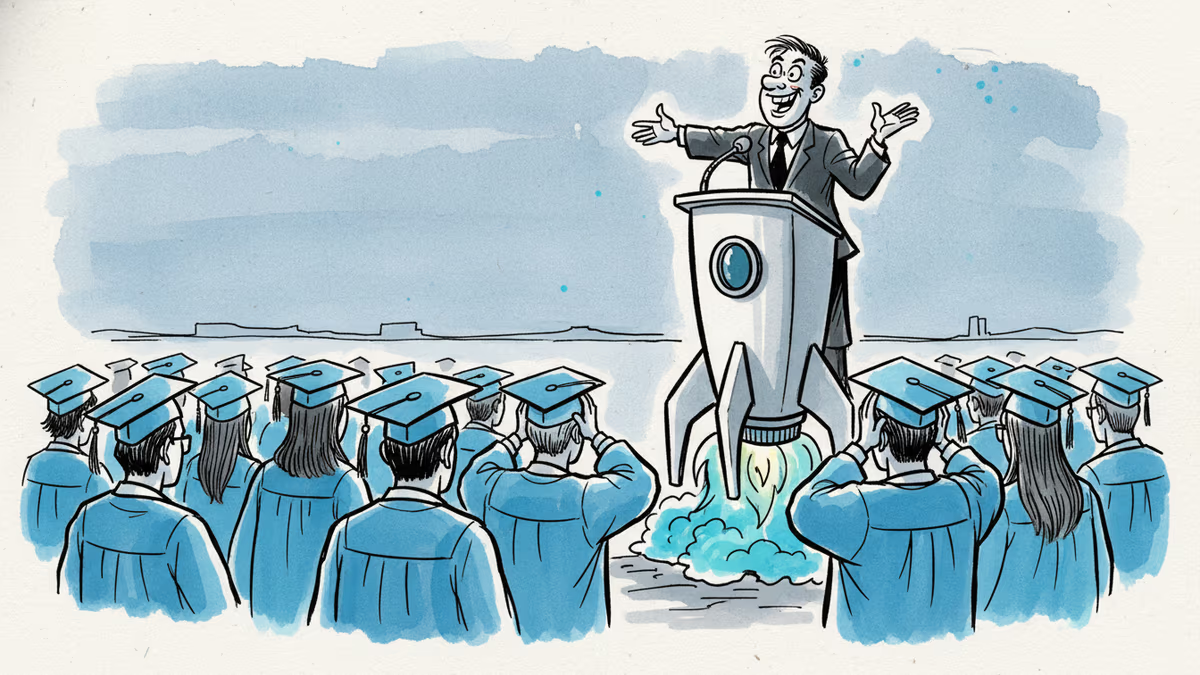
Two commencement speakers learned the hard way that AI enthusiasm doesn't land well with today's graduates. The backlash reveals a widening gap between tech optimism and Gen Z's economic reality.
Samsung and SK unveiled a chip and AI investment package worth thousands of trillions of won on June 29. The headline number swings wildly by outlet, but the real contest isn't capital — it's water and power.
Viral videos show 2026 graduates jeering executives who praise AI at commencement ceremonies. It's not just rudeness — it's a signal about who pays for technological optimism.
Filipino virtual assistants using AI to ghost-manage LinkedIn profiles for executives is now a structured industry. 30 comments a day, fake engagement rings, and a platform struggling to tell real from fabricated.
Two commencement speakers learned the hard way that AI enthusiasm doesn't land well with today's graduates. The backlash reveals a widening gap between tech optimism and Gen Z's economic reality.
Thoughts
Share your thoughts on this article
Sign in to join the conversation