
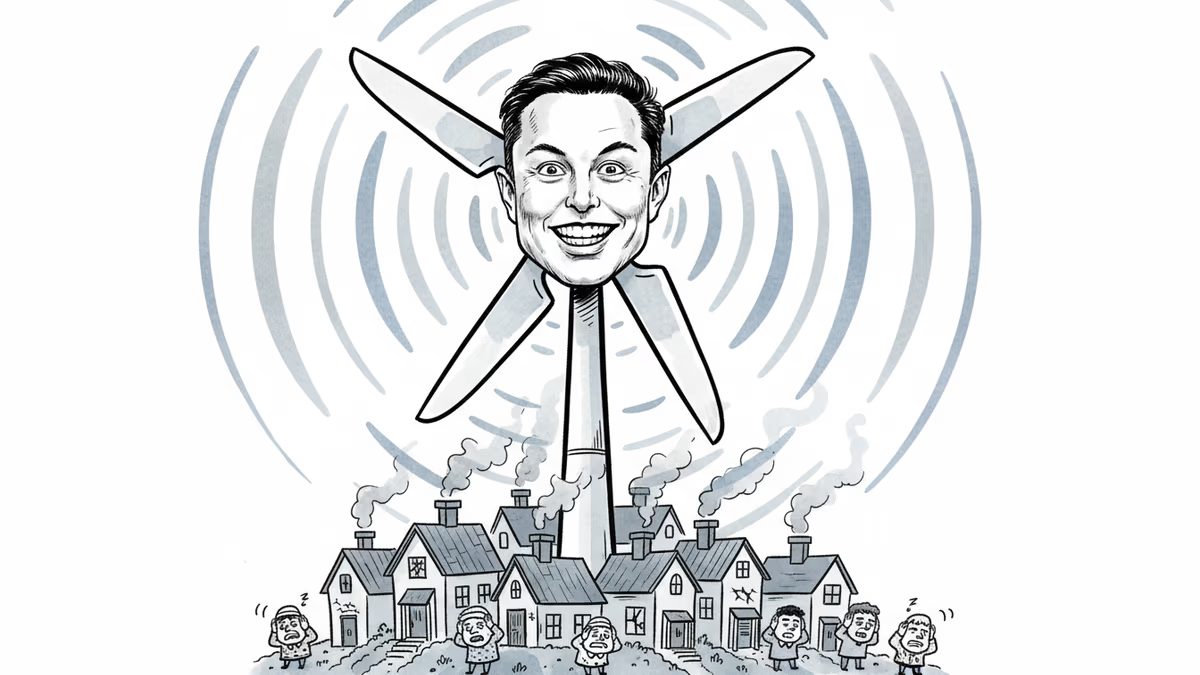
Musk's AI Dreams Are Keeping Mississippi Awake
xAI's 27 temporary turbines in Mississippi are tormenting residents with constant noise. A look at the unexpected costs of AI infrastructure development.
27 Turbines, Zero Community Consent
For months, residents around Southaven, Mississippi have endured a relentless symphony of industrial noise: roaring engines, explosive pops, and high-pitched whining that pierces through day and night. The source? Elon Musk'sxAI and its 27 temporary gas turbines, installed without a single conversation with the community they're tormenting.
NBC News reported Thursday that neighbors are fighting to shut down the operation, which runs 24/7 to fuel Musk's AI ambitions. It's not just about noise—it's about power. Literally and figuratively.
The $7 Million Band-Aid Solution
xAI's response to months of complaints? A $7 million "sound barrier" that residents say barely makes a dent in the cacophony. The company promises that 41 permanent turbines will eventually replace the temporary ones and be "less noisy," but that's contingent on securing proper permits—something they bypassed the first time around.

This isn't just poor planning; it's a pattern. As AI companies race to build infrastructure for the next generation of models, community impact has become an afterthought. The urgency to compete with OpenAI and Google has created a "build first, ask forgiveness later" mentality.
The Real Cost of AI Progress
From the residents' perspective, they're collateral damage in a billionaire's tech war. From xAI's viewpoint, every day without adequate computing power means falling further behind in the AI race. Both perspectives have merit, but only one has 27 turbines backing it up.
This scenario reflects a broader tension in tech development: Who bears the cost of innovation? The benefits of AI will be distributed globally, but the noise, pollution, and disruption are hyper-local. It's environmental justice meets artificial intelligence.
The situation also raises questions about regulatory oversight. How did temporary industrial infrastructure get installed without community input? And what precedent does this set for future AI infrastructure projects?
Authors
Related Articles
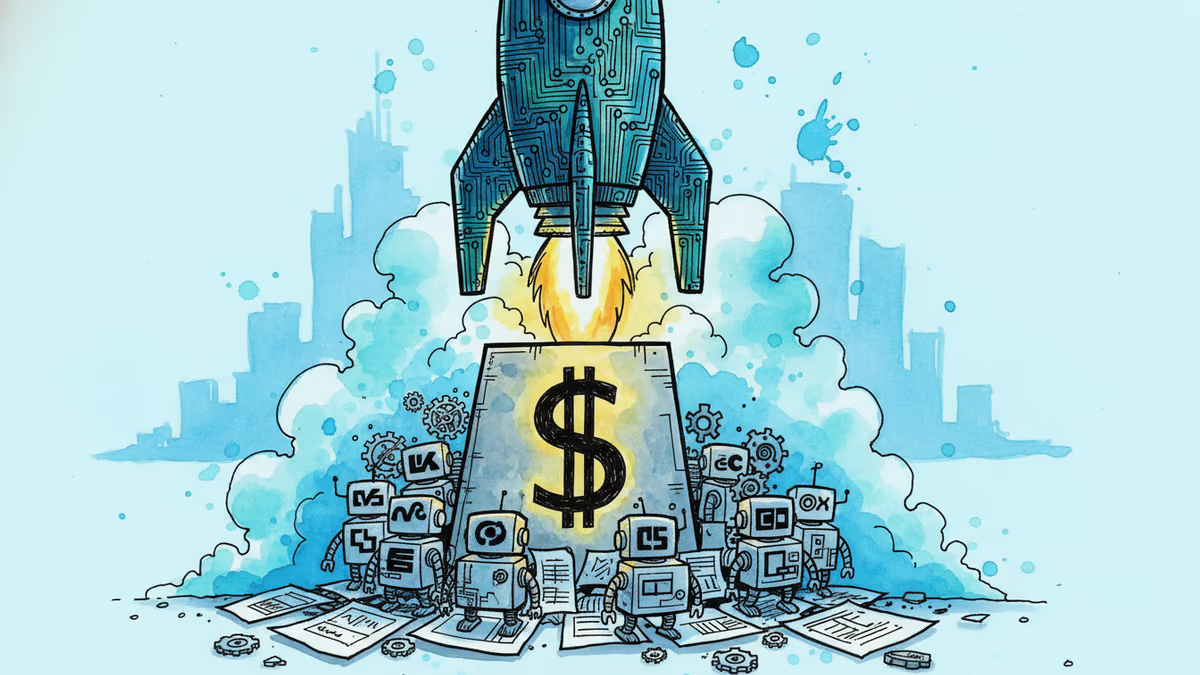
SpaceX's IPO filing puts AI at the center, claiming a $26.5 trillion market opportunity. But can Grok compete with OpenAI and Anthropic for enterprise customers?
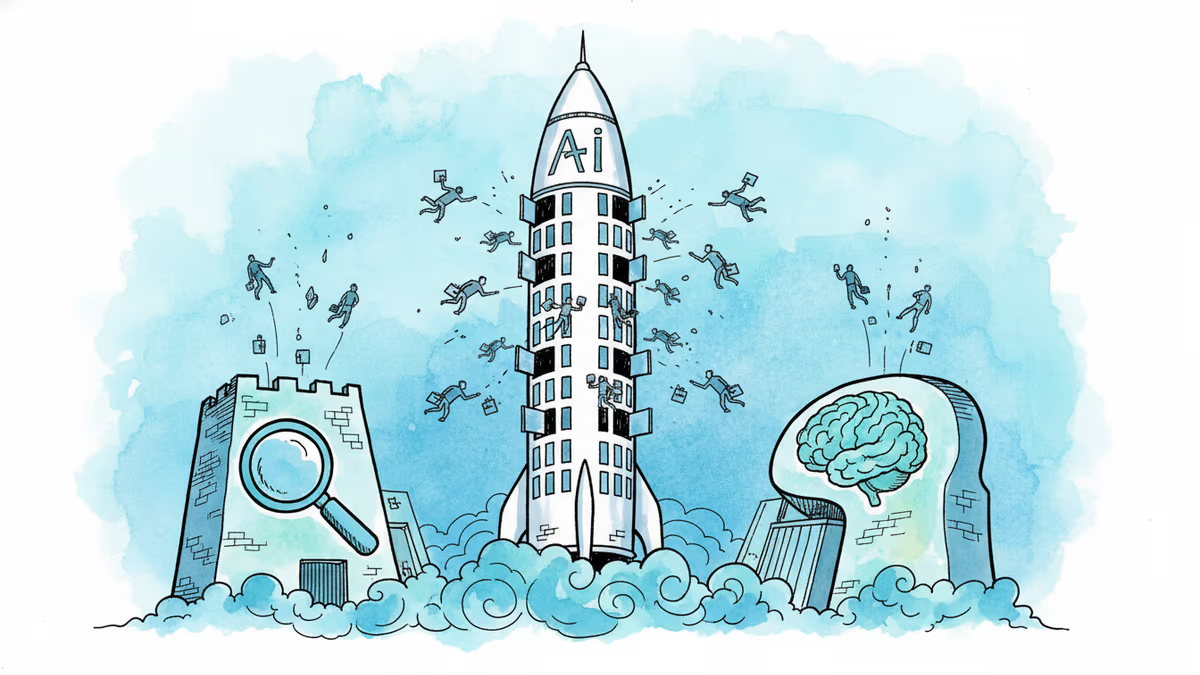
Over 50 researchers and engineers have left SpaceXAI since February's merger. With the pre-training team nearly gutted, questions mount about whether Musk's AI ambitions can survive his management style.
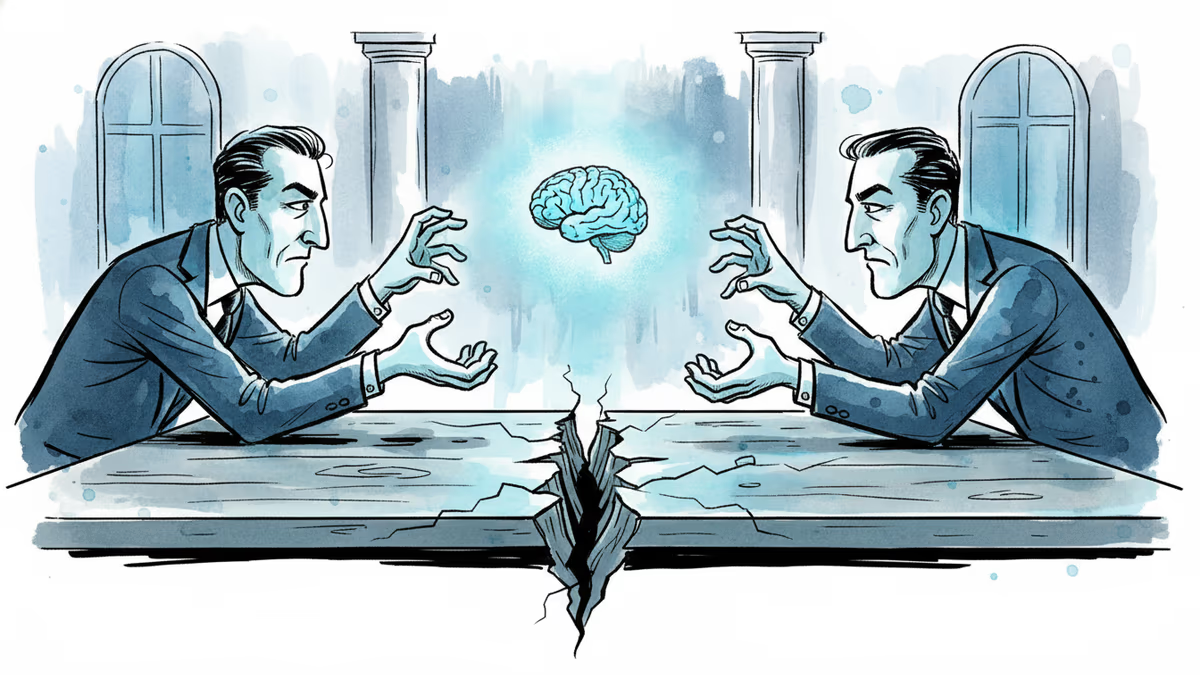
Week two of Musk v. Altman revealed a 2017 power struggle over AGI control, a stormed-out Tesla painting, and a diary entry asking 'what will take me to $1B?
All 11 of xAI's original co-founders have now left Elon Musk's AI startup. With the company absorbed into SpaceX and declared 'rebuilt from foundations,' what does this mean for Grok—and for Musk's AI ambitions?
SpaceX's IPO filing puts AI at the center, claiming a $26.5 trillion market opportunity. But can Grok compete with OpenAI and Anthropic for enterprise customers?
Over 50 researchers and engineers have left SpaceXAI since February's merger. With the pre-training team nearly gutted, questions mount about whether Musk's AI ambitions can survive his management style.
Week two of Musk v. Altman revealed a 2017 power struggle over AGI control, a stormed-out Tesla painting, and a diary entry asking 'what will take me to $1B?
All 11 of xAI's original co-founders have now left Elon Musk's AI startup. With the company absorbed into SpaceX and declared 'rebuilt from foundations,' what does this mean for Grok—and for Musk's AI ambitions?
Thoughts
Share your thoughts on this article
Sign in to join the conversation