
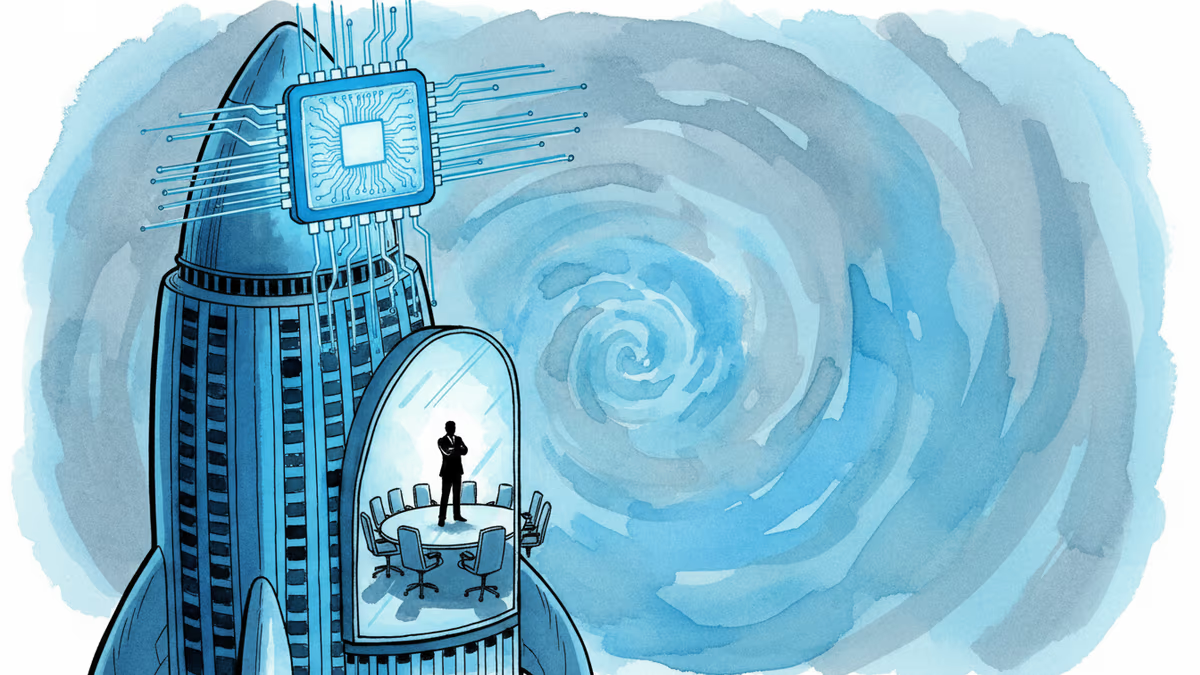
xAI's Last Co-Founders Are Gone. What's Left?
All 11 of xAI's original co-founders have now left Elon Musk's AI startup. With the company absorbed into SpaceX and declared 'rebuilt from foundations,' what does this mean for Grok—and for Musk's AI ambitions?
Eleven Co-Founders. Zero Remaining.
When Elon Musk launched xAI in 2023, he brought 11 co-founders on board. As of this week, that number stands at zero.
According to Business Insider, the final two co-founders—Manuel Kroiss and Ross Nordeen—have both left the company. Kroiss, who led xAI's pretraining team, told people he was departing earlier this month. Nordeen, widely described as Musk's "right-hand operator," followed him out the door last Friday. Both reported directly to Musk. TechCrunch has reached out to xAI for comment.
The timing is hard to ignore. Just weeks ago, Musk publicly admitted that xAI "was not built right the first time around" and announced it was being "rebuilt from the foundations up." The company is now folding into SpaceX, which is reportedly planning an IPO—bringing SpaceX, xAI, and X (formerly Twitter) under one corporate umbrella.
Why This Matters Beyond the Headlines
Co-founder departures happen in Silicon Valley every week. But the complete erasure of a founding team—every single one of 11 people—within roughly two years of launch is a different signal.

Kroiss wasn't a peripheral figure. Leading the pretraining team means he was central to how Grok, xAI's flagship model, actually learns. His exit raises a practical question: who now owns the technical direction of xAI's next-generation models? Nordeen's background adds another layer—he came from Tesla and was reportedly involved in orchestrating the mass layoffs at Twitter after Musk's $44 billion acquisition in 2022. These weren't peripheral hires. They were the architecture of the company.
Meanwhile, xAI's merger into SpaceX is not a quiet corporate reshuffling. It's a consolidation of Musk's most powerful assets at exactly the moment SpaceX is eyeing public markets. The question of how xAI's valuation—and its talent gaps—will be presented to future IPO investors is not a small one.
Three Ways to Read the Exodus
For AI researchers and engineers: The departure of a pretraining lead mid-rebuild is a technical red flag. AI model development is not a relay race where one runner hands the baton cleanly to the next. Institutional knowledge about model architecture, training data decisions, and failure modes lives in people's heads. Losing that, during a declared "rebuild," compounds the risk.
For investors watching the SpaceX IPO: AI startup valuations are built as much on team credibility as on benchmarks. When the founding team vanishes, the story investors are buying changes. xAI without its co-founders is effectively a different company than the one that launched with fanfare in 2023—and that reframing will need to be priced in.
***For Musk's competitors—Anthropic, OpenAI, Google DeepMind:*** Talent doesn't disappear. Eleven co-founders and their networks are now on the market. The question of where Kroiss, Nordeen, and the others land—and whether they build something new—may turn out to be the more interesting follow-up story.
Authors
Related Articles
American Airlines just signed Starlink for 500+ aircraft. It's not just about faster inflight internet — it's a calculated move in the run-up to what could be the largest IPO in history.
SpaceX's upgraded Starship V3 completed its first test flight, deploying 20 Starlink simulators but losing the Super Heavy booster. With an IPO weeks away, the stakes just got higher.
SpaceX's IPO filing puts AI at the center, claiming a $26.5 trillion market opportunity. But can Grok compete with OpenAI and Anthropic for enterprise customers?
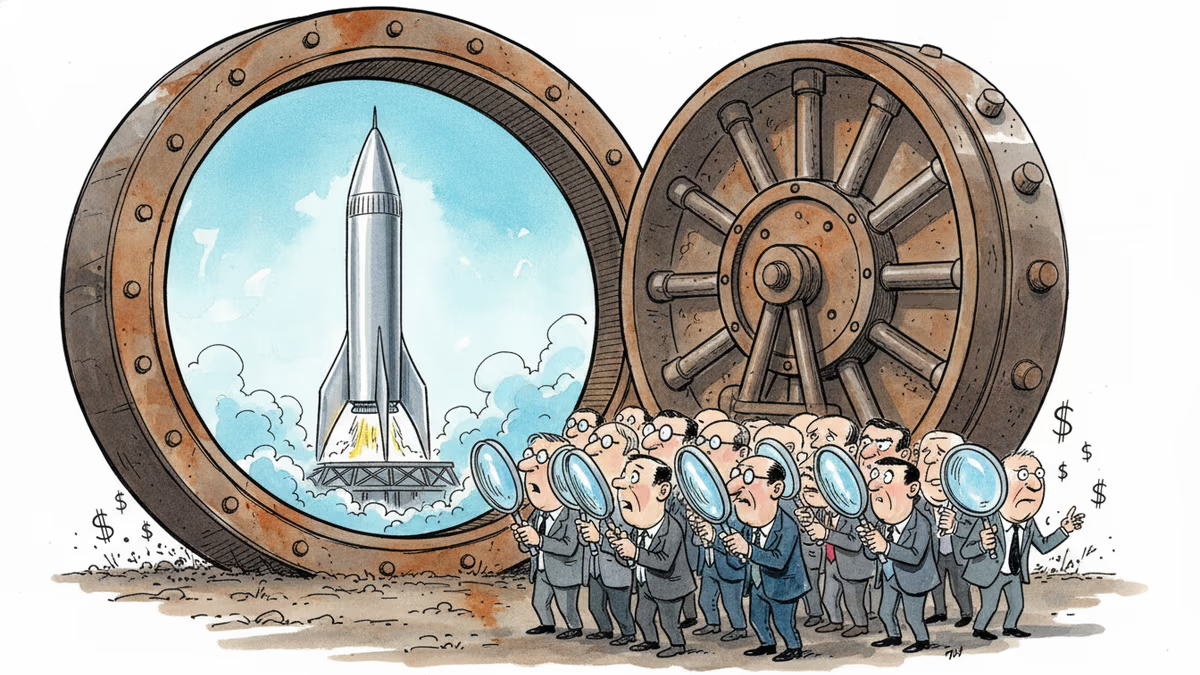
SpaceX filed a nearly 400-page S-1 with the SEC, targeting an IPO as early as June 12. Here's what the filing reveals—and what it doesn't.
American Airlines just signed Starlink for 500+ aircraft. It's not just about faster inflight internet — it's a calculated move in the run-up to what could be the largest IPO in history.
SpaceX's upgraded Starship V3 completed its first test flight, deploying 20 Starlink simulators but losing the Super Heavy booster. With an IPO weeks away, the stakes just got higher.
SpaceX's IPO filing puts AI at the center, claiming a $26.5 trillion market opportunity. But can Grok compete with OpenAI and Anthropic for enterprise customers?
SpaceX filed a nearly 400-page S-1 with the SEC, targeting an IPO as early as June 12. Here's what the filing reveals—and what it doesn't.
Thoughts
Share your thoughts on this article
Sign in to join the conversation