
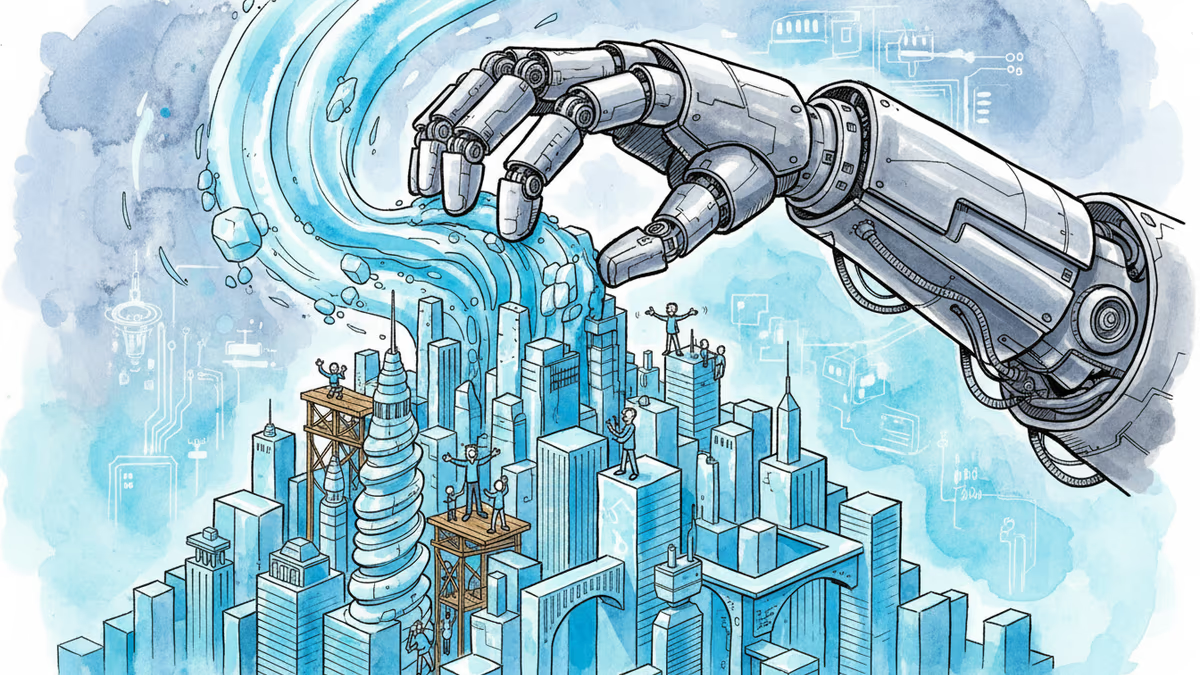
The $200M Bet That Could Reshape How We Build Worlds
Fei-Fei Li's World Labs secures $200M from Autodesk in a strategic partnership that could transform 3D creation from entertainment to architecture. But will AI democratize design or just create new gatekeepers?
When $200 Million Moves in 48 Hours
Fei-Fei Li's World Labs just landed a $200 million investment from 3D software giant Autodesk. This isn't just another AI funding round. It's a strategic partnership that could reshape how we think about creating digital worlds—from blockbuster movies to the buildings we live in.
World Labs emerged from stealth last year at a $1 billion valuation. Now, reports suggest it's in talks for funding at $5 billion. That's 5x growth in less than a year, signaling something bigger than hype is happening here.
Beyond Pretty Pictures: AI That Understands Physics
World Labs' first product, Marble, launched last November. Unlike image generators that create flat pictures, it builds interactive 3D environments you can actually walk through. Type "office layout" and get a space governed by real-world physics and geometry.
Autodesk's chief scientist Daron Green explains the collaboration: "You might start with a world-model sketch in World Labs and then drill down on design aspects where our tech comes in. Or take an object designed in our platform and place it in a context created through their prompts."
This isn't about replacing human designers—it's about augmenting their capabilities with AI that understands how things work in the real world.

The Gaming Gateway Strategy
Both companies are starting with media and entertainment, following the playbook of competitors like Google DeepMind and Runway. Gaming offers a natural testing ground where physics don't need to be perfect, just convincing.
But Autodesk's involvement signals bigger ambitions. The company powers workflows for architecture, engineering, construction, and manufacturing. Green envisions AI systems that don't just animate a dog, but "give it a world within which it can interact."
The $10 Billion Question: Who Controls the Tools?
This partnership reveals a critical shift in the AI landscape. While OpenAI and Anthropic focus on language, World Labs is betting on spatial intelligence—AI that understands the 3D world we actually live in.
For creators, this could be transformative. Independent game developers might finally compete with AAA studios. Architects could prototype buildings in minutes instead of weeks. But it also raises questions about dependency. What happens when a handful of companies control the tools that create our digital and physical spaces?
The Democratization Paradox
Autodesk already works with most major media production companies and has been training models for character animation. Adding World Labs' capabilities could accelerate adoption across industries that haven't traditionally used AI.
Yet there's a tension here. These tools promise to democratize 3D creation, making it accessible to anyone with an idea. But they also require significant computational resources and technical expertise to deploy at scale.
Authors
Related Articles
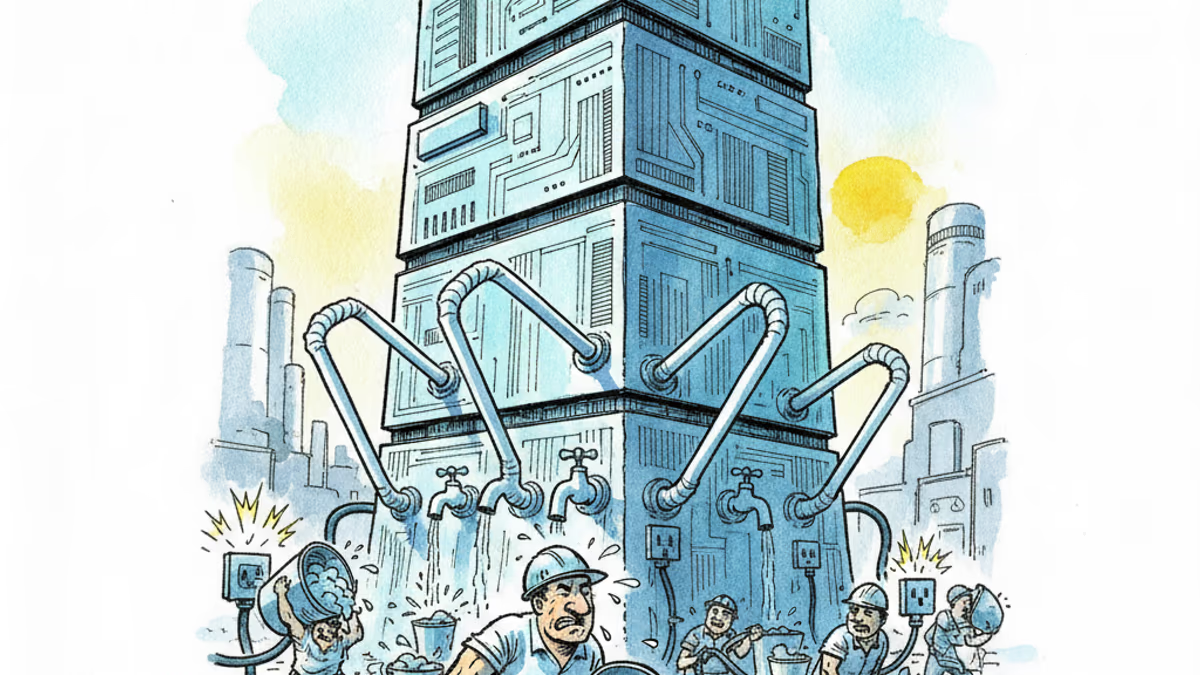
Samsung and SK unveiled a chip and AI investment package worth thousands of trillions of won on June 29. The headline number swings wildly by outlet, but the real contest isn't capital — it's water and power.

Viral videos show 2026 graduates jeering executives who praise AI at commencement ceremonies. It's not just rudeness — it's a signal about who pays for technological optimism.

Filipino virtual assistants using AI to ghost-manage LinkedIn profiles for executives is now a structured industry. 30 comments a day, fake engagement rings, and a platform struggling to tell real from fabricated.
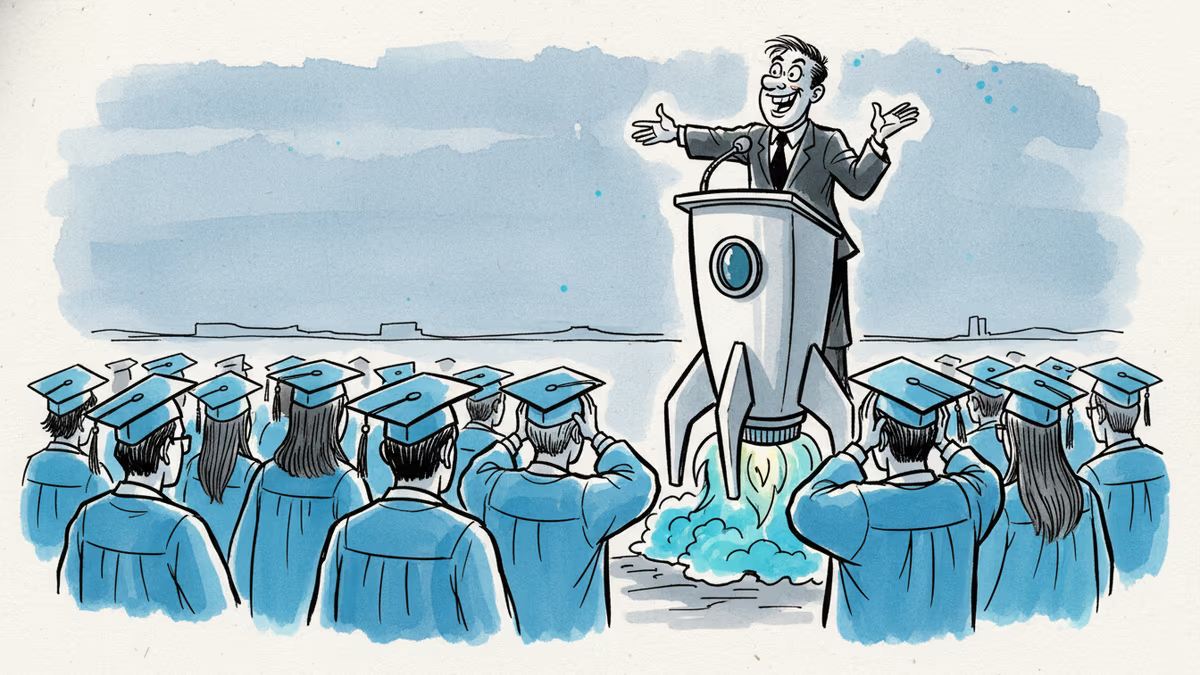
Two commencement speakers learned the hard way that AI enthusiasm doesn't land well with today's graduates. The backlash reveals a widening gap between tech optimism and Gen Z's economic reality.
Samsung and SK unveiled a chip and AI investment package worth thousands of trillions of won on June 29. The headline number swings wildly by outlet, but the real contest isn't capital — it's water and power.
Viral videos show 2026 graduates jeering executives who praise AI at commencement ceremonies. It's not just rudeness — it's a signal about who pays for technological optimism.
Filipino virtual assistants using AI to ghost-manage LinkedIn profiles for executives is now a structured industry. 30 comments a day, fake engagement rings, and a platform struggling to tell real from fabricated.
Two commencement speakers learned the hard way that AI enthusiasm doesn't land well with today's graduates. The backlash reveals a widening gap between tech optimism and Gen Z's economic reality.
Thoughts
Share your thoughts on this article
Sign in to join the conversation