
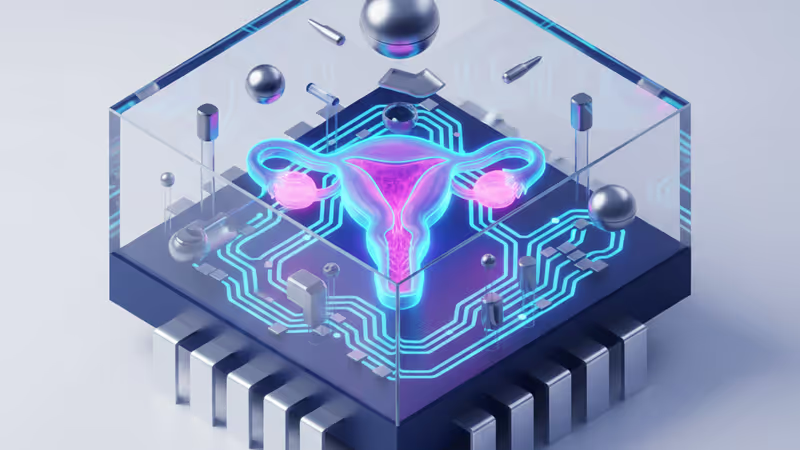
World's First Mini-Womb on a Chip Unlocks Secrets of Human Life
A China-led team has developed the world's first mini-womb on a chip, replicating human embryo implantation to solve infertility mysteries and improve IVF success.
The 'black box' of early human pregnancy is finally opening. A China-led research team has successfully built the world's first mini-womb on a chip that can fully replicate the complex process of an embryo 'invading' the uterine lining.
Understanding Infertility Through the World's First Mini-Womb on a Chip
The study, led by the Chinese Academy of Sciences Institute of Zoology, utilizes a 3D model on a microfluidic chip to mimic the uterine environment. This breakthrough allows scientists to observe the critical first week of implantation—a stage that was previously nearly impossible to study due to ethical and technical constraints.

According to the researchers, this technology isn't just about observation; it's a path toward personalized treatments for women struggling with infertility. By identifying why an implantation fails on a cellular level, doctors can tailor interventions for individual patients, potentially increasing the success rates of IVF procedures.
The Shift to Organ-on-a-Chip Technology
This innovation represents a broader shift in biotechnology toward Organ-on-a-Chip models. These chips provide more accurate data than animal testing, as they use actual human cells to simulate biological responses. The team plans to use this model to test the safety of medications during early pregnancy, ensuring better outcomes for both mother and child.
Authors
Related Articles
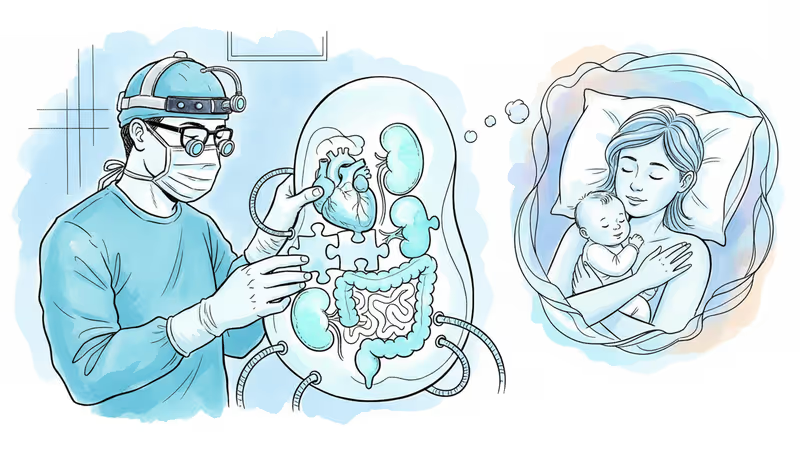
A groundbreaking surgical procedure temporarily relocates reproductive organs during cancer treatment, allowing patients to preserve fertility. Baby Lucien represents hope for thousands facing this devastating choice.
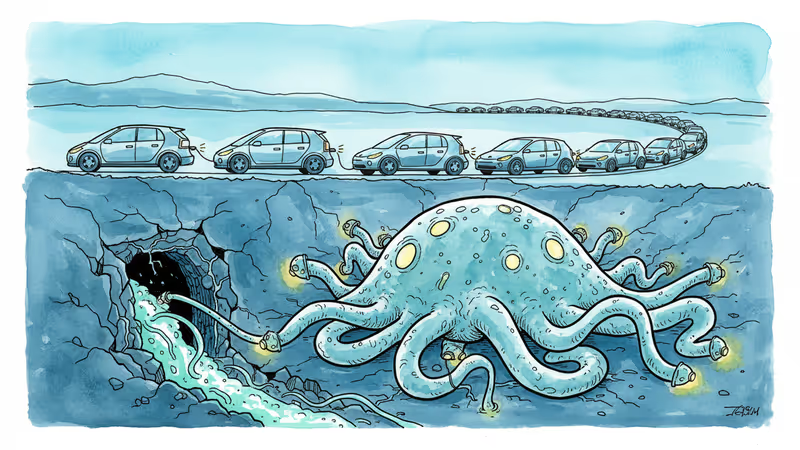
As high-grade ore depletes, biotech startups are engineering microbes to extract metals from aging mines and waste. But can biology scale fast enough for the EV boom?
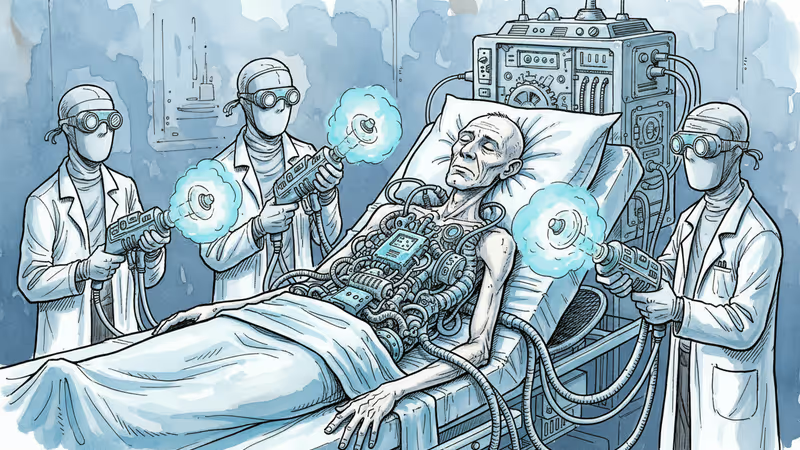
A 33-year-old man survived 48 hours with no lungs using a custom artificial lung system at Northwestern University, opening new possibilities for previously hopeless transplant cases.

As of January 1, 2026, the EU has officially restricted desflurane, a potent anesthetic gas. Learn how this 7,000x warming pollutant is being removed from hospitals worldwide.
A groundbreaking surgical procedure temporarily relocates reproductive organs during cancer treatment, allowing patients to preserve fertility. Baby Lucien represents hope for thousands facing this devastating choice.
As high-grade ore depletes, biotech startups are engineering microbes to extract metals from aging mines and waste. But can biology scale fast enough for the EV boom?
A 33-year-old man survived 48 hours with no lungs using a custom artificial lung system at Northwestern University, opening new possibilities for previously hopeless transplant cases.
As of January 1, 2026, the EU has officially restricted desflurane, a potent anesthetic gas. Learn how this 7,000x warming pollutant is being removed from hospitals worldwide.
Thoughts
Share your thoughts on this article
Sign in to join the conversation