
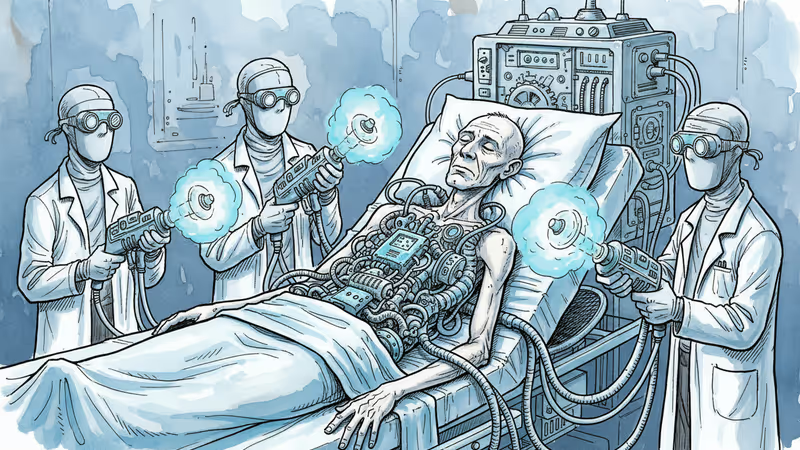
Man Lives 48 Hours Without Lungs: Artificial System Rewrites Medical Limits
A 33-year-old man survived 48 hours with no lungs using a custom artificial lung system at Northwestern University, opening new possibilities for previously hopeless transplant cases.
Humans can't live without lungs. Except for 48 hours last year, when a 33-year-old man proved that assumption wrong. In a surgical suite at Northwestern University, he survived with an empty chest cavity where his lungs used to be, kept alive by a custom-engineered artificial device that represented medicine's most desperate—and successful—gamble.
When Last-Resort Antibiotics Fail
The patient had been perfectly healthy before Influenza B struck. But the viral infection opened the door to something far worse: Pseudomonas aeruginosa, a bacterial infection that laughed at carbapenem antibiotics—our weapons of last resort.
This deadly combination triggered acute respiratory distress syndrome (ARDS), where lungs become so inflamed and waterlogged that oxygen can no longer reach the bloodstream. Traditional treatments had failed. The man was dying, and conventional medicine had run out of options.
Rewriting the Rules of Survival
Ankit Bharat, a surgeon-researcher at Northwestern, faced an impossible choice. Bilateral pneumonectomy—removing both lungs entirely—had always been considered a death sentence. No human had ever survived long enough without lungs to receive a transplant.
But Bharat's team had built something unprecedented: a custom artificial lung system that could temporarily replace the entire pulmonary function. The device would need to oxygenate blood, remove carbon dioxide, and maintain circulation—essentially becoming the patient's respiratory system.

For 48 hours, this synthetic surrogate performed flawlessly. The patient remained stable enough to undergo a double lung transplant, something previously considered physiologically impossible.
Beyond One Patient's Story
This breakthrough creates a blueprint for saving patients transplant teams had written off as beyond hope. The artificial lung system proves that the gap between organ removal and transplantation doesn't have to be fatal.
The implications extend far beyond emergency medicine. Patients with end-stage lung disease, those whose conditions deteriorate while waiting for donors, and victims of severe respiratory infections now have a potential bridge to survival.
However, significant challenges remain. Each system must be custom-engineered for individual patients, requiring specialized expertise and substantial resources. The technology isn't ready for widespread deployment, but it demonstrates what's possible when engineering meets desperation.
The Regulatory and Ethical Landscape
As this technology develops, regulators will face complex questions about approval processes for life-saving devices that exist in uncharted medical territory. How do you test something when failure means death, but the alternative is certain death anyway?
Insurance coverage presents another hurdle. Custom-built artificial organ systems will likely carry enormous costs, raising questions about healthcare equity and resource allocation.
Authors
Related Articles
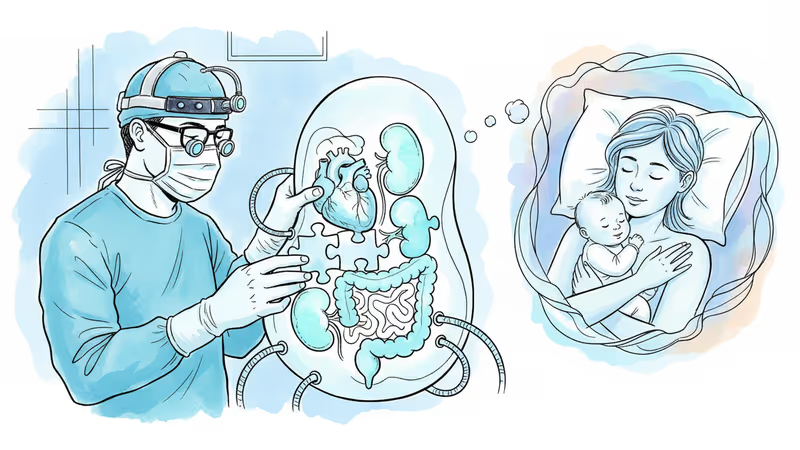
A groundbreaking surgical procedure temporarily relocates reproductive organs during cancer treatment, allowing patients to preserve fertility. Baby Lucien represents hope for thousands facing this devastating choice.
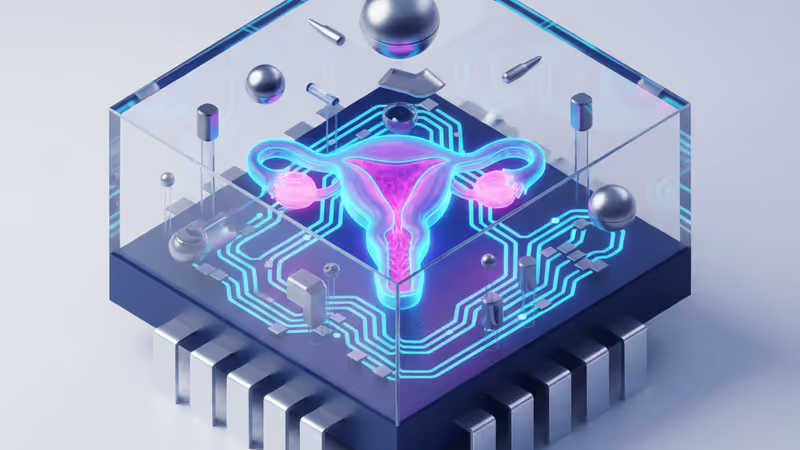
A China-led team has developed the world's first mini-womb on a chip, replicating human embryo implantation to solve infertility mysteries and improve IVF success.
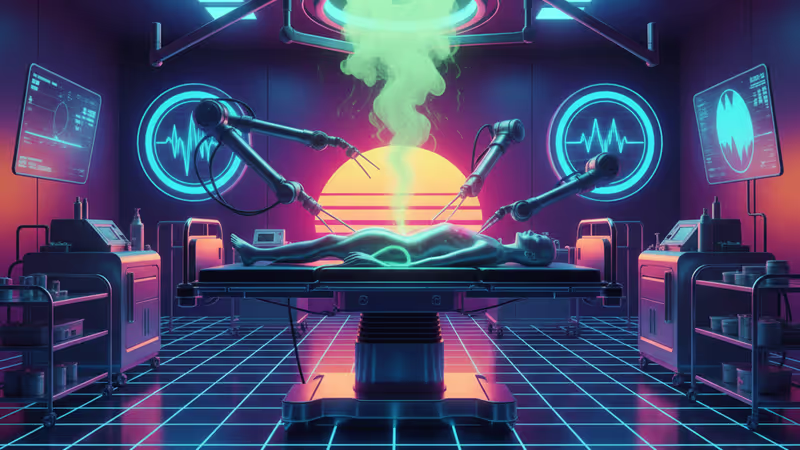
As of January 1, 2026, the EU has officially restricted desflurane, a potent anesthetic gas. Learn how this 7,000x warming pollutant is being removed from hospitals worldwide.

In a world-first, surgeons in China successfully reattached a woman's severed ear by first grafting it to her foot. This radical approach to microsurgery could change how severe trauma injuries are treated.
A groundbreaking surgical procedure temporarily relocates reproductive organs during cancer treatment, allowing patients to preserve fertility. Baby Lucien represents hope for thousands facing this devastating choice.
A China-led team has developed the world's first mini-womb on a chip, replicating human embryo implantation to solve infertility mysteries and improve IVF success.
As of January 1, 2026, the EU has officially restricted desflurane, a potent anesthetic gas. Learn how this 7,000x warming pollutant is being removed from hospitals worldwide.
In a world-first, surgeons in China successfully reattached a woman's severed ear by first grafting it to her foot. This radical approach to microsurgery could change how severe trauma injuries are treated.
Thoughts
1 thoughts
Share your thoughts on this article
Sign in to join the conversation