

Surgeons Save Patient's Severed Ear By Grafting It to Her Foot in World-First Procedure
In a world-first, surgeons in China successfully reattached a woman's severed ear by first grafting it to her foot. This radical approach to microsurgery could change how severe trauma injuries are treated.
To save a woman's ear, doctors first attached it to her foot. In a world-first procedure, surgeons in China have successfully reattached a patient's completely severed ear after keeping it alive for months by grafting it onto her own foot, according to a Monday report from medical news platform Med-J.
A Devastating Accident
The patient suffered life-threatening injuries in a workplace accident this past April. According to Qiu Shenqiang, deputy director of the microsurgery unit at Shandong Provincial Hospital in Jinan, heavy machinery had torn her scalp, neck, and facial skin into multiple fragments. Her ear was “completely severed along with the scalp.”
The hospital's reconstructive microsurgery team immediately attempted to repair the damage, but standard methods failed. The severe damage to the scalp's tissue and vascular network meant there was no viable place to reattach the ear.

An Unconventional Lifeline
Facing a dead end, the surgical team opted for a radical solution: they grafted the ear onto the patient's foot. This unconventional move used the rich blood supply in her foot as a temporary incubator, providing the necessary circulation to keep the ear's delicate tissues alive while her scalp healed.
The strategy worked. After several months, once the patient's head injuries had sufficiently recovered, the surgeons performed a second operation to transfer the ear from her foot back to its proper place, successfully completing the reconstruction.
Authors
Related Articles
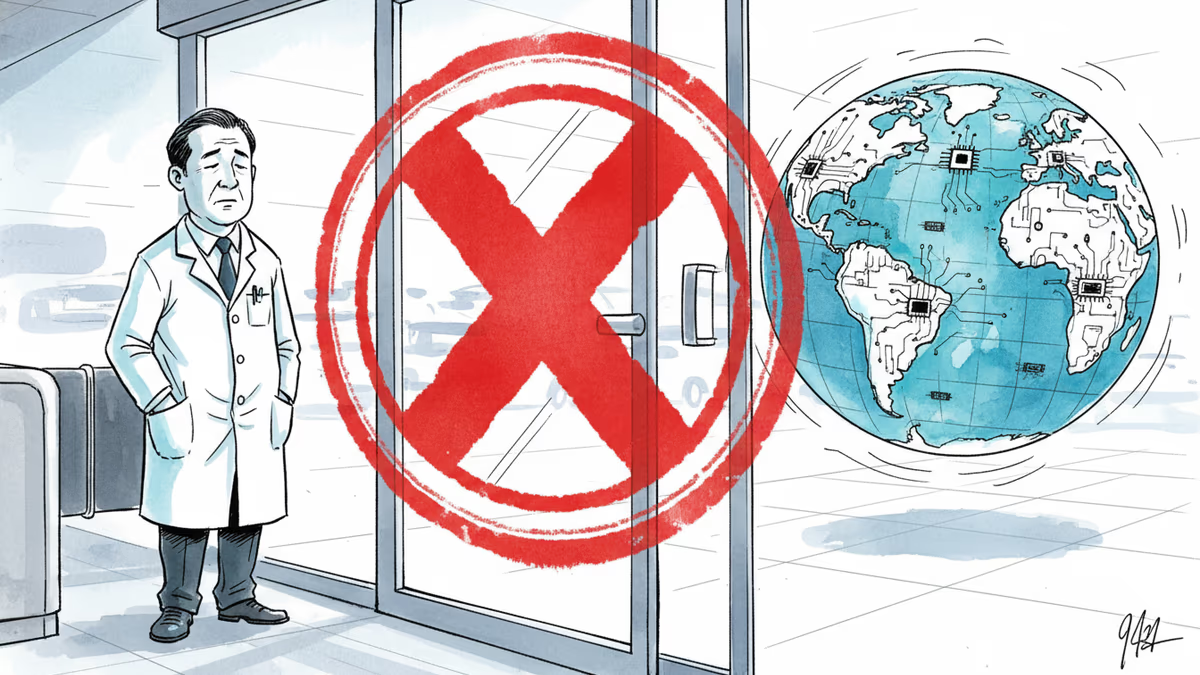
China is restricting AI researchers and startup founders from traveling abroad as the U.S.-China AI performance gap narrows to just 2.7%. What Beijing's talent lockdown means for the global AI race.

Western automakers lost two-thirds of China's EV market share. Everyone blames subsidies, but they account for just 5% of BYD's $4,700 cost advantage over Tesla. The real story is structural.

Stanford-Princeton study reveals systematic censorship in Chinese AI models. DeepSeek refuses 36% of sensitive questions while US models refuse less than 3%.
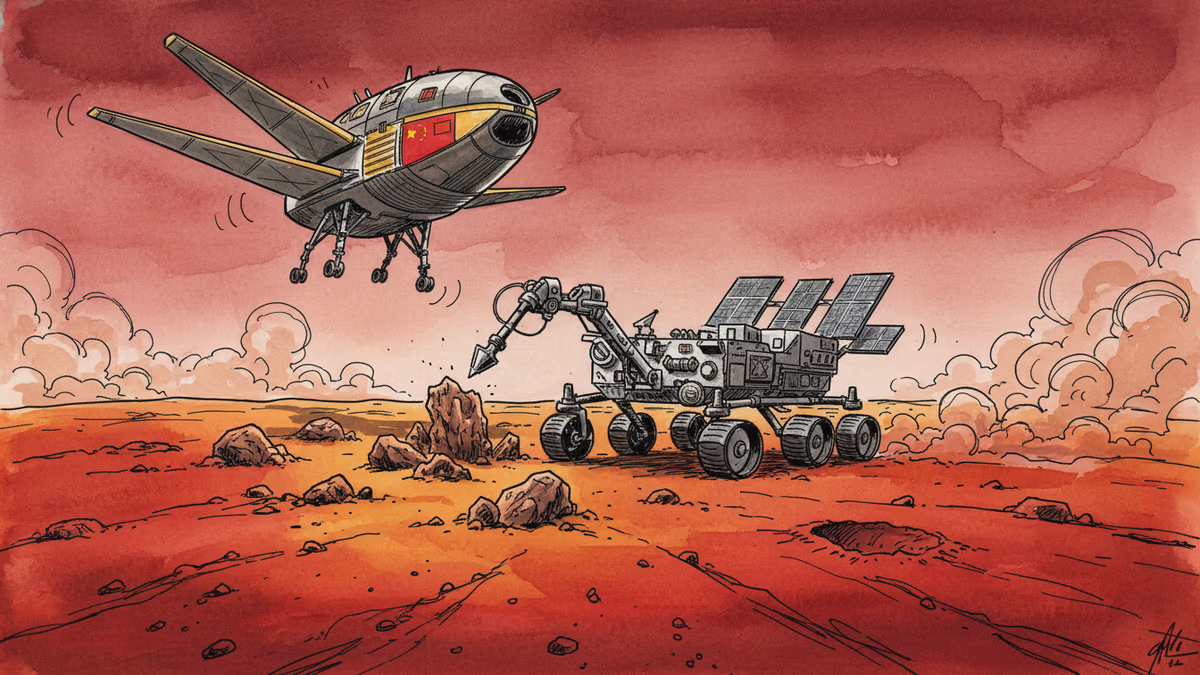
Despite NASA's promising discovery of potential microbial traces on Mars, budget cuts have stalled the sample return mission while China races ahead with its own plan.
China is restricting AI researchers and startup founders from traveling abroad as the U.S.-China AI performance gap narrows to just 2.7%. What Beijing's talent lockdown means for the global AI race.
Western automakers lost two-thirds of China's EV market share. Everyone blames subsidies, but they account for just 5% of BYD's $4,700 cost advantage over Tesla. The real story is structural.
Stanford-Princeton study reveals systematic censorship in Chinese AI models. DeepSeek refuses 36% of sensitive questions while US models refuse less than 3%.
Despite NASA's promising discovery of potential microbial traces on Mars, budget cuts have stalled the sample return mission while China races ahead with its own plan.
Thoughts
Share your thoughts on this article
Sign in to join the conversation