
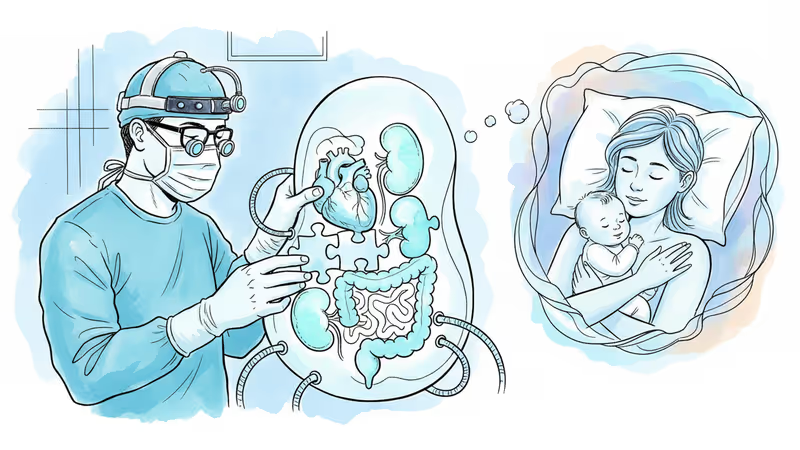
Moving Wombs to Save Dreams: The Surgery Revolutionizing Cancer Care
A groundbreaking surgical procedure temporarily relocates reproductive organs during cancer treatment, allowing patients to preserve fertility. Baby Lucien represents hope for thousands facing this devastating choice.
When a 28-year-old woman received her rectal cancer diagnosis, doctors presented her with medicine's cruelest trade-off: save your life or save your chance at motherhood.
But a Swiss surgeon offered a third option that sounds like science fiction: temporarily move her uterus and ovaries out of radiation's path, then put them back when treatment ends.
Last week, that woman welcomed baby Lucien—Europe's first birth after this experimental procedure. He's living proof that sometimes the impossible just needs someone brave enough to try it.
The Devastating Choice Cancer Patients Face
Radiation therapy for bowel and rectal cancers doesn't discriminate. While it destroys tumor cells, it also devastates reproductive organs in the pelvis. The damage is often irreversible—radiation can prevent fertilized eggs from implanting and leave uterine muscles unable to stretch during pregnancy.
Daniela Huber, the gyno-oncologist at Sion Hospital who performed the surgery, explains the cruel irony: "We can freeze eggs before treatment, but if the uterus is damaged, patients can never carry their own pregnancy." In countries like Switzerland where surrogacy is illegal, frozen eggs become a painful reminder of lost possibilities.
For young cancer patients, this creates an agonizing psychological burden alongside their medical battle. They're not just fighting for survival—they're mourning a future they may never have.
A Brazilian Pioneer's Bold Vision
The solution came from Reitan Ribeiro, a gynecologic oncologist formerly in Brazil who refused to accept "nothing can be done." His 2017 case report described something unprecedented: surgically relocating a patient's uterus, fallopian tubes, and ovaries to the upper abdomen, safely tucked below the ribs.
The procedure sounds complex, but Huber describes it as "delicate dissection" rather than the most difficult surgery. During a 2-3 hour operation, surgeons literally stitch organs to the abdominal wall. After a week, scar tissue forms a lasting attachment in their temporary home.

Ribeiro's first patient had pleaded with multiple doctors to preserve her fertility. When others said impossible, he asked "why not try?"
From Experiment to Hope
Huber's patient recovered for two weeks before beginning cancer treatment. The relocated organs stayed safe while radiation shrunk her tumor until it disappeared from scans. During surgery to remove the affected colon section, doctors cut away scar tissue and moved her reproductive organs back home.
Eight months later, she stopped contraception. Without IVF, she conceived naturally. Though there were minor growth concerns around seven months—possibly due to placental blood supply issues—baby Lucien arrived healthy.
The success isn't isolated. Ribeiro has performed the surgery 16 times, with teams in the US, Peru, Israel, India, and Russia following suit. He estimates around 40 cases worldwide, with at least eight babies born so far.
The Ripple Effects Across Medicine
This surgery represents more than fertility preservation—it's reshaping how we think about cancer care. Traditional oncology focused solely on eliminating disease. Now, physicians increasingly consider quality of life and future dreams alongside survival rates.
The procedure also highlights growing collaboration between specialties. Successful cases require gynecologists, oncologists, and general surgeons working in perfect coordination. It's medicine becoming more holistic and patient-centered.
For medical device companies, this opens new markets. Specialized surgical instruments, imaging technology, and monitoring equipment designed for these complex procedures could become significant business opportunities.
The Questions That Remain
Not every story has a happy ending. One of Ribeiro's patients lost uterine function after surgery. The long-term effects remain unknown—these are still early days for understanding complications, success rates, and optimal patient selection.
Insurance coverage remains unclear. Will health systems embrace expensive experimental procedures? How do we balance hope with realistic expectations for desperate patients?
There's also the global equity question. This surgery requires highly skilled teams and advanced facilities. Will it become another treatment available only to the wealthy, or can it reach patients in developing countries where cancer rates are rising?
Authors
Related Articles
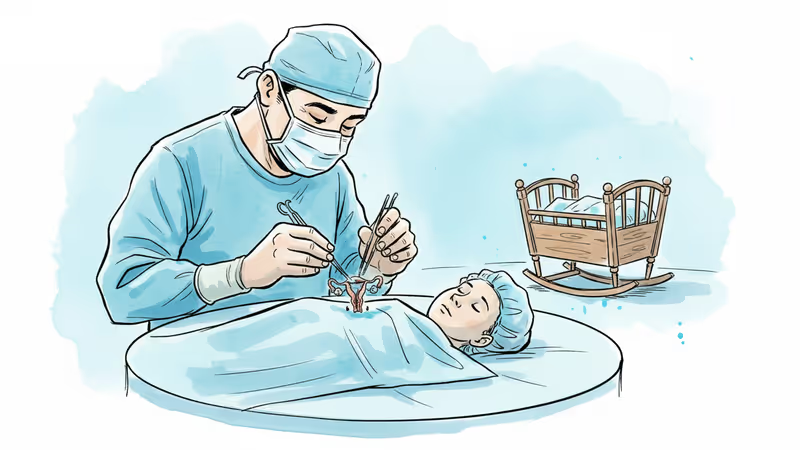
An experimental surgery that relocates reproductive organs during cancer treatment has led to 5 successful births. Here's how medical innovation is redefining what's possible after cancer.

A groundbreaking JAMA study reveals that high-deductible health insurance plans significantly reduce cancer survival rates, exposing the deadly cost of trying to save money on healthcare.
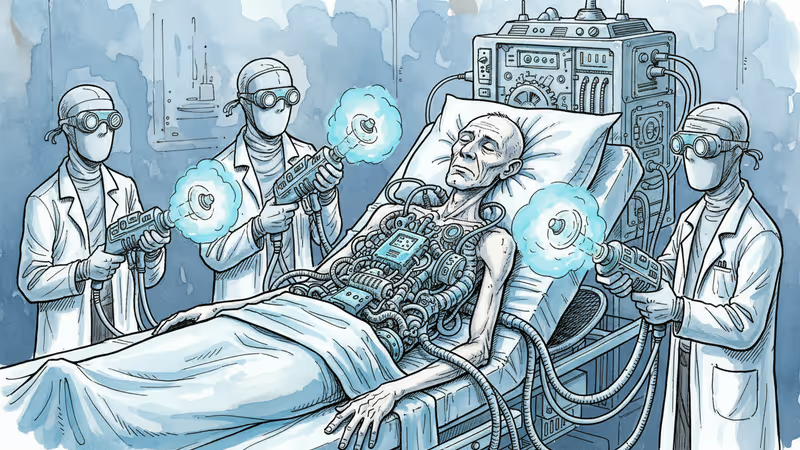
A 33-year-old man survived 48 hours with no lungs using a custom artificial lung system at Northwestern University, opening new possibilities for previously hopeless transplant cases.
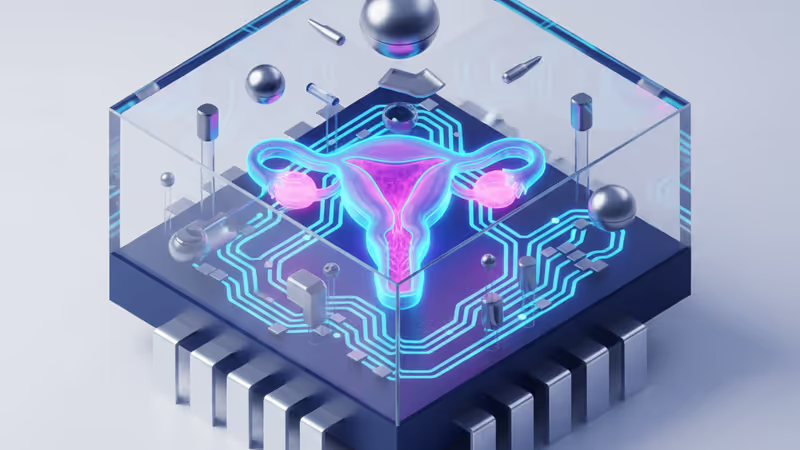
A China-led team has developed the world's first mini-womb on a chip, replicating human embryo implantation to solve infertility mysteries and improve IVF success.
An experimental surgery that relocates reproductive organs during cancer treatment has led to 5 successful births. Here's how medical innovation is redefining what's possible after cancer.
A groundbreaking JAMA study reveals that high-deductible health insurance plans significantly reduce cancer survival rates, exposing the deadly cost of trying to save money on healthcare.
A 33-year-old man survived 48 hours with no lungs using a custom artificial lung system at Northwestern University, opening new possibilities for previously hopeless transplant cases.
A China-led team has developed the world's first mini-womb on a chip, replicating human embryo implantation to solve infertility mysteries and improve IVF success.
Thoughts
Share your thoughts on this article
Sign in to join the conversation