
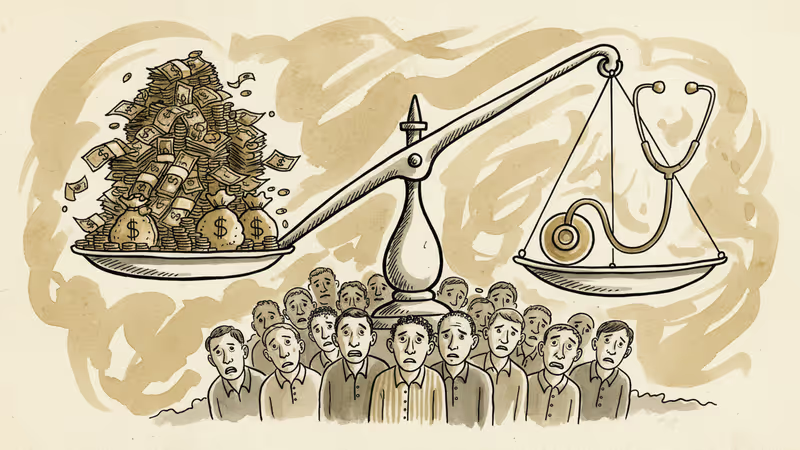
High-Deductible Health Plans Are Literally Killing Cancer Patients
A groundbreaking JAMA study reveals that high-deductible health insurance plans significantly reduce cancer survival rates, exposing the deadly cost of trying to save money on healthcare.
Choosing cheaper health insurance to save money might be the most expensive decision you ever make—potentially costing you your life.
A new study published in JAMA Network Open delivers a sobering reality check: cancer patients with high-deductible health plans have significantly worse survival rates than those with traditional insurance coverage. The research provides hard evidence for what many have long suspected—that financial barriers to healthcare aren't just inconvenient, they're deadly.
The Cruel Math of Healthcare Economics
High-deductible health plans seem like a smart financial choice on paper. Lower monthly premiums in exchange for higher out-of-pocket costs before insurance kicks in. For healthy individuals, it's a calculated gamble that often pays off.
But cancer doesn't care about your budget calculations. When you're facing a diagnosis that requires immediate, expensive treatment, that $5,000 or $10,000 deductible becomes a formidable barrier. Suddenly, the money you saved on monthly premiums pales in comparison to the crushing weight of upfront medical costs.
The study's findings aren't just statistics—they represent real people making impossible choices. Do I start treatment now, or do I wait until next month when I might have more money? Do I opt for the more aggressive treatment my doctor recommends, or the cheaper alternative that might not be as effective?
The Rationing of Hope
What makes this research particularly troubling is how it exposes the quiet rationing of healthcare that happens every day in America. Unlike the dramatic scenes we imagine when we think about healthcare rationing, this happens in doctors' offices and family kitchens across the country.

Patients delay screenings because they can't afford the deductible. They postpone follow-up appointments. They skip recommended tests. Each delay, each postponement, each skipped appointment chips away at their chances of survival.
The irony is stark: people choose high-deductible plans to protect themselves financially from medical bankruptcy, but end up compromising their health—and potentially their lives—in the process.
Beyond Individual Tragedy
This isn't just a personal finance story—it's a public health crisis hiding in plain sight. When people with treatable cancers die because they couldn't afford timely care, we lose more than individual lives. We lose productivity, family stability, and community members who might have lived decades longer with proper treatment.
The ripple effects extend beyond patients to healthcare providers who find themselves in ethical dilemmas. How do you tell a patient they need immediate treatment when you know they can't afford it? How do you balance medical recommendations with financial reality?
Healthcare systems also bear the cost when patients delay care until their conditions become more severe and expensive to treat. Emergency room visits and late-stage treatments cost far more than early intervention would have.
The Global Context
While this study focuses on the American healthcare system, it raises questions that resonate globally. Most developed nations have moved toward universal healthcare systems precisely to eliminate financial barriers to essential medical care.
Yet even in countries with national health services, debates about cost-sharing, wait times, and treatment rationing continue. The fundamental tension between healthcare costs and accessibility isn't uniquely American—it's a challenge facing healthcare systems worldwide as medical technology advances and populations age.
Authors
Related Articles
TriZetto confirms massive health data breach affecting 3.4 million people went undetected for nearly a year, exposing critical vulnerabilities in healthcare IT infrastructure.
How digital twin technology is helping people manage diabetes and obesity without expensive GLP-1 drugs, and what it means for the future of healthcare.
DavaIndia's security flaw exposed customer prescription data and drug control functions, highlighting critical vulnerabilities in online healthcare platforms.
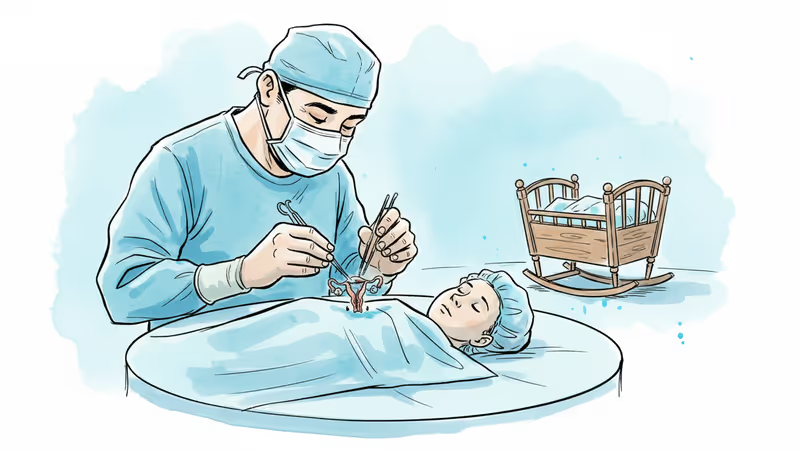
An experimental surgery that relocates reproductive organs during cancer treatment has led to 5 successful births. Here's how medical innovation is redefining what's possible after cancer.
TriZetto confirms massive health data breach affecting 3.4 million people went undetected for nearly a year, exposing critical vulnerabilities in healthcare IT infrastructure.
How digital twin technology is helping people manage diabetes and obesity without expensive GLP-1 drugs, and what it means for the future of healthcare.
DavaIndia's security flaw exposed customer prescription data and drug control functions, highlighting critical vulnerabilities in online healthcare platforms.
An experimental surgery that relocates reproductive organs during cancer treatment has led to 5 successful births. Here's how medical innovation is redefining what's possible after cancer.
Thoughts
Share your thoughts on this article
Sign in to join the conversation