
Cancer Treatment No Longer Means Giving Up Motherhood
An experimental surgery that relocates reproductive organs during cancer treatment has led to 5 successful births. Here's how medical innovation is redefining what's possible after cancer.
Five babies have been born to mothers who thought cancer treatment had stolen their chance at motherhood. The latest arrival—baby Lucien in Switzerland—represents something remarkable: a surgical innovation that's giving cancer survivors back their reproductive future.
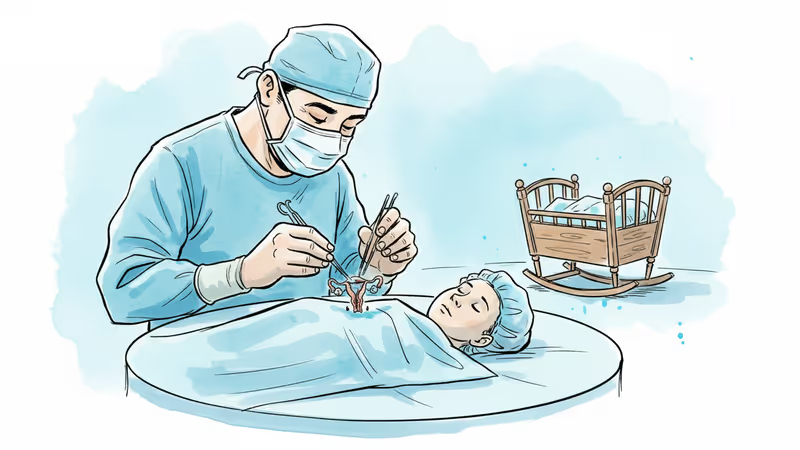
Last week, Swiss researchers shared news that would have seemed impossible just a decade ago. A woman who underwent experimental surgery before bowel cancer treatment successfully gave birth to a healthy baby boy. The procedure? Surgeons literally moved her uterus, ovaries, and fallopian tubes out of harm's way during radiation therapy, then put everything back afterward.
When Saving One Life Threatens Another
Radiation and chemotherapy for bowel and rectal cancers are lifesavers, but they come with a devastating side effect for young women: they often destroy reproductive organs in the pelvic area. The powerful radiation needed to eliminate cancer cells doesn't discriminate—it damages healthy tissue too.
Traditional fertility preservation methods like egg freezing help, but they're not foolproof. Even if eggs survive, a radiation-damaged uterus may not be able to carry a pregnancy. For women diagnosed in their twenties and thirties, this meant choosing between beating cancer and having biological children.
The surgical solution sounds almost absurdly simple: temporarily relocate the reproductive organs during treatment, then move them back. Think of it as evacuating civilians from a war zone, then helping them rebuild once the fighting stops.
Beyond Switzerland: A Growing Movement
Lucien is the first baby born in Europe after this procedure, but he's the fifth globally. Since the announcement, at least three more babies have been born to mothers who underwent the surgery. The technique is gaining traction among reproductive surgeons worldwide.

The surgery itself is complex, requiring two separate operations months apart. First, surgeons detach the uterus and ovaries from their normal position and relocate them to the upper abdomen, away from the radiation field. After cancer treatment concludes, a second surgery moves everything back to its original location.
Early results are promising. Most patients who've undergone the procedure have resumed normal menstrual cycles and achieved natural pregnancies.
The Economics of Hope
Here's where things get complicated. This isn't a simple outpatient procedure—it requires highly specialized surgical teams, multiple operations, and months of monitoring. In the US healthcare system, where fertility treatments are often considered elective, insurance coverage remains uncertain.
The procedure also raises questions about access and equity. Will this become another medical innovation available primarily to the wealthy? Or will healthcare systems recognize fertility preservation as essential cancer care?
Some hospitals are already integrating fertility counseling into cancer treatment protocols, but comprehensive coverage varies dramatically by insurance provider and geographic location.
What Patients Need to Know
Timing is everything with this procedure. The surgery must happen before cancer treatment begins, requiring rapid coordination between oncology and reproductive surgery teams. This puts enormous pressure on newly diagnosed patients who are already processing a cancer diagnosis.
The long-term effects remain unknown. While initial results are encouraging, researchers are still tracking patients to understand potential complications years down the line. The procedure also doesn't guarantee pregnancy—it preserves the possibility.
The five babies born after this experimental surgery represent more than medical success stories—they embody a shift in how we think about healing. The question isn't just whether we can save lives, but whether we can preserve the dreams that make those lives worth living.
Authors
Related Articles
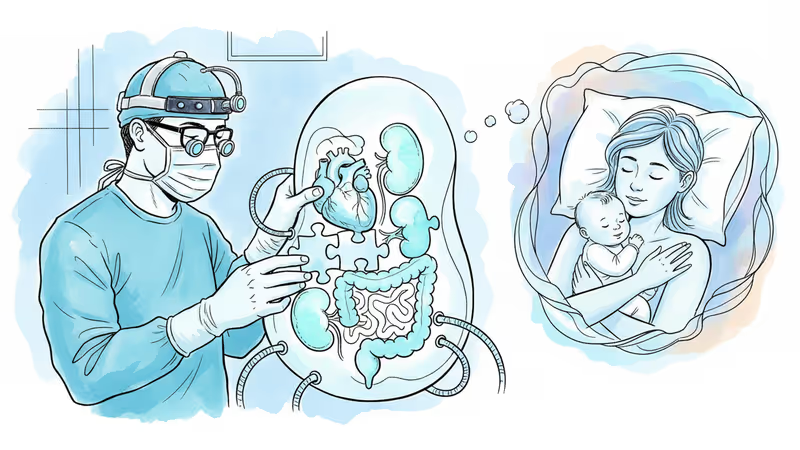
A groundbreaking surgical procedure temporarily relocates reproductive organs during cancer treatment, allowing patients to preserve fertility. Baby Lucien represents hope for thousands facing this devastating choice.

A groundbreaking JAMA study reveals that high-deductible health insurance plans significantly reduce cancer survival rates, exposing the deadly cost of trying to save money on healthcare.

Five stories from late September, traced to where the paper trail stops: Korea's export record, Nvidia's Hugging Face 8-K, a US-China AI channel, the UN on AI, and rising births.

Huawei's CANN is open source under a license barring software for non-Ascend chips. Inside China's second CUDA, and the two links still outside it: pre-training compute and 5nm capacity.
A groundbreaking surgical procedure temporarily relocates reproductive organs during cancer treatment, allowing patients to preserve fertility. Baby Lucien represents hope for thousands facing this devastating choice.
A groundbreaking JAMA study reveals that high-deductible health insurance plans significantly reduce cancer survival rates, exposing the deadly cost of trying to save money on healthcare.
Five stories from late September, traced to where the paper trail stops: Korea's export record, Nvidia's Hugging Face 8-K, a US-China AI channel, the UN on AI, and rising births.
Huawei's CANN is open source under a license barring software for non-Ascend chips. Inside China's second CUDA, and the two links still outside it: pre-training compute and 5nm capacity.
Thoughts
Share your thoughts on this article
Sign in to join the conversation