

Humans Are Going Back to the Moon. Now What?
For the first time since 1972, astronauts are heading toward the Moon. But the Artemis program is less about planting flags and more about who gets to stay—and why that changes everything.
Everyone alive under the age of 54 has never watched a human being walk on the Moon in real time. That's about to change.
NASA's Artemis program is advancing toward its next crewed mission. Artemis II will send four astronauts—including Victor Glover, Reid Wiseman, Christina Koch, and Canadian astronaut Jeremy Hansen—on a loop around the Moon, the first crewed lunar flyby since Apollo 17 in 1972. The actual landing comes with Artemis III, but the machinery is in motion. Humanity is heading back.
The question isn't whether we'll return. It's what we're actually going back for.
Why It Took 50 Years
After Apollo ended in 1972, the Moon quietly fell off the agenda. The Cold War rationale—beat the Soviets—had been satisfied. Political will evaporated. Budgets migrated to the International Space Station, a triumph of international cooperation that kept humans in orbit but never pushed them further.
Two forces broke the stalemate. First, China. The Chang'e lunar program has already landed on the Moon's far side—something no other nation has done—and Beijing has formally stated a goal of crewed lunar missions in the 2030s. Second, SpaceX. By slashing launch costs through reusable rockets, Elon Musk's company rewrote the economics of deep space travel. What once required a superpower's treasury now fits, at least partially, into a commercial contract.
Those two shifts turned Artemis from a science mission into something closer to a geopolitical statement.
This Time, the Goal Is to Stay

The most important difference between Apollo and Artemis isn't the rocket or the crew. It's the intent. Apollo was a sprint—plant the flag, collect rocks, come home. Artemis is designed as infrastructure.
The plan involves building the Lunar Gateway, a small space station in lunar orbit, and eventually establishing a sustained human presence near the Moon's south pole. That location isn't arbitrary. Permanently shadowed craters at the poles contain confirmed deposits of water ice. Water means drinking water, oxygen to breathe, and—when split into hydrogen and oxygen—rocket fuel. If humans ever want to reach Mars, the Moon is the logical refueling stop.
This reframes everything. The Moon isn't a destination. It's a staging ground.
Who Wants What—And Who Pays
The stakeholders circling Artemis have very different agendas.
For NASA and the U.S. government, it's about maintaining leadership in space at a moment when that leadership feels genuinely contested. But the program's costs—estimated at tens of billions of dollars across its lifetime—have made it a recurring political target. Timelines have already slipped multiple times.
For SpaceX, the Moon is a market. The company holds the contract to build the Artemis III lunar lander using a modified Starship. Beyond that, lunar resource extraction, private tourism, and communications infrastructure represent future revenue streams that no traditional aerospace company has yet captured.
For scientists, the picture is more complicated. The lunar south pole holds genuine scientific value—ancient ice that could preserve a record of the early solar system. But researchers worry that geopolitical competition will fragment data-sharing agreements the way it has in other strategic domains. The Artemis Accords, signed by over *40 countries including South Korea and Japan, attempt to establish norms for lunar activity. Whether those norms hold under commercial pressure remains an open question.
For the average person watching from Earth, the relevance is less obvious—but historically, space programs have generated spillover technologies that eventually reach everyday life, from water purification to medical imaging. The more immediate question is whether this generation's lunar program will be publicly accountable or largely shaped by private interests.
Authors
Related Articles
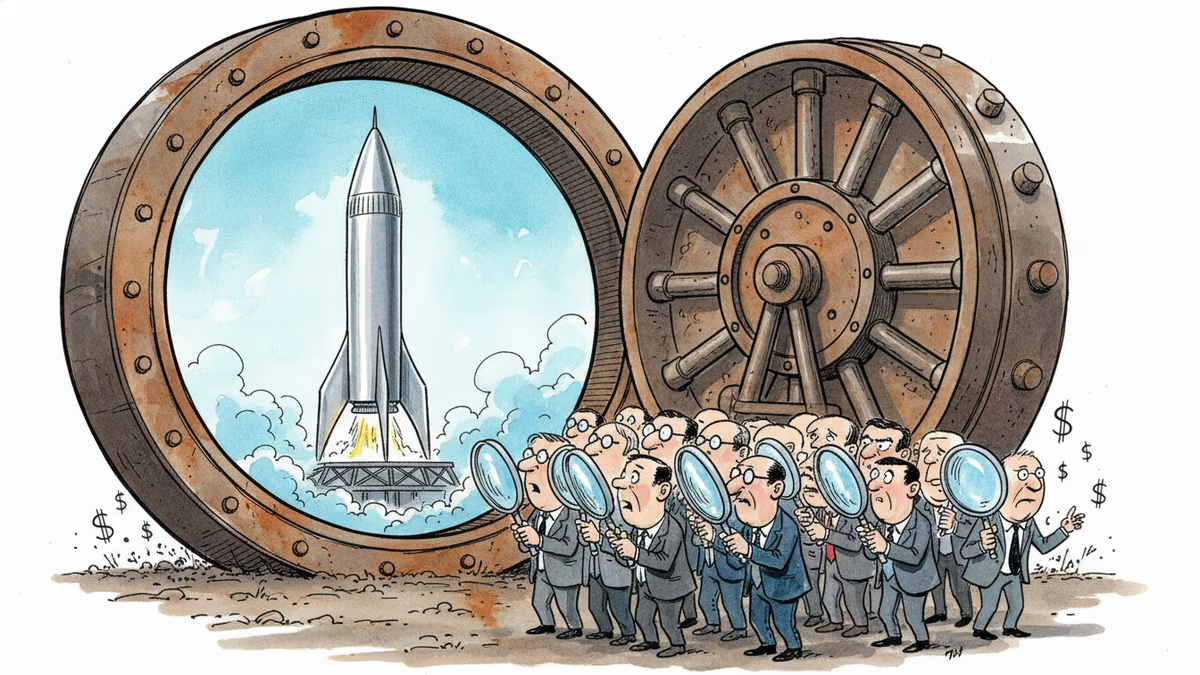
SpaceX filed a nearly 400-page S-1 with the SEC, targeting an IPO as early as June 12. Here's what the filing reveals—and what it doesn't.
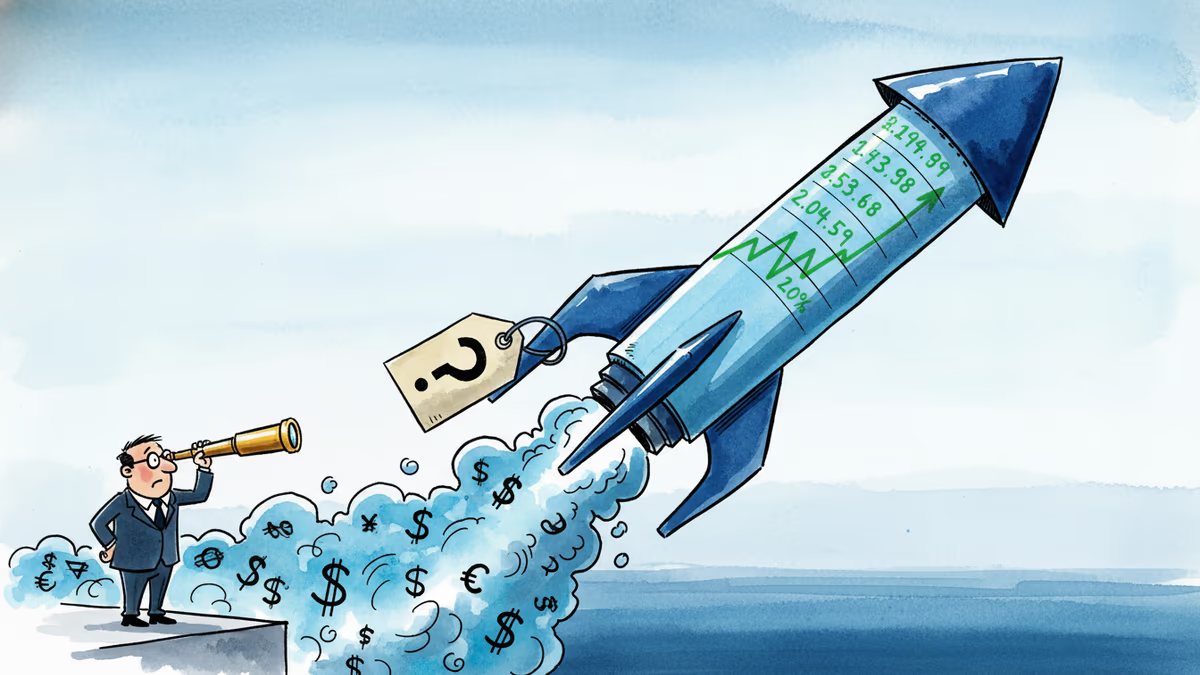
SpaceX has filed its S-1 with the SEC, targeting the Nasdaq under ticker SPCX. With $18.67B in revenue but a $4.9B loss, the IPO forces investors to answer one hard question.

NASA's Artemis III has been redesigned as an Earth-orbit mission. SpaceX and Blue Origin say their landers won't be ready until late 2027. What does this mean for the future of lunar exploration?
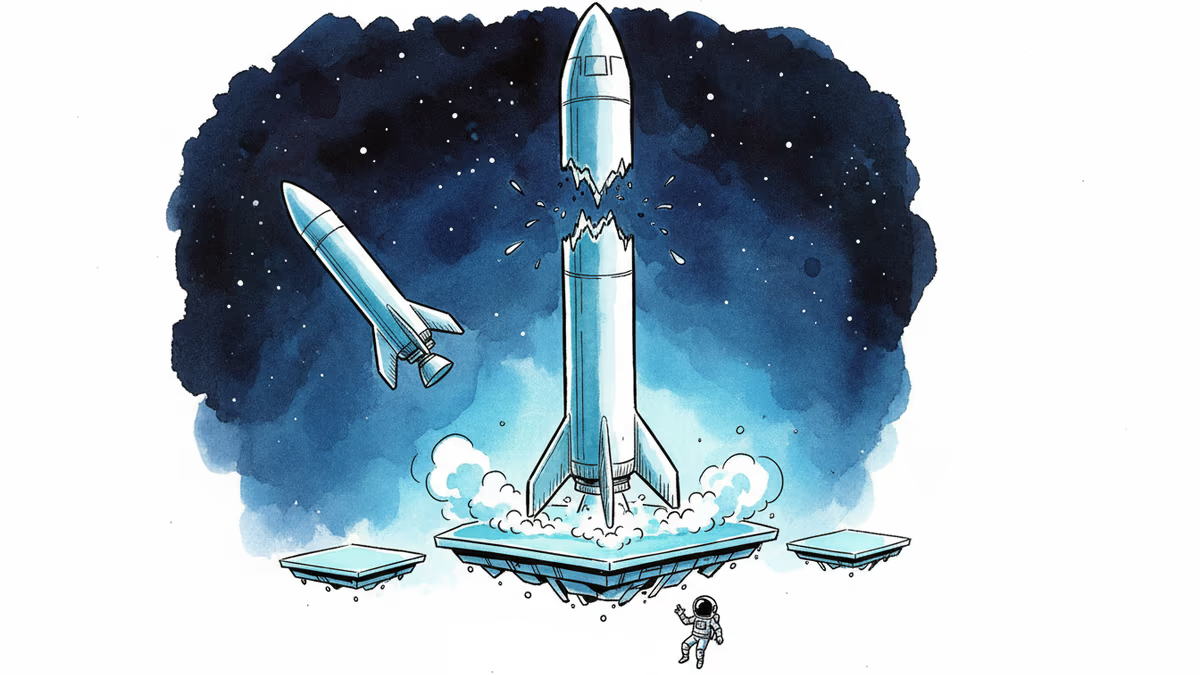
Blue Origin successfully reflew an orbital-class booster for the first time, but New Glenn's upper stage failed on its third mission — raising questions about NASA's Artemis timeline.
SpaceX filed a nearly 400-page S-1 with the SEC, targeting an IPO as early as June 12. Here's what the filing reveals—and what it doesn't.
SpaceX has filed its S-1 with the SEC, targeting the Nasdaq under ticker SPCX. With $18.67B in revenue but a $4.9B loss, the IPO forces investors to answer one hard question.
NASA's Artemis III has been redesigned as an Earth-orbit mission. SpaceX and Blue Origin say their landers won't be ready until late 2027. What does this mean for the future of lunar exploration?
Blue Origin successfully reflew an orbital-class booster for the first time, but New Glenn's upper stage failed on its third mission — raising questions about NASA's Artemis timeline.
Thoughts
Share your thoughts on this article
Sign in to join the conversation