

California Bans Masked Federal Agents in Landmark Transparency Law
California restricts federal law enforcement from wearing masks during operations, sparking a nationwide debate over accountability versus security. Will other states follow?
Americans don't like masked secret police. There's really no other way to put it. The reasons are manifold: accountability, trust in law enforcement, and just plain overall vibes.
More concretely, not being able to tell who's a cop and who isn't is dangerous. An assassin masquerading as law enforcement killed Minnesota legislator Melissa Hortman and her husband last year. When you're being dragged out of your home in your underwear, how can anyone tell whether they're facing legitimate ICE agents or amateur thugs?
California Takes a Stand
Last year, California passed the No Secret Police Act, restricting masking for federal law enforcement, alongside the No Vigilantes Act. The message is clear: if you're going to exercise government power on California soil, citizens have a right to know who you are.
The law doesn't ban all face coverings for federal agents—exceptions exist for undercover operations with proper judicial oversight and genuine safety concerns. But it does prohibit the kind of anonymous enforcement actions that became synonymous with federal overreach during recent years.
California officials frame this as basic civil rights protection. Citizens should know who's arresting them and whether that authority is legitimate. It sounds reasonable until you consider the practical implications.
Federal Pushback
Federal agencies aren't happy. The FBI, ICE, and DEA argue that agent safety and investigative effectiveness require anonymity in certain situations. Organized crime investigations, drug trafficking cases, and terrorism probes often depend on agents' ability to operate without immediate identification.
The federal government is also invoking the Supremacy Clause—the constitutional principle that federal law trumps state law. This sets up a potential Supreme Court showdown over whether states can regulate how federal agents operate within their borders.
But this isn't just about legal precedent. It's about the lingering trauma from scenes of unidentified federal agents in military gear confronting protesters. Many Americans asked then: "Is this really what America looks like?"

A Spreading Movement
California's move is inspiring copycat legislation. New York, Illinois, and Washington are considering similar bills. Each state is crafting slightly different approaches, but the core principle remains: government power requires identification.
Conservative states are pushing back hard. Texas and Florida have denounced these efforts as "dangerous interference with federal law enforcement." They're doubling down on cooperation with federal agencies, regardless of identification requirements.
What's fascinating is how this issue scrambles traditional political alliances. Some conservatives, concerned about government overreach, support identification requirements. Meanwhile, some progressives worry about hampering legitimate criminal investigations.
Technology Changes Everything
This debate is happening as technology transforms surveillance and identification. Facial recognition software can identify people even with partial face coverings. Gait analysis and body shape recognition are becoming more sophisticated.
Smartphones and social media have also empowered citizen oversight. Masked agents' actions can be livestreamed globally within minutes. This technological shift creates new pressures for transparency while also providing new tools for both surveillance and accountability.
For law enforcement, it's a double-edged sword. Greater transparency might improve public trust, but it could also compromise operational security in ways that weren't possible a generation ago.
The Accountability Question
At its heart, this is about power and accountability in a democracy. When government agents exercise force, citizens traditionally have had the right to know who's acting and under what authority. Anonymity breaks that chain of accountability.
But modern threats—from sophisticated criminal organizations to domestic terrorism—often require law enforcement to operate in ways that traditional democratic oversight didn't anticipate. The challenge is maintaining democratic principles while adapting to contemporary security needs.
California's law attempts to thread this needle through judicial oversight and specific exceptions. Whether this balance works in practice remains to be seen.
Authors
Related Articles
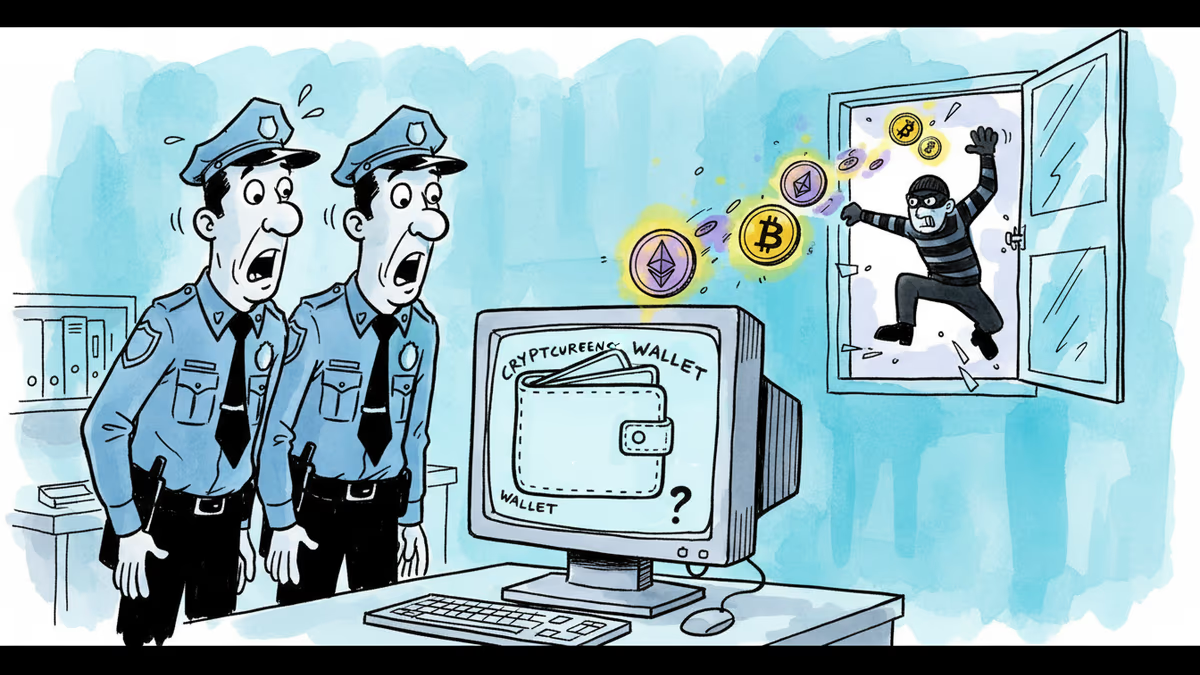
South Korean police accidentally revealed recovery phrases in a press release photo, leading to the theft of seized cryptocurrency assets worth $5.6 million. A costly lesson in digital evidence handling.
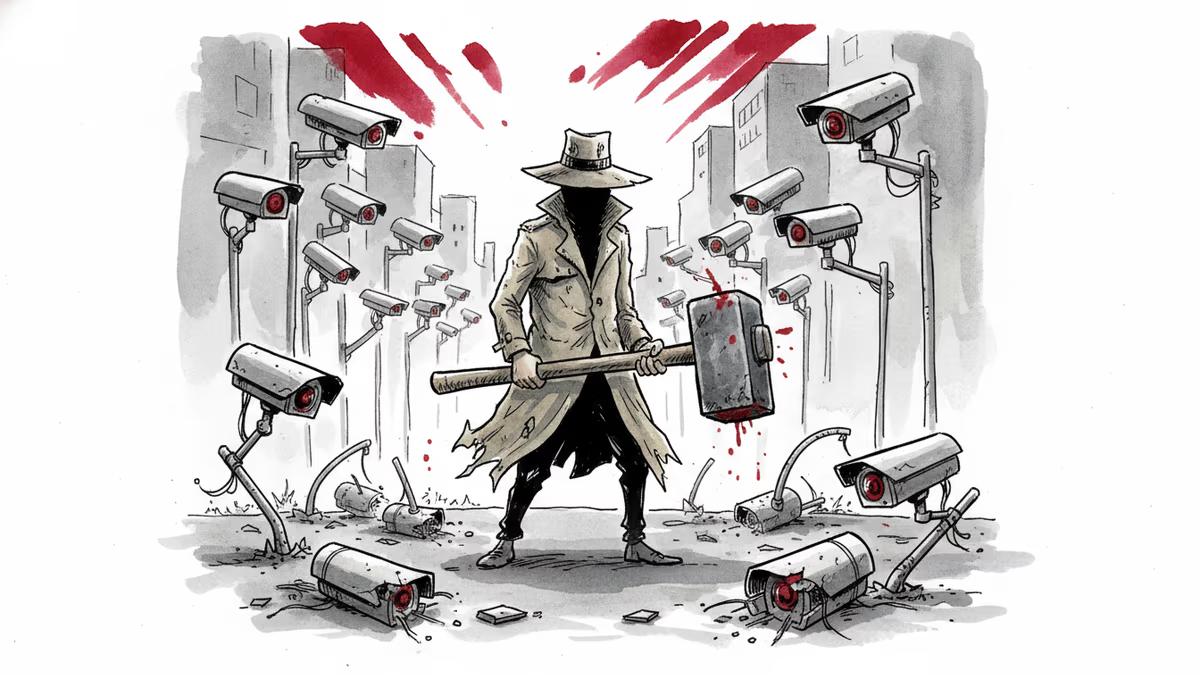
Citizens across the US are destroying Flock surveillance cameras amid immigration enforcement concerns. A grassroots resistance movement is challenging the $7.5B surveillance startup.
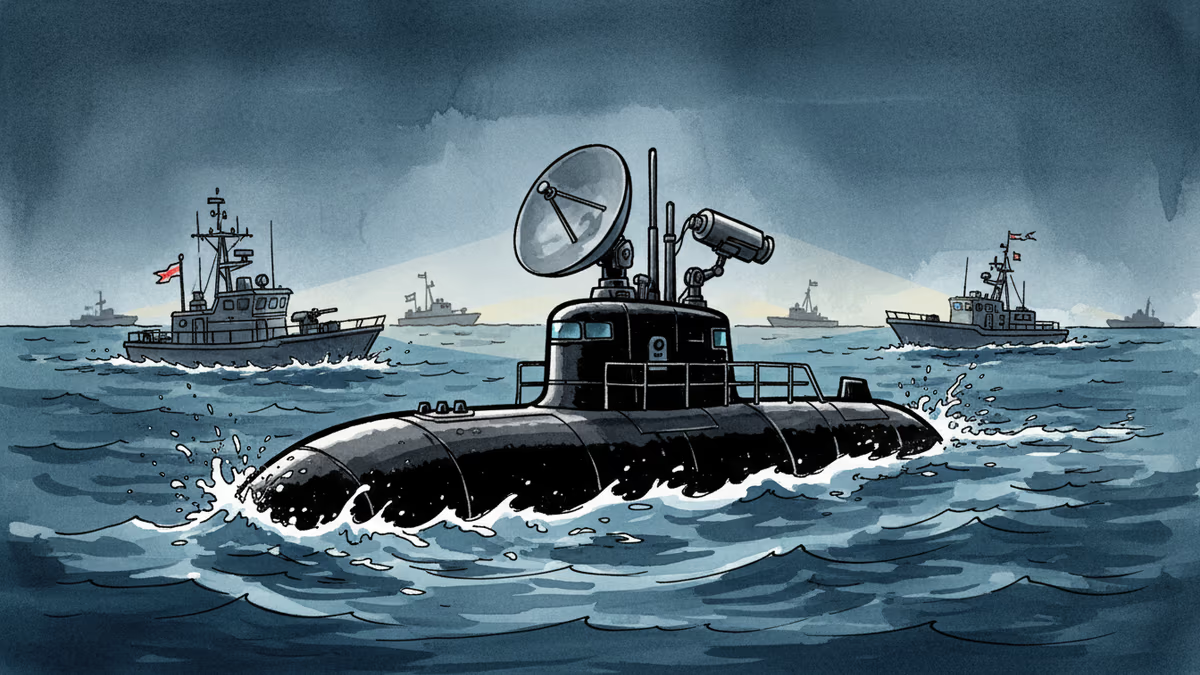
Colombian cartels are weaponizing Starlink and autopilot tech to create uncrewed drug submarines. Law enforcement faces an unprecedented challenge as the cat-and-mouse game enters a new phase.
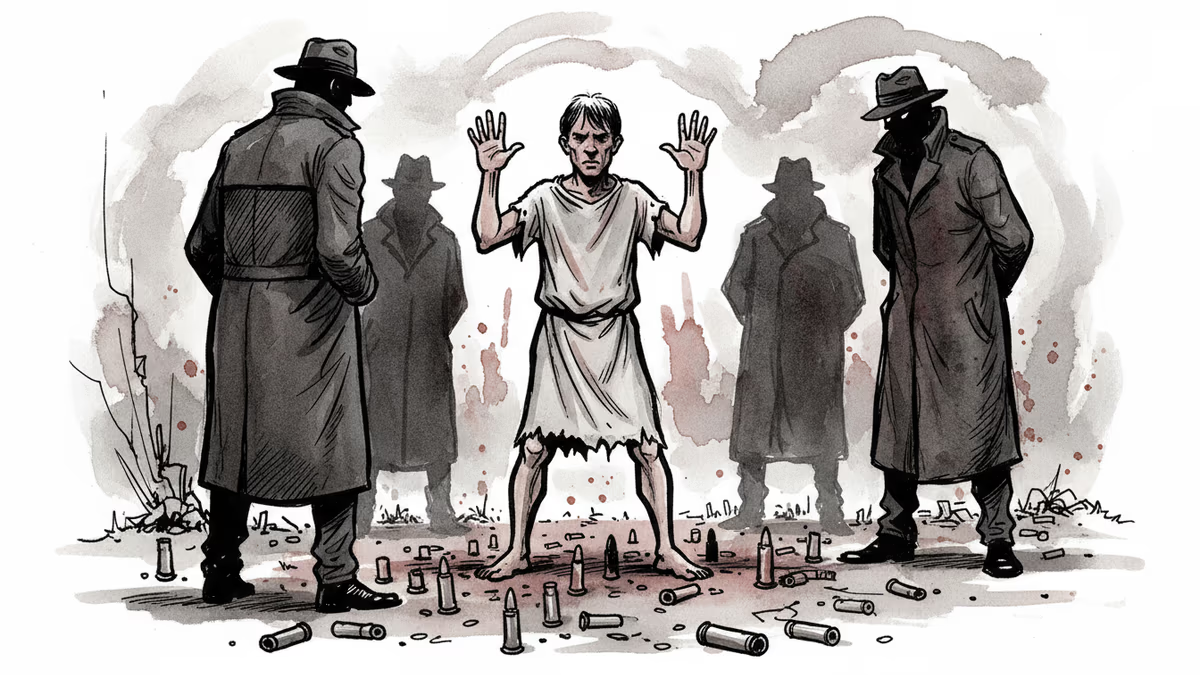
Frame-by-frame video analysis reveals federal agents fired 11 shots at Alex Pretti, challenging official claims of self-defense in a case that questions civil liberties
South Korean police accidentally revealed recovery phrases in a press release photo, leading to the theft of seized cryptocurrency assets worth $5.6 million. A costly lesson in digital evidence handling.
Citizens across the US are destroying Flock surveillance cameras amid immigration enforcement concerns. A grassroots resistance movement is challenging the $7.5B surveillance startup.
Colombian cartels are weaponizing Starlink and autopilot tech to create uncrewed drug submarines. Law enforcement faces an unprecedented challenge as the cat-and-mouse game enters a new phase.
Frame-by-frame video analysis reveals federal agents fired 11 shots at Alex Pretti, challenging official claims of self-defense in a case that questions civil liberties
Thoughts
Share your thoughts on this article
Sign in to join the conversation