
Police Seized $5.6M in Crypto, Then Accidentally Posted the Keys Online
South Korean police accidentally revealed recovery phrases in a press release photo, leading to the theft of seized cryptocurrency assets worth $5.6 million. A costly lesson in digital evidence handling.
$5.6 Million Gone in the Time It Takes to Delete a Tweet
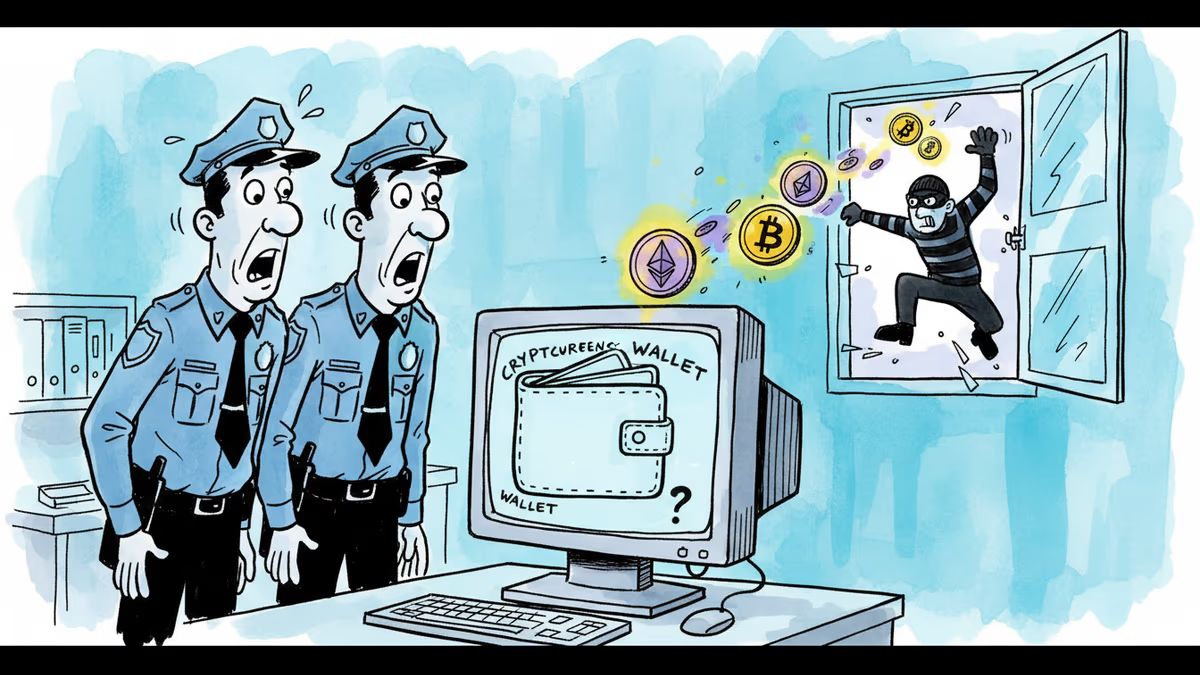
South Korean police thought they had a good news story. They'd just seized $5.6 million worth of cryptocurrency from 124 wealthy tax evaders and wanted to show off their success. So they posted a press release with photos of the seized assets, including a Ledger hardware wallet sitting next to what looked like an innocent handwritten note.
That note contained the wallet's complete recovery phrase—essentially the master key to $5.6 million in digital assets. By the time police realized their mistake and pulled down the press release, it was too late. Someone had already used those words to drain most of the seized cryptocurrency into their own wallet.
The irony is almost too perfect: a press release meant to showcase police competence instead became evidence of a spectacular security blunder that made global headlines.
When "Cold Storage" Meets Hot Mess
Hardware wallets like Ledger devices are called "cold wallets" because they're supposed to be disconnected from the internet and immune to online threats. The whole point is keeping your crypto safe from hackers who might try to break into exchange accounts or hot wallets.
But this incident reveals the difference between technical security and operational security. The 12-24 word recovery phrase (also called a mnemonic seed) is designed to restore access to a wallet if the hardware device is lost or damaged. Anyone with those words can recreate the wallet on any device—no PIN, no additional authentication required.

It's like having an unbreakable safe, then posting the combination on your front door.
Bleeping Computer and other tech publications quickly grabbed screenshots of the deleted press release, ensuring the embarrassing mistake would live forever in the internet's memory. The crypto community's reaction was swift and merciless, with many pointing out that basic security practices seemed to be missing from what should have been a sophisticated law enforcement operation.
The Bigger Picture: Digital Evidence in Analog Minds
This isn't just about one police department's mistake. It highlights a fundamental challenge facing law enforcement worldwide as digital assets become more mainstream. Traditional evidence handling procedures—taking photos, cataloging items, creating public records—don't translate well to assets that exist purely as information.
In the physical world, photographing seized cash or drugs doesn't make them vulnerable to theft. But with cryptocurrency, the information is the asset. Revealing private keys or recovery phrases is literally giving away the money.
Some agencies have adapted better than others. The FBI and Germany's BKA have developed strict protocols for handling cryptocurrency seizures, including procedures that ensure sensitive information never appears in photographs or public documents. They've learned that transparency and security sometimes conflict in the digital realm.
Cybersecurity experts argue this incident should be a wake-up call. "Law enforcement agencies need specialized training for digital assets," says one industry veteran. "The stakes are too high for learning on the job."
But critics of the police response might be missing a larger point. As one legal expert noted, "Public accountability requires some level of transparency in asset seizures. The challenge is figuring out how to maintain that transparency without compromising security."
Authors
Related Articles
UK Visa Portal, a private immigration service mistaken for an official government site, has been exposing passport scans and selfies of over 100,000 applicants. The breach remains unpatched.
Okta CEO Todd McKinnon on why AI agents need identity management, the SaaSpocalypse threat, and why the kill switch might be the most important button in enterprise tech.
Iran and Israel are hacking civilian security cameras for military reconnaissance. How consumer surveillance devices became weapons of war.

A security researcher discovered he could access 7,000 DJI robot vacuums and peek into strangers' homes. This Valentine's Day revelation exposes the hidden privacy risks of our smart home obsession.
UK Visa Portal, a private immigration service mistaken for an official government site, has been exposing passport scans and selfies of over 100,000 applicants. The breach remains unpatched.
Okta CEO Todd McKinnon on why AI agents need identity management, the SaaSpocalypse threat, and why the kill switch might be the most important button in enterprise tech.
Iran and Israel are hacking civilian security cameras for military reconnaissance. How consumer surveillance devices became weapons of war.
A security researcher discovered he could access 7,000 DJI robot vacuums and peek into strangers' homes. This Valentine's Day revelation exposes the hidden privacy risks of our smart home obsession.
Thoughts
Share your thoughts on this article
Sign in to join the conversation