
Americans Are Smashing Surveillance Cameras. Here's Why.
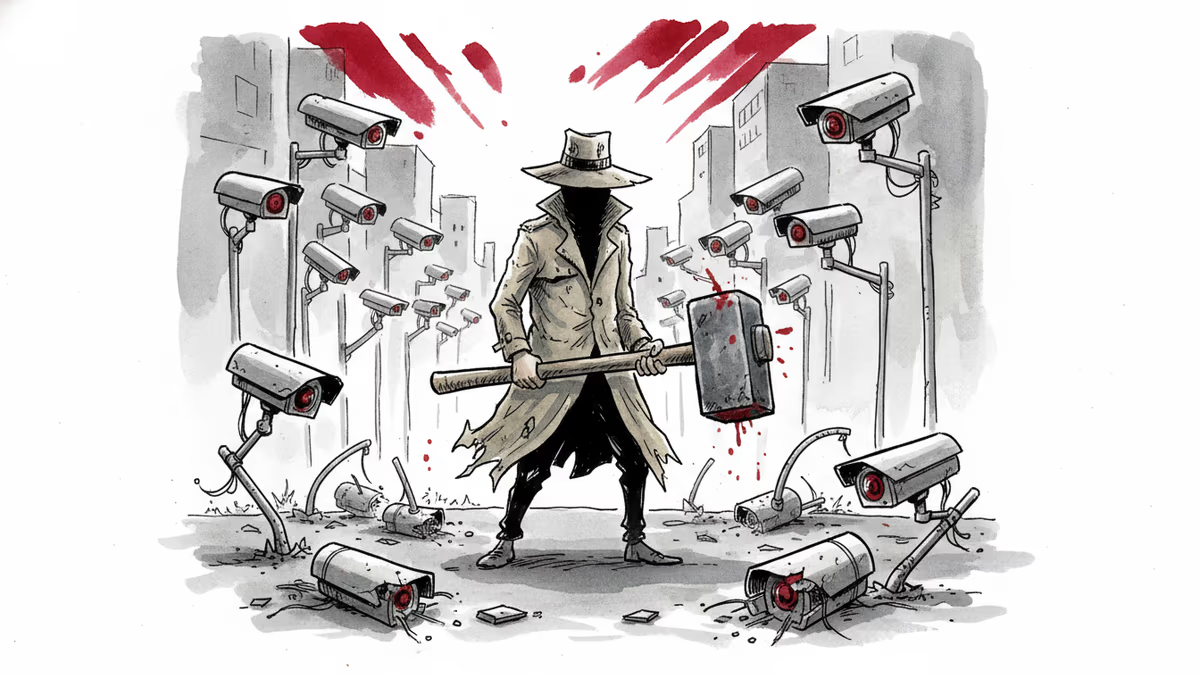
Citizens across the US are destroying Flock surveillance cameras amid immigration enforcement concerns. A grassroots resistance movement is challenging the $7.5B surveillance startup.
80,000 surveillance cameras. That's how many license plate readers Flock Safety has deployed across America. But increasingly, they're being met with hammers, spray paint, and wire cutters.
What started as isolated acts of vandalism has evolved into a nationwide pattern of resistance—one that reveals deeper tensions about surveillance, immigration, and the limits of democratic process.
The $7.5 Billion Problem
Flock Safety, the Atlanta-based startup valued at $7.5 billion just a year ago, built its business on a simple promise: help police solve crimes by tracking license plates. Their cameras capture millions of data points daily, creating a vast network that can trace where anyone goes and when.
But the company's relationship with immigration enforcement has sparked fierce backlash. While Flock claims it doesn't directly share data with ICE, local police departments have been providing federal authorities access to their Flock systems. In an era of intensified immigration raids under the Trump administration, that distinction feels meaningless to many communities.
From California to Connecticut
The destruction isn't random—it's targeted and spreading. In La Mesa, California, cameras were smashed just weeks after the city council voted to continue their Flock contract, despite overwhelming public opposition at the meeting.
In Oregon, six cameras were cut down entirely, poles and all. A note left behind read: "Hahaha get wrecked ya surveilling fucks." Similar incidents have occurred across California, Connecticut, Illinois, and Virginia.

Two Paths of Resistance
What's fascinating is how communities are splitting their response strategies. Some are working within the system—pressuring city councils, attending meetings, demanding contract cancellations. Dozens of cities have already rejected Flock cameras, and some police departments have blocked federal access to their surveillance resources.
But others have chosen direct action. Why wait for bureaucratic processes when you can solve the problem with a sledgehammer? It's vigilante justice meets digital resistance—and it's growing.
The Surveillance Dilemma
This isn't just about immigration policy. It's about the broader question of how much surveillance we're willing to accept in exchange for security. Flock's cameras don't just catch criminals—they track everyone, creating detailed maps of daily movement that would have been unimaginable just decades ago.
The company won't say how many cameras have been destroyed, but the pattern suggests this is more than isolated incidents. It's a grassroots movement challenging one of surveillance capitalism's fastest-growing sectors.
Beyond the Hammer
Yet physical destruction raises uncomfortable questions. If democratic processes fail—if city councils ignore public input and contracts continue despite opposition—what recourse do citizens have? Is breaking cameras civil disobedience or mere vandalism?
Some privacy advocates worry that destroying visible cameras might simply accelerate the shift toward less obvious surveillance methods. Others argue that visible resistance is necessary to spark broader conversations about digital rights.
Authors
Related Articles

The same heartbeat reading, DNA sample, or facial scan has radically different legal protections depending on where you live. From 23andMe's bankruptcy to post-Dobbs data weaponization, here's how five legal regimes treat the data your body generates — and why 640 million smartwatch users should care.
Iran and Israel are hacking civilian security cameras for military reconnaissance. How consumer surveillance devices became weapons of war.

The Pentagon's clash with AI companies exposes a legal gray area around mass surveillance. OpenAI and Anthropic's opposing choices reveal deeper questions about privacy in the AI age.
Greek court sentences Intellexa founder to 8 years for illegal wiretapping. First time a spyware maker faces prison for technology misuse, setting precedent for the industry.
The same heartbeat reading, DNA sample, or facial scan has radically different legal protections depending on where you live. From 23andMe's bankruptcy to post-Dobbs data weaponization, here's how five legal regimes treat the data your body generates — and why 640 million smartwatch users should care.
Iran and Israel are hacking civilian security cameras for military reconnaissance. How consumer surveillance devices became weapons of war.
The Pentagon's clash with AI companies exposes a legal gray area around mass surveillance. OpenAI and Anthropic's opposing choices reveal deeper questions about privacy in the AI age.
Greek court sentences Intellexa founder to 8 years for illegal wiretapping. First time a spyware maker faces prison for technology misuse, setting precedent for the industry.
Thoughts
Share your thoughts on this article
Sign in to join the conversation