
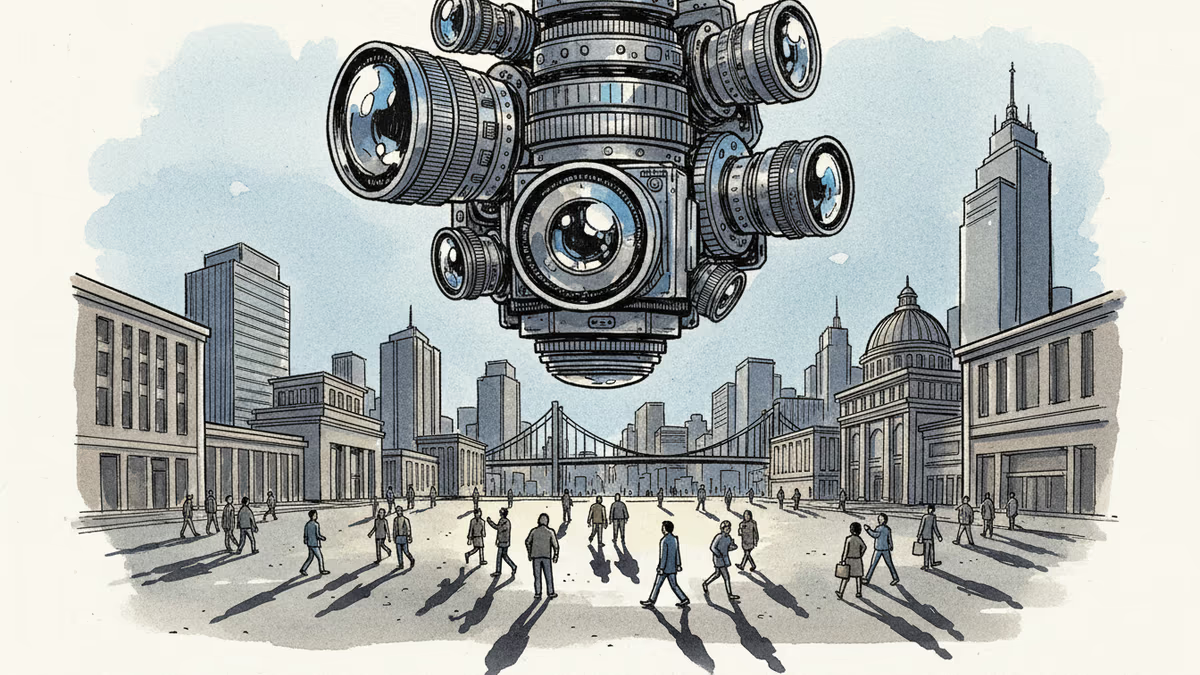
Chicago's 45,000 Cameras: Smart City or Surveillance State?
Chicago operates one of America's most extensive surveillance networks. The debate over safety versus privacy could define the future of smart cities worldwide.
Step outside in Chicago, and you're immediately part of the show. Up to 45,000 surveillance cameras track your movements from the moment you leave home until you return—and that's just the public ones.
Chicago boasts one of the highest per-capita camera counts in America. The city operates the country's largest license plate reader system and can tap into feeds from schools, parks, transit systems, and even private Ring doorbells in real-time. It's a surveillance network that would make Orwell pause.
The Great Safety vs. Privacy Divide
Law enforcement officials paint this as a success story. Chicago police credit the system with preventing crimes and nabbing suspects faster than ever before. The numbers, they argue, speak for themselves: response times down, clearance rates up.
But step into any Chicago neighborhood meeting, and you'll hear a different tune. Residents and activists describe living in a "surveillance panopticon" where every movement is monitored, every gathering recorded. The ACLU of Illinois warns of a chilling effect on free speech and assembly.
"People change how they behave when they know they're being watched," says one longtime resident. "That's not the Chicago I grew up in."
The Global Template?

Chicago isn't alone in this experiment. Cities worldwide are wrestling with similar trade-offs as smart city technologies proliferate. London has over 600,000 CCTV cameras. Singapore's "Safe City" initiative uses AI to analyze behavior patterns in real-time.
But Chicago's approach feels different—more comprehensive, more integrated. When your school camera, your bus camera, and your neighbor's doorbell camera all feed into one system, the result isn't just surveillance. It's omniscience.
Tech Companies' Cold Feet
Even the companies building these systems are getting nervous. Amazon pulled back from unlimited police access to Ring footage in 2021. IBM exited facial recognition entirely. Microsoft has imposed strict limits on its AI surveillance tools.
Yet demand keeps growing. The global video surveillance market is expected to hit $144 billion by 2030, driven largely by smart city initiatives.
The Regulation Gap
Here's where it gets tricky: Chicago's surveillance network exists in a regulatory vacuum. Unlike the EU's GDPR or California's privacy laws, most American cities operate under patchwork rules that haven't caught up to the technology.
Urban planners and privacy advocates worry we're building surveillance infrastructure faster than we're building the democratic institutions to govern it.
Authors
Related Articles
Tinder now rewards users who scan their irises at a World orb with free in-app boosts. As AI agents flood dating apps, 'being human' is becoming a verified status — and a business model.
Wisconsin Governor Tony Evers vetoed an age verification bill for adult sites, citing privacy concerns. With 25+ states going the other way, the debate cuts to the heart of online freedom vs. child protection.

The same heartbeat reading, DNA sample, or facial scan has radically different legal protections depending on where you live. From 23andMe's bankruptcy to post-Dobbs data weaponization, here's how five legal regimes treat the data your body generates — and why 640 million smartwatch users should care.
Iran and Israel are hacking civilian security cameras for military reconnaissance. How consumer surveillance devices became weapons of war.
Tinder now rewards users who scan their irises at a World orb with free in-app boosts. As AI agents flood dating apps, 'being human' is becoming a verified status — and a business model.
Wisconsin Governor Tony Evers vetoed an age verification bill for adult sites, citing privacy concerns. With 25+ states going the other way, the debate cuts to the heart of online freedom vs. child protection.
The same heartbeat reading, DNA sample, or facial scan has radically different legal protections depending on where you live. From 23andMe's bankruptcy to post-Dobbs data weaponization, here's how five legal regimes treat the data your body generates — and why 640 million smartwatch users should care.
Iran and Israel are hacking civilian security cameras for military reconnaissance. How consumer surveillance devices became weapons of war.
Thoughts
Share your thoughts on this article
Sign in to join the conversation