
Organizing Under Surveillance: The New Resistance Dilemma
As Americans mobilize against Trump's second term, they face unprecedented government surveillance powers. How do grassroots movements balance security with the openness needed for mass organizing?
Millions Want to Resist. Few Know How to Do It Safely.
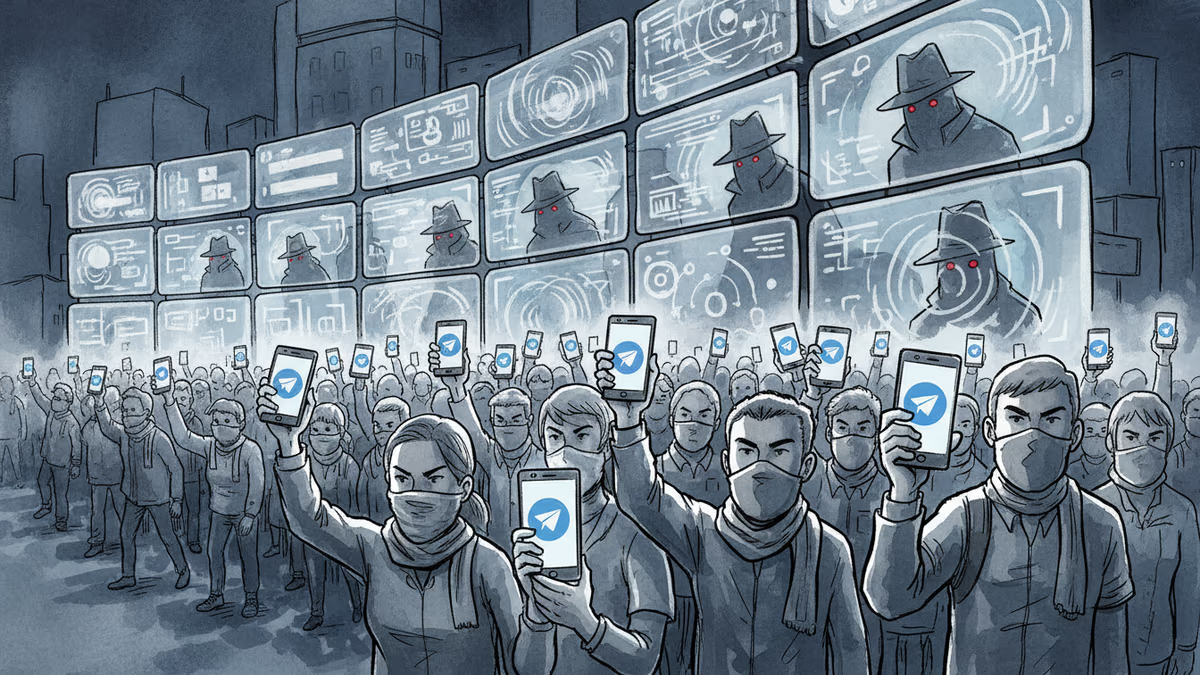
Signal downloads surged 300% in the 48 hours after Trump's inauguration. Across America, grassroots movements are forming to protect immigrants, defend civil rights, and oppose federal policies. But these organizers face a chilling reality: a government with vast surveillance powers and willing corporate partners.
The dilemma is stark. Mass movements need mass participation, but every new member increases exposure to government monitoring. Immigration and Customs Enforcement (ICE) and Customs and Border Protection (CBP) operate with paramilitary ambitions and budgets larger than some countries' militaries.
"You're caught between secrecy and openness," says Eva Galperin, cybersecurity director at the Electronic Frontier Foundation. "The power of organizing comes from numbers and solidarity, but you also need to protect sensitive information from law enforcement subpoenas."
The Art of Strategic Transparency
Security experts call it "threat modeling"—deciding what needs protection and what can remain public. Matt Mitchell, former CryptoHarlem founder and CEO of Safety Sync Group, warns against over-encryption: "If you try to secure everything, you create barriers and increase mistakes."
The key insight? Not everything needs hiding. Public rallies requiring city permits will become public anyway. The challenge is protecting the truly sensitive: meeting locations, warehouse addresses, member identities.
Taylor Fairbank from humanitarian group Distribute Aid illustrates this balance: "I'll never leave Facebook because grandparents in the UK reach out once a year offering knitted hats for refugee camps. It's my job to be available on insecure tools to make those connections." But warehouse locations? "We've seen our warehouses targeted for theft and political violence. That stays secret."
Signal: The Gold Standard (With Caveats)

Every expert WIRED consulted recommended Signal as the core communication tool. Unlike WhatsApp, Signal doesn't log metadata—crucial when authorities come knocking. Its disappearing messages feature, settable from 30 seconds to 4 weeks, dramatically reduces leak risks.
But Signal isn't bulletproof. Groups over 50 people "aren't private spaces," Galperin warns, citing Trump administration's SignalGate scandal. End-to-end encryption can't prevent human leaks.
Biometric unlocking poses another risk. As Washington Post reporter Hannah Natanson's case showed, facial recognition and fingerprints have weaker Fourth Amendment protections. For sensitive organizing, security experts recommend "alt phones" with stronger protections—compartmentalizing high-risk communications from daily life.
The Corporate Cooperation Problem
The surveillance threat isn't just technical—it's structural. Silicon Valley companies routinely comply with government data requests. Even encrypted platforms can reveal metadata: who contacted whom, when, and from where.
This cooperation extends beyond messaging. Cloud storage, email providers, and social media platforms all present vulnerabilities. The solution isn't paranoia but strategic thinking about which tools to use for which purposes.
Beyond the Technical Fix
Technology alone can't solve the surveillance-organizing dilemma. The most secure communications mean nothing if members lack basic digital hygiene or if the movement becomes so secretive it can't grow.
"A very large part of activism is telling people what you're doing," Galperin notes. "It's casseroles and phone trees. Deeply unsexy, but not secret work."
The challenge for 2025's resistance movements: building mass participation while protecting vulnerable members from a government with unprecedented surveillance capabilities.
Authors
Related Articles
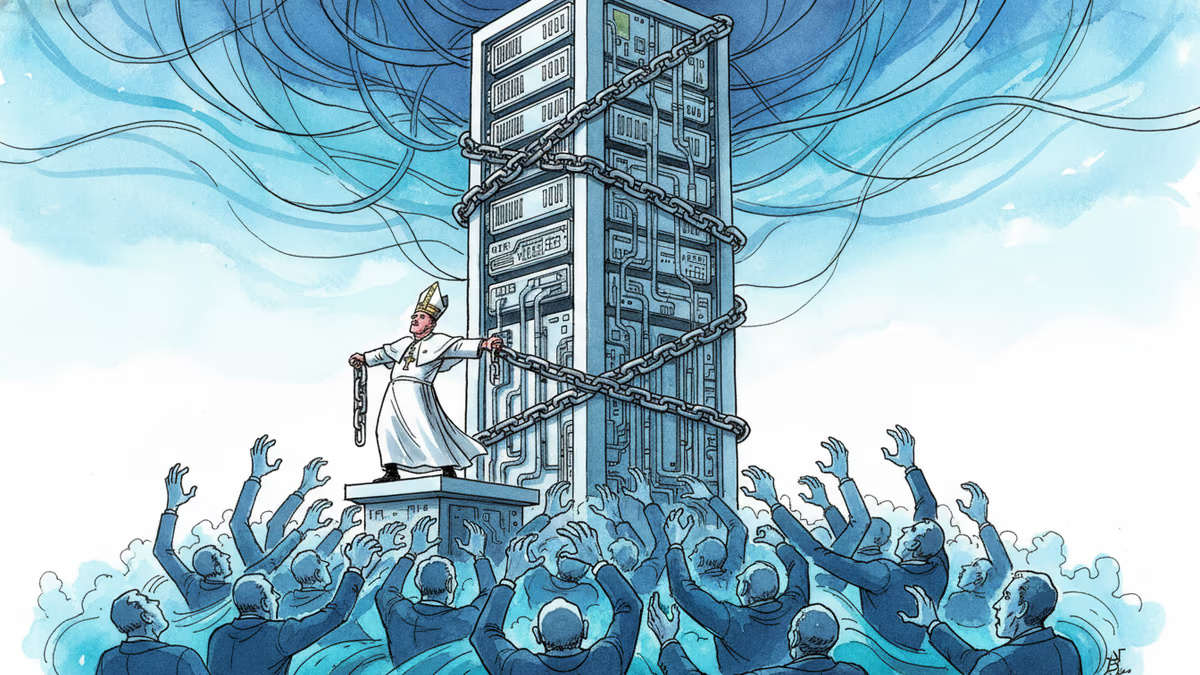
Pope Leo XIV's first encyclical frames AI not as a technology problem but a power problem. Who controls the algorithm controls reality—and that's a political question, not a spiritual one.
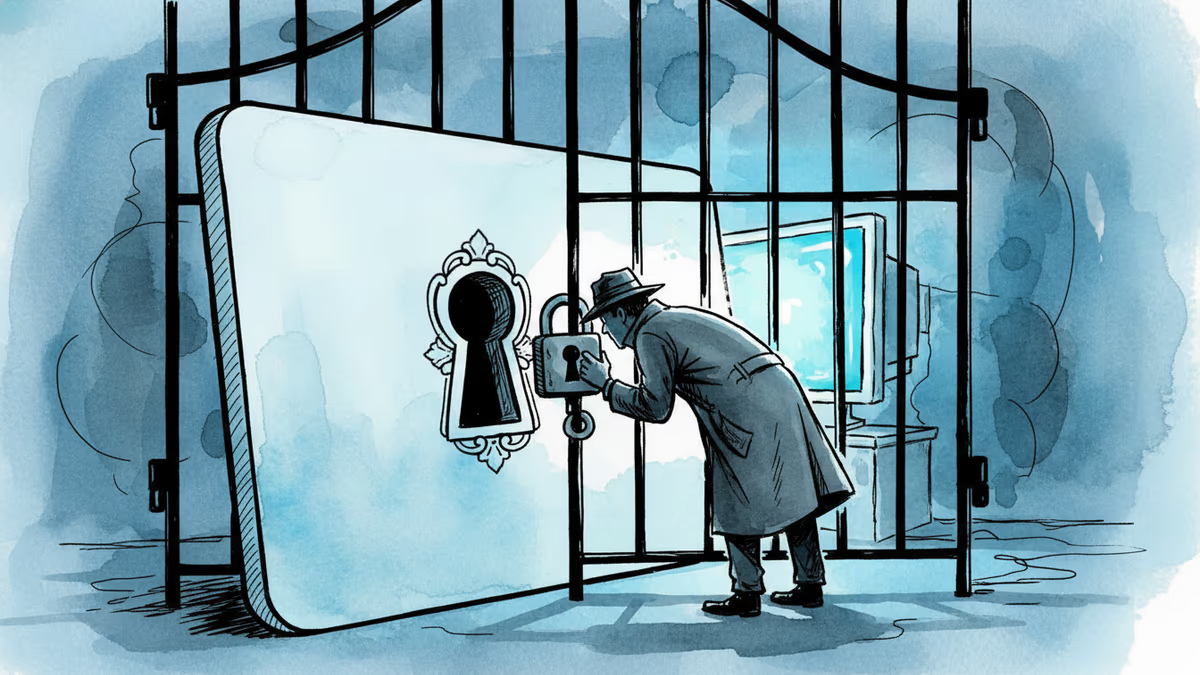
Wisconsin Governor Tony Evers vetoed an age verification bill for adult sites, citing privacy concerns. With 25+ states going the other way, the debate cuts to the heart of online freedom vs. child protection.

The same heartbeat reading, DNA sample, or facial scan has radically different legal protections depending on where you live. From 23andMe's bankruptcy to post-Dobbs data weaponization, here's how five legal regimes treat the data your body generates — and why 640 million smartwatch users should care.
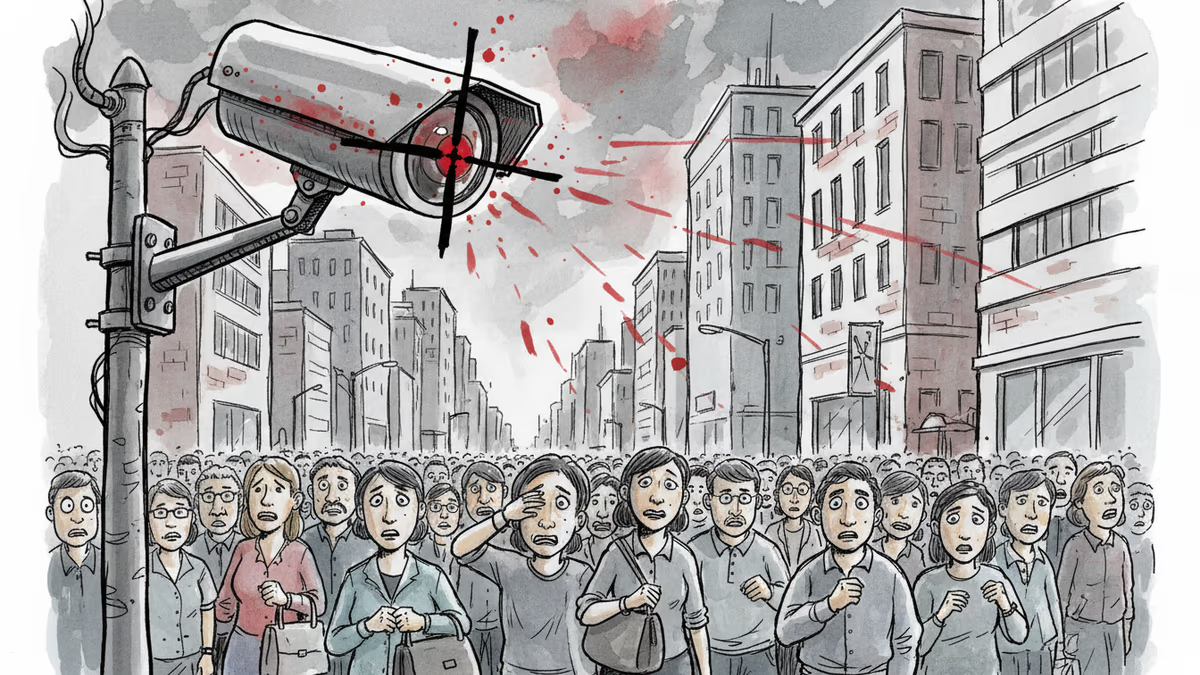
Iran and Israel are hacking civilian security cameras for military reconnaissance. How consumer surveillance devices became weapons of war.
Pope Leo XIV's first encyclical frames AI not as a technology problem but a power problem. Who controls the algorithm controls reality—and that's a political question, not a spiritual one.
Wisconsin Governor Tony Evers vetoed an age verification bill for adult sites, citing privacy concerns. With 25+ states going the other way, the debate cuts to the heart of online freedom vs. child protection.
The same heartbeat reading, DNA sample, or facial scan has radically different legal protections depending on where you live. From 23andMe's bankruptcy to post-Dobbs data weaponization, here's how five legal regimes treat the data your body generates — and why 640 million smartwatch users should care.
Iran and Israel are hacking civilian security cameras for military reconnaissance. How consumer surveillance devices became weapons of war.
Thoughts
Share your thoughts on this article
Sign in to join the conversation