
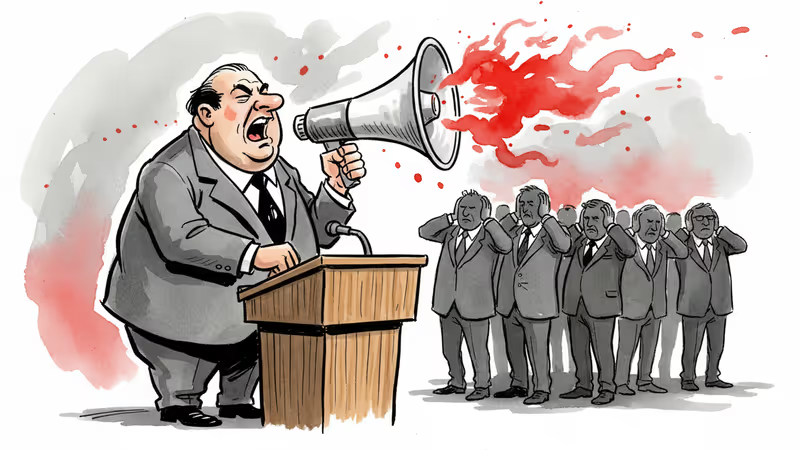
The Wyden Siren Sounds Again—This Time It's About the CIA
Senator Ron Wyden has expressed 'deep concerns' about CIA activities. His track record suggests we should pay attention.
Senator Ron Wyden has sent a two-line letter that should make every American pause. The 13-year veteran of the Senate Intelligence Committee expressed "deep concerns" about certain CIA activities—without revealing what those activities are.
It's a familiar pattern. Wyden can't tell us what he knows because it's classified, but he's found a way to sound the alarm anyway. Privacy advocates call it the "Wyden siren," and its track record is perfect: every time Wyden has warned about government overreach, he's been proven right.
The Man Who Knows Too Much
Wyden occupies a unique position in American democracy. As one of the few lawmakers with access to the government's most sensitive surveillance programs, he knows things that would shock the public. But he's legally bound to keep those secrets, creating an impossible dilemma: How do you warn people about threats to their civil liberties when you can't explain what those threats are?
His solution has been strategic ambiguity. In 2011, Wyden warned that there was a "gap between what the public thinks the law says and what the American government secretly thinks the law says" regarding the Patriot Act. Two years later, Edward Snowden revealed that the NSA was using a secret interpretation of that law to collect phone records from hundreds of millions of Americans.
The pattern repeated with push notifications. Wyden revealed that the Justice Department had barred Apple and Google from disclosing that federal authorities were secretly demanding access to their customers' push notification contents. Each time, what seemed like cryptic warnings became concrete revelations of government surveillance overreach.
The CIA Pushes Back

The CIA's response to Wyden's latest concerns is telling. A spokesperson called it "ironic but unsurprising" that Wyden was unhappy, describing his criticism as a "badge of honor." This defensive posture suggests the senator has hit a nerve.
But what exactly has the CIA been doing? We can only speculate, but given Wyden's history of exposing tech-related surveillance programs, it likely involves digital surveillance or data collection that pushes—or crosses—legal boundaries.
The Broader Implications
Wyden's warning comes at a critical moment for American democracy. The intelligence community has vast technological capabilities that previous generations of oversight mechanisms weren't designed to handle. Social media platforms, cloud services, and mobile devices generate unprecedented amounts of personal data, creating new opportunities for surveillance that existing laws struggle to address.
The challenge isn't just about privacy—it's about accountability. When surveillance programs are so secret that even most members of Congress can't know about them, how can democratic oversight function? Wyden has become a crucial check on this system, using his unique position to hint at problems that would otherwise remain hidden.
What This Means for You
For ordinary Americans, Wyden's warnings matter because they often precede revelations that change how we think about privacy and government power. The NSA phone records program, the push notification surveillance, and other programs Wyden has flagged all directly affected millions of people who had no idea they were being monitored.
The timing is also significant. As the intelligence community adapts to new technologies—artificial intelligence, quantum computing, advanced data analytics—the potential for surveillance overreach grows. Wyden's concerns about the CIA suggest that adaptation may be happening faster than legal frameworks can keep up.
Authors
Related Articles
Tinder now rewards users who scan their irises at a World orb with free in-app boosts. As AI agents flood dating apps, 'being human' is becoming a verified status — and a business model.
Wisconsin Governor Tony Evers vetoed an age verification bill for adult sites, citing privacy concerns. With 25+ states going the other way, the debate cuts to the heart of online freedom vs. child protection.

The same heartbeat reading, DNA sample, or facial scan has radically different legal protections depending on where you live. From 23andMe's bankruptcy to post-Dobbs data weaponization, here's how five legal regimes treat the data your body generates — and why 640 million smartwatch users should care.
Iran and Israel are hacking civilian security cameras for military reconnaissance. How consumer surveillance devices became weapons of war.
Tinder now rewards users who scan their irises at a World orb with free in-app boosts. As AI agents flood dating apps, 'being human' is becoming a verified status — and a business model.
Wisconsin Governor Tony Evers vetoed an age verification bill for adult sites, citing privacy concerns. With 25+ states going the other way, the debate cuts to the heart of online freedom vs. child protection.
The same heartbeat reading, DNA sample, or facial scan has radically different legal protections depending on where you live. From 23andMe's bankruptcy to post-Dobbs data weaponization, here's how five legal regimes treat the data your body generates — and why 640 million smartwatch users should care.
Iran and Israel are hacking civilian security cameras for military reconnaissance. How consumer surveillance devices became weapons of war.
Thoughts
Share your thoughts on this article
Sign in to join the conversation