
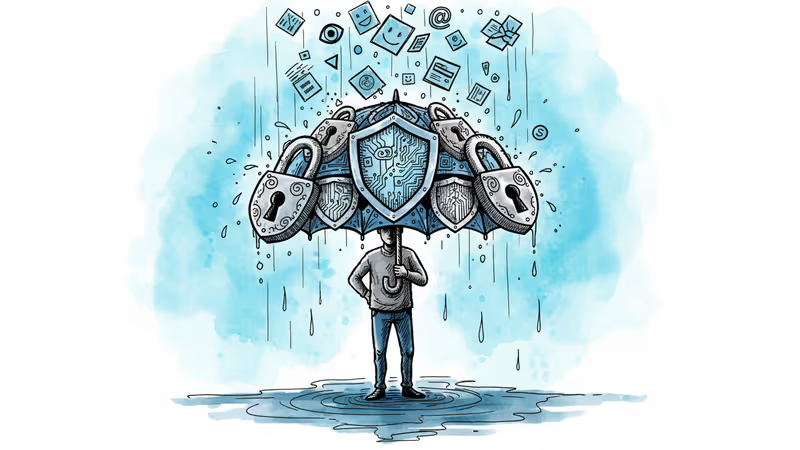
Privacy Protection Goes Full Insurance Mode
NordProtect bundles VPN, identity theft insurance, and data monitoring into subscription plans. What happens when privacy becomes a purchasable commodity?
Data breaches happen so frequently they barely make headlines anymore. Your personal information is probably floating around the dark web right now, and there's not much you can do about it. Nord Security's answer? Stop trying to prevent the inevitable and start insuring against it instead.
NordProtect isn't traditional security software. It's essentially an insurance bundle with some monitoring tools on the side. The approach acknowledges a harsh reality: perfect privacy protection is impossible, so let's focus on damage control.
Insurance First, Security Second
The service structure reveals its true nature. The Silver tier ($7/month annually) centers around identity theft and online fraud insurance provided by HSB Specialty Insurance Company. Dark web monitoring and credit score tracking feel like add-ons to the main insurance product.
Upgrading to Gold ($9.50/month) throws in NordVPN, while Platinum ($12/month) adds Incogni, a data broker removal service. The pricing heavily favors annual subscriptions—monthly rates are punishingly expensive at $16-32 per tier.
What's striking is the philosophical shift. Instead of promising to keep your data safe, NordProtect assumes it's already compromised and focuses on mitigating consequences. It's privacy protection for the post-privacy world.
Lots of Alerts, Limited Action
The user experience reflects this reactive approach. After spending 20 minutes filling out personal information forms, users get bombarded with data breach alerts from the past two decades. One reviewer received 48 notifications, mostly containing outdated passwords and incorrect information.
The interface stays deliberately simple—perhaps too simple. Users report forgetting what the service actually does for them day-to-day. Without a mobile app, the experience feels incomplete for a service targeting everyday consumers.

The tangible benefits vary significantly based on your existing privacy setup. Users already employing credit freezes, bank monitoring, and VPNs see minimal additional protection. But for privacy newcomers starting from scratch, the bundled approach offers genuine value.
Bundle Economics Make Sense
The real selling point is pricing strategy. Buying NordVPN Basic ($60/year) and Incogni Standard ($95/year) separately costs $155. NordProtect Platinum, including both services plus insurance, runs $144 annually.
Competitor pricing sits across the spectrum: Aura Individual costs $144/year, Norton LifeLock Ultimate Plus runs $240/year, and McAfee Total Protect charges $90/year. NordProtect lands in the middle while offering unique VPN integration.
The bundle strategy mirrors streaming services—it makes little sense for single-service users but creates compelling value for those wanting multiple privacy tools.
The Commodification Question
NordProtect's emergence signals a broader shift in how we think about digital privacy. When individual efforts prove insufficient against systemic data collection and breaches, commercialized protection becomes the logical next step.
This trend extends beyond single companies. Major platforms increasingly offer premium privacy features, while telecom providers bundle security services into higher-tier plans. Privacy is becoming a tiered commodity—basic protection for everyone, enhanced protection for paying customers.
But this commodification raises uncomfortable questions. Should privacy protection depend on purchasing power? Does insurance-focused thinking discourage proactive prevention measures? When privacy becomes a subscription service, who gets left behind?
The regulatory landscape adds another layer of complexity. As governments implement stricter data protection laws, companies face pressure to provide better baseline privacy. Yet services like NordProtect suggest that truly comprehensive protection requires going beyond regulatory minimums.
Authors
Related Articles
UK Visa Portal, a private immigration service mistaken for an official government site, has been exposing passport scans and selfies of over 100,000 applicants. The breach remains unpatched.
Tinder now rewards users who scan their irises at a World orb with free in-app boosts. As AI agents flood dating apps, 'being human' is becoming a verified status — and a business model.
Wisconsin Governor Tony Evers vetoed an age verification bill for adult sites, citing privacy concerns. With 25+ states going the other way, the debate cuts to the heart of online freedom vs. child protection.
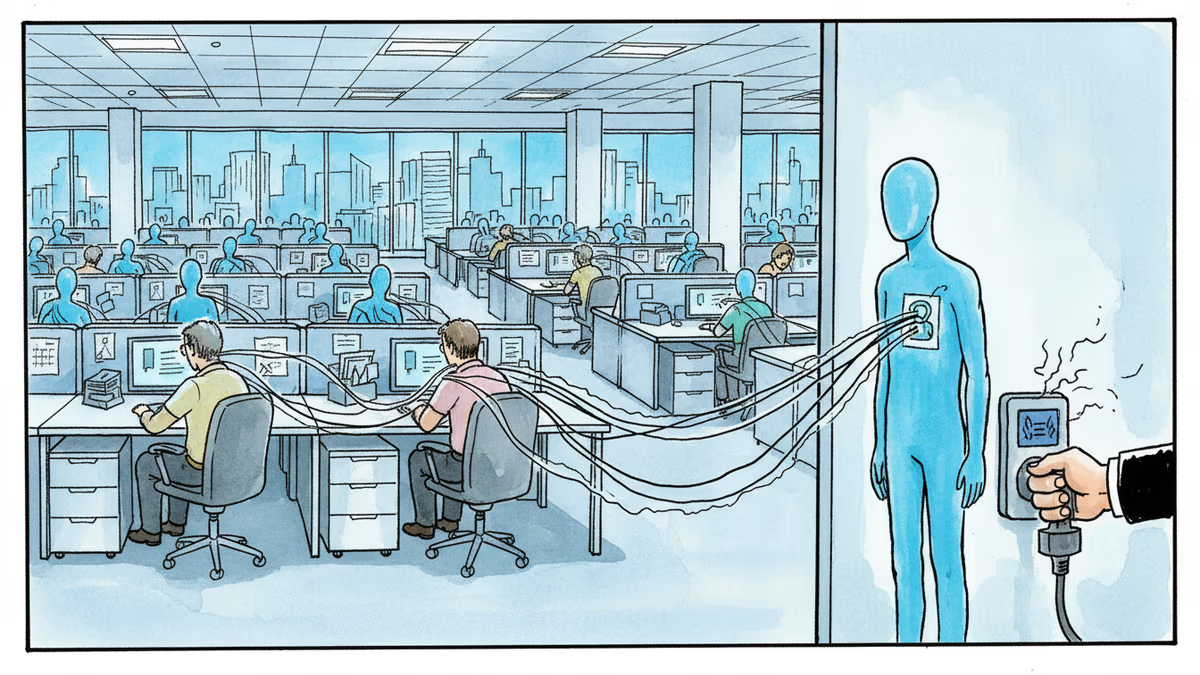
Okta CEO Todd McKinnon on why AI agents need identity management, the SaaSpocalypse threat, and why the kill switch might be the most important button in enterprise tech.
UK Visa Portal, a private immigration service mistaken for an official government site, has been exposing passport scans and selfies of over 100,000 applicants. The breach remains unpatched.
Tinder now rewards users who scan their irises at a World orb with free in-app boosts. As AI agents flood dating apps, 'being human' is becoming a verified status — and a business model.
Wisconsin Governor Tony Evers vetoed an age verification bill for adult sites, citing privacy concerns. With 25+ states going the other way, the debate cuts to the heart of online freedom vs. child protection.
Okta CEO Todd McKinnon on why AI agents need identity management, the SaaSpocalypse threat, and why the kill switch might be the most important button in enterprise tech.
Thoughts
Share your thoughts on this article
Sign in to join the conversation