
When 120,000 Students Go Dark: The Rising Threat to University Systems
La Sapienza University in Rome faces third day of system shutdown after ransomware attack. Why universities are becoming prime targets for cybercriminals and what it means for higher education security.
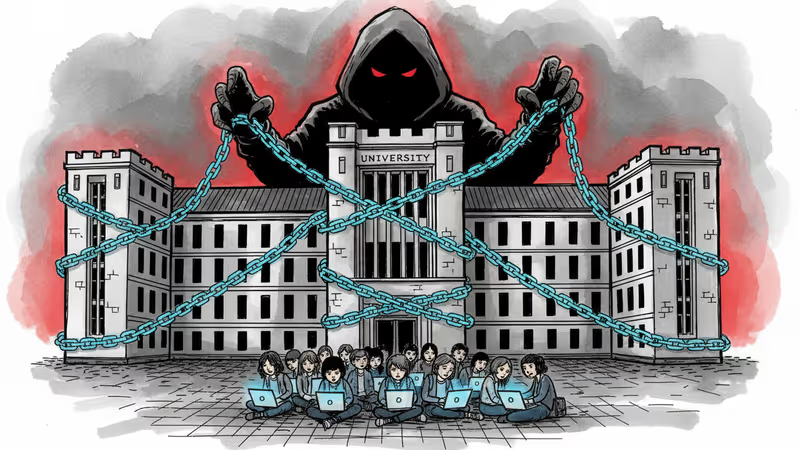
120,000 students and staff have been thrust into a digital dark age for three straight days. La Sapienza University in Rome, one of Europe's largest universities, remains paralyzed after what appears to be a sophisticated ransomware attack that's turned one of Italy's premier academic institutions into a cautionary tale.
The 72-Hour Countdown
The university took the drastic step of shutting down its entire digital infrastructure Tuesday as a "precautionary measure" following the cyberattack. Email systems are "partially limited," workstations are offline, and the university's website remains inaccessible as of this writing.
According to Italian daily Il Corriere della Sera, the attackers didn't just encrypt systems—they sent university administrators a ransom demand with a twisted psychological element. The 72-hour countdown only begins once someone clicks the malicious link, creating an additional layer of pressure and uncertainty.
The attack reportedly used BabLock malware, also known as Rorschach, which was first discovered in 2023. The previously unknown hacking group behind this assault calls itself "Femwar02," adding another name to the growing roster of ransomware gangs targeting educational institutions.
Why Universities Make Perfect Targets
La Sapienza's predicament isn't an isolated incident—it's part of a disturbing trend. Universities have become prime real estate for cybercriminals, and the reasons are grimly logical.
First, universities are data goldmines. They house millions of records containing personal information, research data, financial records, and intellectual property. Second, they're typically underfunded when it comes to cybersecurity, operating with limited IT budgets while managing vast, complex networks.

Last year, the notorious ShinyHunters group demonstrated a different approach, hacking both Harvard University and the University of Pennsylvania without using encryption malware. Instead, they simply stole data and attempted to extort the institutions. This week, the hackers revealed that neither university paid the ransom—a decision that likely influenced their strategy going forward.
The Academic Security Paradox
Universities face a unique challenge that corporations don't: balancing openness with security. Academic institutions are built on principles of collaboration, research sharing, and open access to information. This inherent openness creates multiple entry points for attackers.
Consider the typical university network: thousands of devices connecting daily, guest networks for visitors, research systems that need external access, and legacy systems that may not receive regular security updates. Add faculty who travel internationally, students using personal devices, and the constant flow of visiting researchers, and you have a security professional's nightmare.
Italy's national cybersecurity agency, Agenzia per la Cybersicurezza Nazionale (ACN), is investigating the La Sapienza incident, but the damage extends beyond just technical systems. Exams continue, but students must register directly with professors. Information kiosks have been set up across campus to help confused students navigate the analog world.
The Ripple Effect
The three-day shutdown at La Sapienza offers a glimpse into what happens when digital infrastructure fails at scale. It's not just about inconvenience—it's about the fundamental disruption of how modern education operates.
Students can't access course materials, submit assignments, or communicate with professors through normal channels. Research projects grind to a halt. Administrative processes revert to paper-based systems that many staff haven't used in years. The financial impact grows with each passing hour, not just from the potential ransom demand, but from operational disruption and reputation damage.
This incident also raises questions about backup strategies and business continuity planning. While La Sapienza reports that its backup systems weren't affected, the restoration process is taking days, not hours. This suggests that even well-prepared institutions may struggle with the complexity of modern ransomware attacks.
Authors
Related Articles
UK Visa Portal, a private immigration service mistaken for an official government site, has been exposing passport scans and selfies of over 100,000 applicants. The breach remains unpatched.
Okta CEO Todd McKinnon on why AI agents need identity management, the SaaSpocalypse threat, and why the kill switch might be the most important button in enterprise tech.
Iran and Israel are hacking civilian security cameras for military reconnaissance. How consumer surveillance devices became weapons of war.
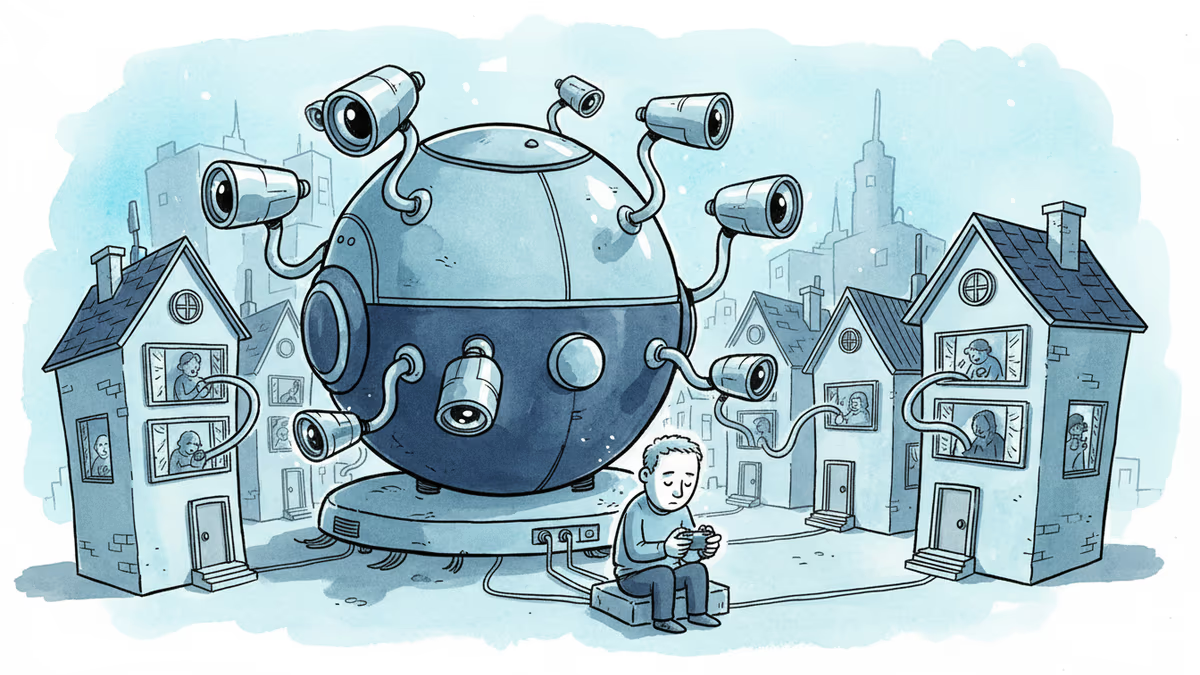
A security researcher discovered he could access 7,000 DJI robot vacuums and peek into strangers' homes. This Valentine's Day revelation exposes the hidden privacy risks of our smart home obsession.
UK Visa Portal, a private immigration service mistaken for an official government site, has been exposing passport scans and selfies of over 100,000 applicants. The breach remains unpatched.
Okta CEO Todd McKinnon on why AI agents need identity management, the SaaSpocalypse threat, and why the kill switch might be the most important button in enterprise tech.
Iran and Israel are hacking civilian security cameras for military reconnaissance. How consumer surveillance devices became weapons of war.
A security researcher discovered he could access 7,000 DJI robot vacuums and peek into strangers' homes. This Valentine's Day revelation exposes the hidden privacy risks of our smart home obsession.
Thoughts
Share your thoughts on this article
Sign in to join the conversation