
Russian Satellites Are Eavesdropping on Europe From Space
European officials reveal Russian space vehicles have intercepted communications from over a dozen satellites, raising concerns about data theft and potential satellite manipulation.
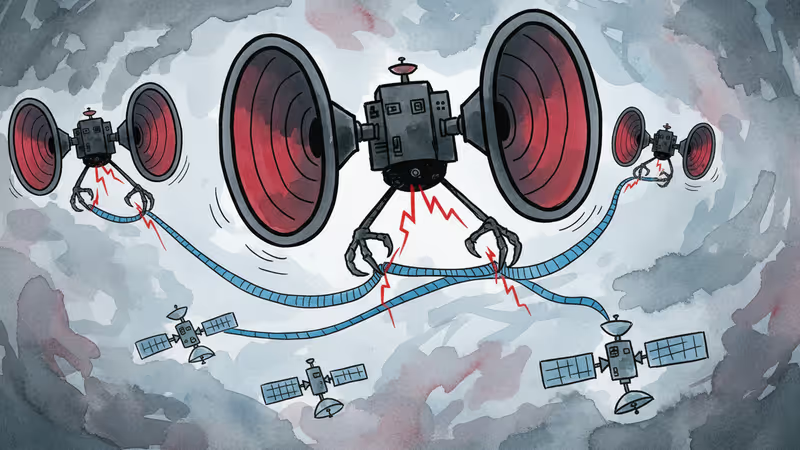
The new frontier of espionage isn't in dark alleys or embassy basements—it's 200 miles above your head. European security officials have discovered that Russian space vehicles have been intercepting communications from at least a dozen key European satellites, turning the cosmos into Moscow's latest surveillance playground.
The Silent Hunt Above the Clouds
The interceptions, which haven't been publicly reported until now, represent a sophisticated escalation in space-based intelligence gathering. European officials believe Russian spacecraft have been systematically shadowing European satellites, positioning themselves to capture sensitive communications that flow through these orbital networks.
But this isn't just about eavesdropping. The real concern lies in what comes next: the potential for Russia to manipulate satellite trajectories or even force them to crash. What starts as digital espionage could quickly become physical destruction of critical infrastructure that millions of Europeans rely on daily.
The shadowing activities have intensified dramatically over the past three years—a timeline that coincides perfectly with Russia's full-scale invasion of Ukraine and the subsequent breakdown in East-West relations. As tensions on Earth have escalated, so has the competition in the heavens.
Beyond Spy Games: The Infrastructure at Risk

European satellites don't just handle government communications. They're the invisible backbone of modern life, managing everything from GPS navigation and banking transactions to weather forecasting and internet connectivity. When Russian spacecraft intercept these communications, they're potentially accessing:
Financial transaction data flowing between European banks, military communications between NATO allies, civilian GPS coordinates that could reveal movement patterns of everything from delivery trucks to emergency services, and weather data that influences agricultural decisions and disaster response.
The implications stretch far beyond traditional espionage. If Russia can manipulate satellite trajectories, they could disrupt services that European citizens take for granted every day. Imagine your GPS suddenly directing you into a lake, or emergency services losing communication during a crisis.
The New Rules of Engagement
This revelation highlights how space has become the latest domain of geopolitical competition. Unlike terrestrial espionage, space-based interception operates in a legal gray area where international law struggles to keep pace with technological capabilities.
European officials face a delicate balancing act. Publicly confronting Russia risks escalating tensions, but staying silent allows the activities to continue unchecked. Meanwhile, the private companies that operate many of these satellites find themselves caught between commercial interests and national security concerns.
The timing also raises questions about Western preparedness. Why did it take three years of intensified activity for this information to emerge? And if European officials are only now discovering these interceptions, what other space-based surveillance activities might be going undetected?
Authors
Related Articles

UK Visa Portal, a private immigration service mistaken for an official government site, has been exposing passport scans and selfies of over 100,000 applicants. The breach remains unpatched.

Over 270 Russian universities are offering students free tuition and up to $70,000 to serve as military drone pilots. Recruiters promise no frontline risk. The reality is more complicated.
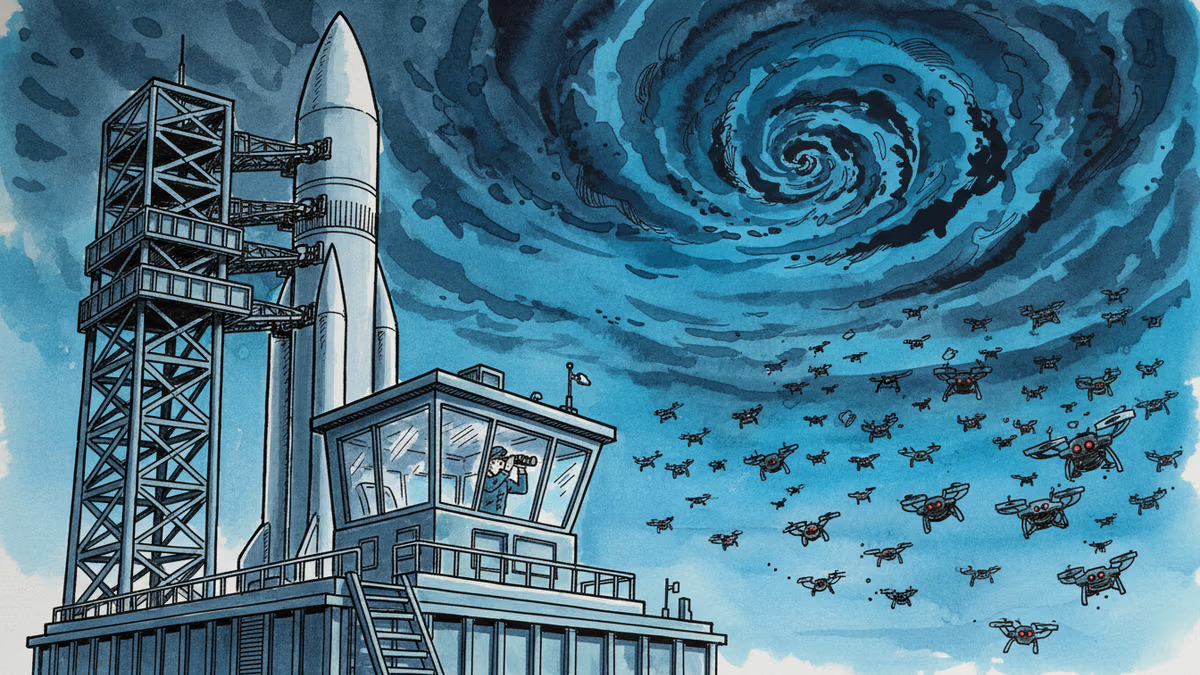
Russia's Plesetsk Cosmodrome has faced multiple drone attacks as Moscow races to build its own Starlink-like satellite network. What does this mean for the future of space warfare?

US Space Command confirms Russia has deployed operational anti-satellite weapons tracking American spy satellites in low-Earth orbit. What does this mean for space security?
UK Visa Portal, a private immigration service mistaken for an official government site, has been exposing passport scans and selfies of over 100,000 applicants. The breach remains unpatched.
Over 270 Russian universities are offering students free tuition and up to $70,000 to serve as military drone pilots. Recruiters promise no frontline risk. The reality is more complicated.
Russia's Plesetsk Cosmodrome has faced multiple drone attacks as Moscow races to build its own Starlink-like satellite network. What does this mean for the future of space warfare?
US Space Command confirms Russia has deployed operational anti-satellite weapons tracking American spy satellites in low-Earth orbit. What does this mean for space security?
Thoughts
Share your thoughts on this article
Sign in to join the conversation