
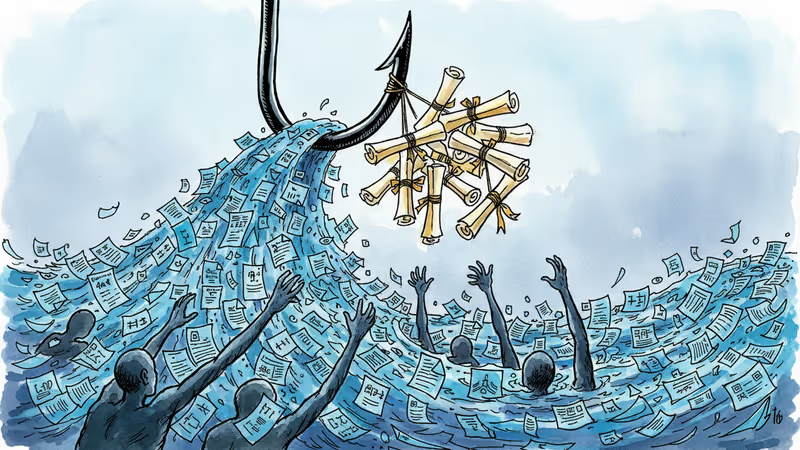
Harvard and UPenn Breaches Expose Million Records Each
Hacking group ShinyHunters published over 1 million records from Harvard and UPenn after universities refused ransom demands. Social engineering attacks highlight vulnerabilities in higher education.
Over 2 million records. That's the combined scale of personal data now floating freely on the dark web, courtesy of two of America's most prestigious universities and their refusal to pay cybercriminals.
ShinyHunters, a notorious hacking group, has published what it claims are more than one million records each from Harvard University and the University of Pennsylvania, following successful breaches last year that both institutions initially tried to downplay.
When Ivy League Security Fails
The attacks weren't sophisticated nation-state operations or zero-day exploits. They were embarrassingly simple social engineering attacks—the digital equivalent of a con artist talking their way past a security guard.
At UPenn, hackers used social engineering to breach "systems related to Penn's development and alumni activities" in November. The audacity was remarkable: they sent emails to alumni announcing the hack from official university addresses. Harvard fell victim to voice phishing, where attackers called employees and tricked them into clicking malicious links.
The stolen data reads like a privacy nightmare: email addresses, phone numbers, home and business addresses, donation details, event attendance records, and biographical information tied to fundraising activities. TechCrunch verified portions of the dataset, confirming its authenticity through alumni records and student ID matches.
The Ransom That Never Came

ShinyHunters operates on a simple business model: steal data, demand payment, publish if refused. Both universities chose not to pay, leading to this week's data dump on the group's dedicated leak site.
During the UPenn breach, hackers included politically charged language about affirmative action policies, though ShinyHunters isn't known for political motivations. The inclusion of such messaging raises questions about whether the group was hired by others or simply opportunistically adding inflammatory content to maximize attention.
Why Universities Make Perfect Targets
Higher education institutions sit at a dangerous intersection: they hold valuable personal and financial data while often operating with limited cybersecurity budgets and complex, decentralized IT systems. Alumni databases are particularly attractive because they contain not just contact information, but wealth indicators, career details, and social connections.
Universities also face unique challenges. Unlike corporations, they must balance security with academic openness. Faculty and students expect easy access to resources, making lockdown security measures difficult to implement. Add in aging IT infrastructure and limited cybersecurity staff, and you have a perfect storm.
The Broader Implications
These breaches highlight a troubling trend: educational institutions becoming prime targets for cybercriminals. The data published this week could enable identity theft, targeted phishing campaigns, and social engineering attacks against alumni for years to come.
For the affected individuals—many of whom are prominent figures in business, politics, and academia—the exposure goes beyond financial risk. Personal details about donations, political affiliations, and social connections could be weaponized for blackmail or influence operations.
Authors
Related Articles
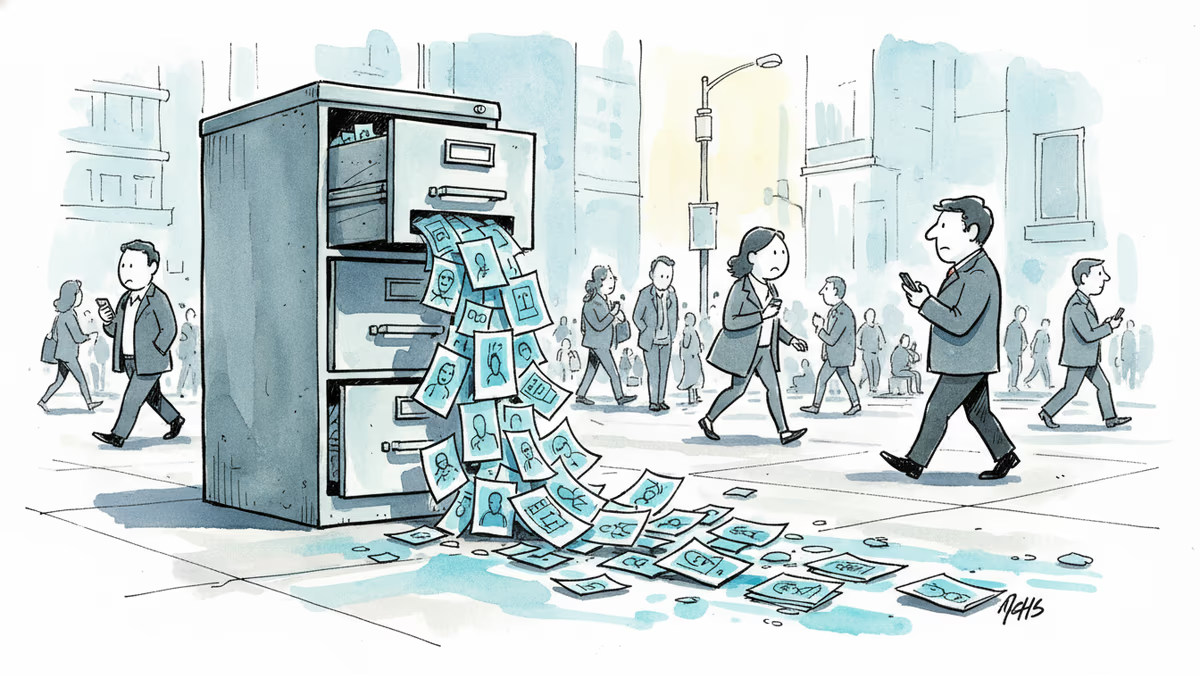
UK Visa Portal, a private immigration service mistaken for an official government site, has been exposing passport scans and selfies of over 100,000 applicants. The breach remains unpatched.
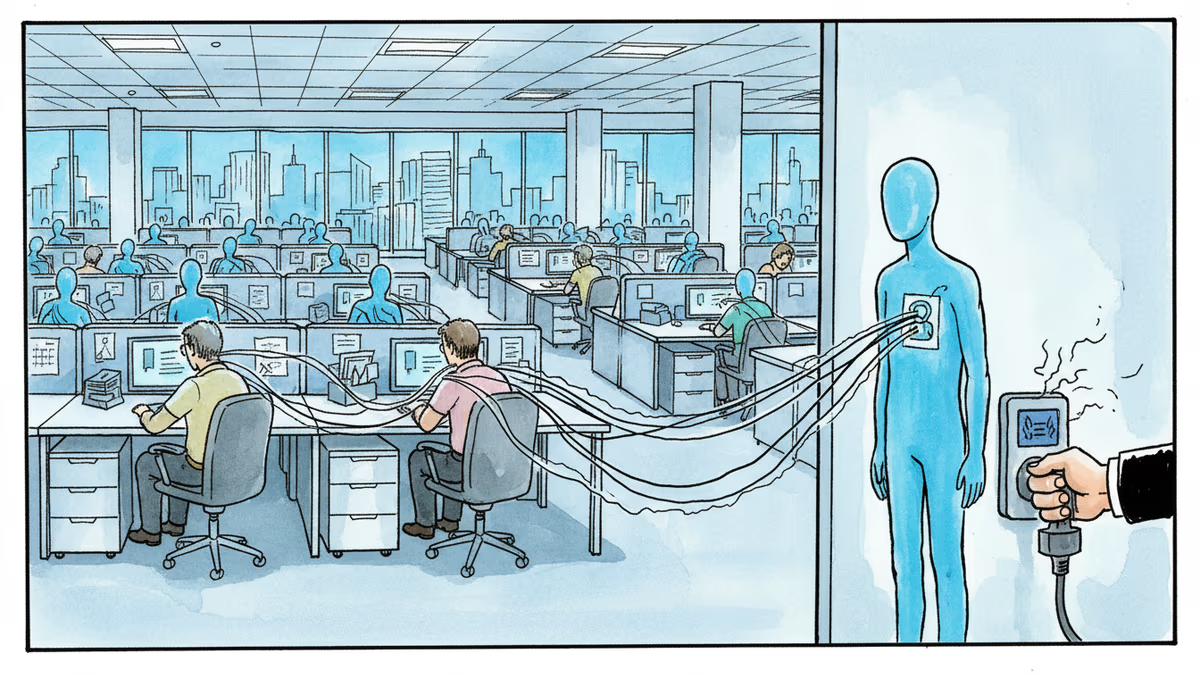
Okta CEO Todd McKinnon on why AI agents need identity management, the SaaSpocalypse threat, and why the kill switch might be the most important button in enterprise tech.
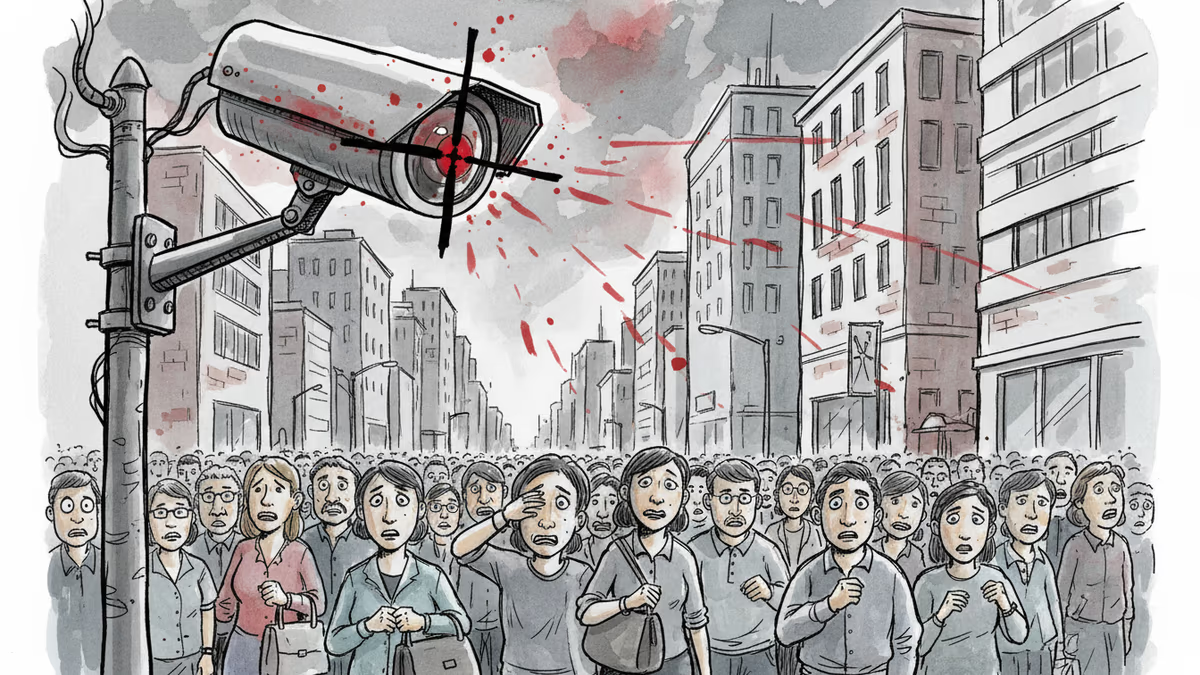
Iran and Israel are hacking civilian security cameras for military reconnaissance. How consumer surveillance devices became weapons of war.
A security researcher discovered he could access 7,000 DJI robot vacuums and peek into strangers' homes. This Valentine's Day revelation exposes the hidden privacy risks of our smart home obsession.
UK Visa Portal, a private immigration service mistaken for an official government site, has been exposing passport scans and selfies of over 100,000 applicants. The breach remains unpatched.
Okta CEO Todd McKinnon on why AI agents need identity management, the SaaSpocalypse threat, and why the kill switch might be the most important button in enterprise tech.
Iran and Israel are hacking civilian security cameras for military reconnaissance. How consumer surveillance devices became weapons of war.
A security researcher discovered he could access 7,000 DJI robot vacuums and peek into strangers' homes. This Valentine's Day revelation exposes the hidden privacy risks of our smart home obsession.
Thoughts
Share your thoughts on this article
Sign in to join the conversation