
Your Trusted Text Editor Was Hijacked for 6 Months—What Else Don't You Know?
Chinese state hackers controlled Notepad++ update infrastructure for six months, selectively targeting users with backdoored versions while others received clean updates.
Imagine updating your favorite text editor and unknowingly inviting Chinese government hackers into your computer. That's exactly what happened to select Notepad++ users for six months—and they had no idea.
The Perfect Stealth Operation
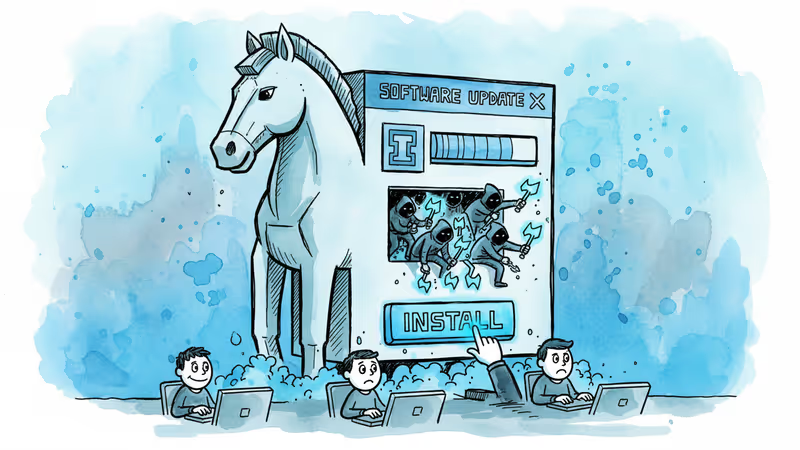
Notepad++ developers revealed Monday that suspected Chinese state actors had completely compromised their update infrastructure since last June. But here's the terrifying part: they didn't attack everyone. Instead, they ran a sophisticated targeting operation, redirecting only specific users to malicious update servers while everyone else received legitimate updates.
This selective approach was brilliant from an attacker's perspective. Mass infections get detected quickly, but cherry-picking targets? That can fly under the radar for months. And it did—until December, when Notepad++ finally regained full control.
Even after the initial infrastructure was secured in September, the attackers maintained access to internal services until December 2nd. They used this persistent foothold to continue their selective redirection campaign, demonstrating a level of patience and sophistication that screams state-sponsored operation.
Trust, Betrayed at the Source
This attack strikes at the heart of software trust. Users did everything right—they kept their software updated, clicked on official update notifications, and installed what appeared to be legitimate patches. Yet some unknowingly received backdoored versions that could have compromised their entire systems.
The implications extend far beyond individual users. Notepad++ is popular among developers, system administrators, and IT professionals who often handle sensitive code and system configurations. A compromised text editor in the wrong hands could provide access to source code, server configurations, or internal documentation.

What makes this particularly insidious is the targeting mechanism. The attackers exploited "insufficient update verification controls in older versions," suggesting they specifically hunted for users running vulnerable software versions. This turns the conventional wisdom of "always update" on its head—what if the update itself is the weapon?
The Evolution of Supply Chain Warfare
This attack represents a new evolution in supply chain compromises. Traditional supply chain attacks inject malicious code during the software development process. This operation took a different approach: hijack the distribution mechanism of already-trusted software.
The sophistication is staggering. Rather than compromising the software itself, they compromised the infrastructure that delivers updates. Rather than attacking everyone, they selectively targeted specific users. Rather than making a quick strike, they maintained access for six months.
This patience suggests strategic intelligence gathering rather than immediate financial gain. State-sponsored actors can afford to play the long game, slowly collecting intelligence from high-value targets while remaining undetected.
The Broader Security Landscape
This incident raises uncomfortable questions about software security verification. How many other popular applications might be similarly compromised? How would we know if attackers are selectively targeting users while leaving the majority unaffected?
The attack also highlights the challenge of securing software distribution channels. Companies invest heavily in securing their development environments, but the infrastructure that delivers updates to millions of users can be equally valuable to attackers—and potentially less protected.
For security professionals, this creates a new category of threats to monitor. It's no longer enough to verify that software comes from a trusted source; we need to verify that the delivery mechanism itself hasn't been compromised.
The answer might not lie in individual user behavior, but in fundamental changes to how we architect software distribution and verification systems. The question is: will the industry act before the next six-month compromise is discovered?
Authors
Related Articles
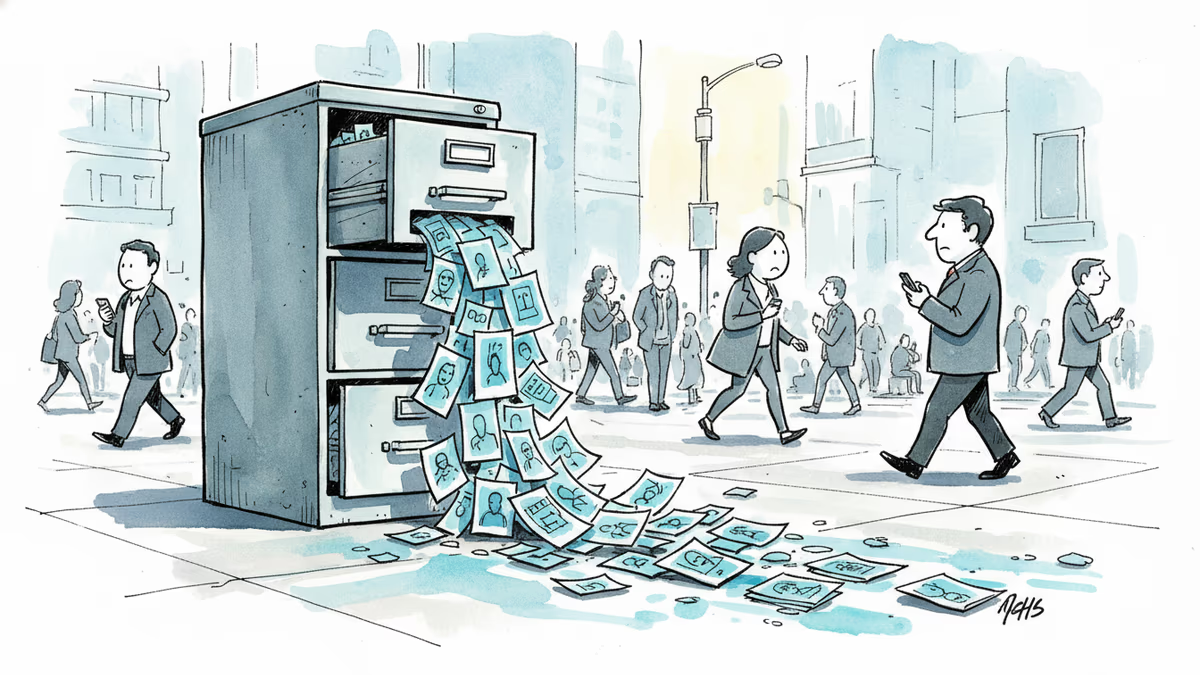
UK Visa Portal, a private immigration service mistaken for an official government site, has been exposing passport scans and selfies of over 100,000 applicants. The breach remains unpatched.
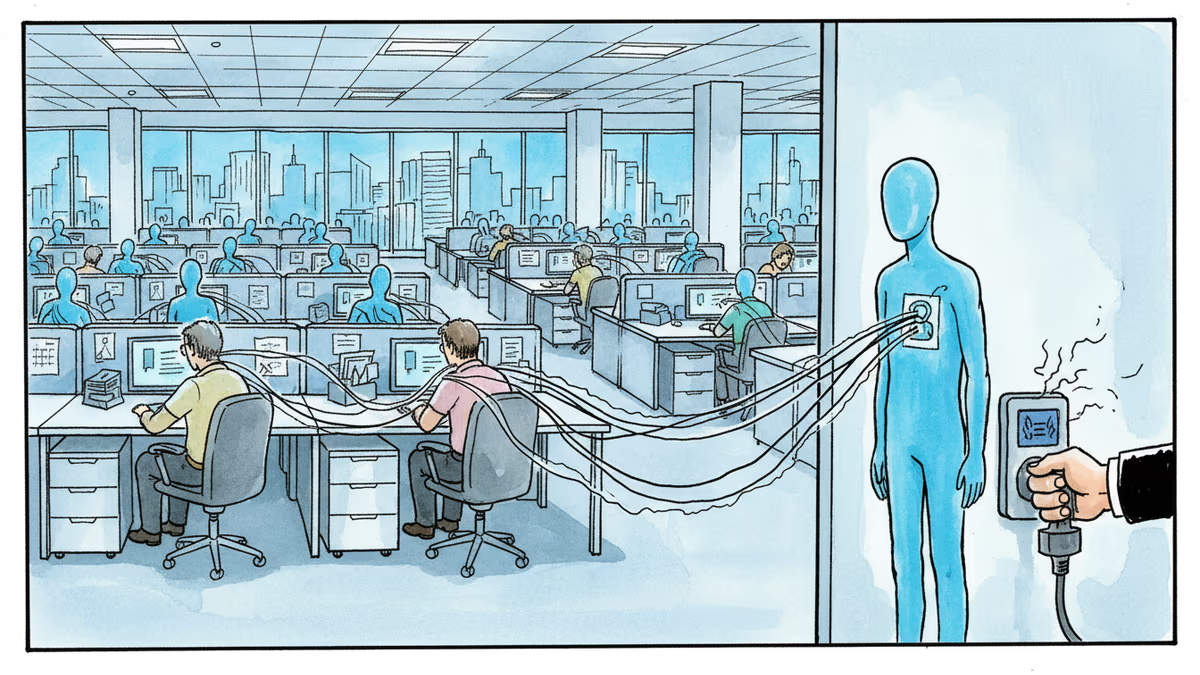
Okta CEO Todd McKinnon on why AI agents need identity management, the SaaSpocalypse threat, and why the kill switch might be the most important button in enterprise tech.
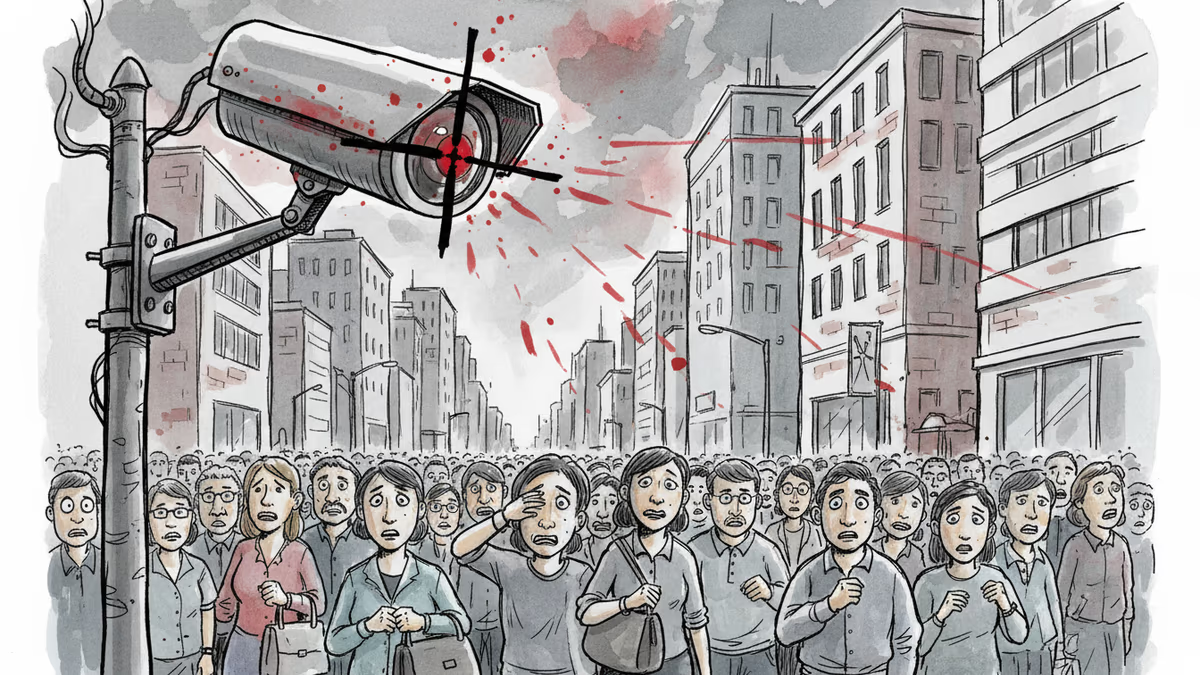
Iran and Israel are hacking civilian security cameras for military reconnaissance. How consumer surveillance devices became weapons of war.
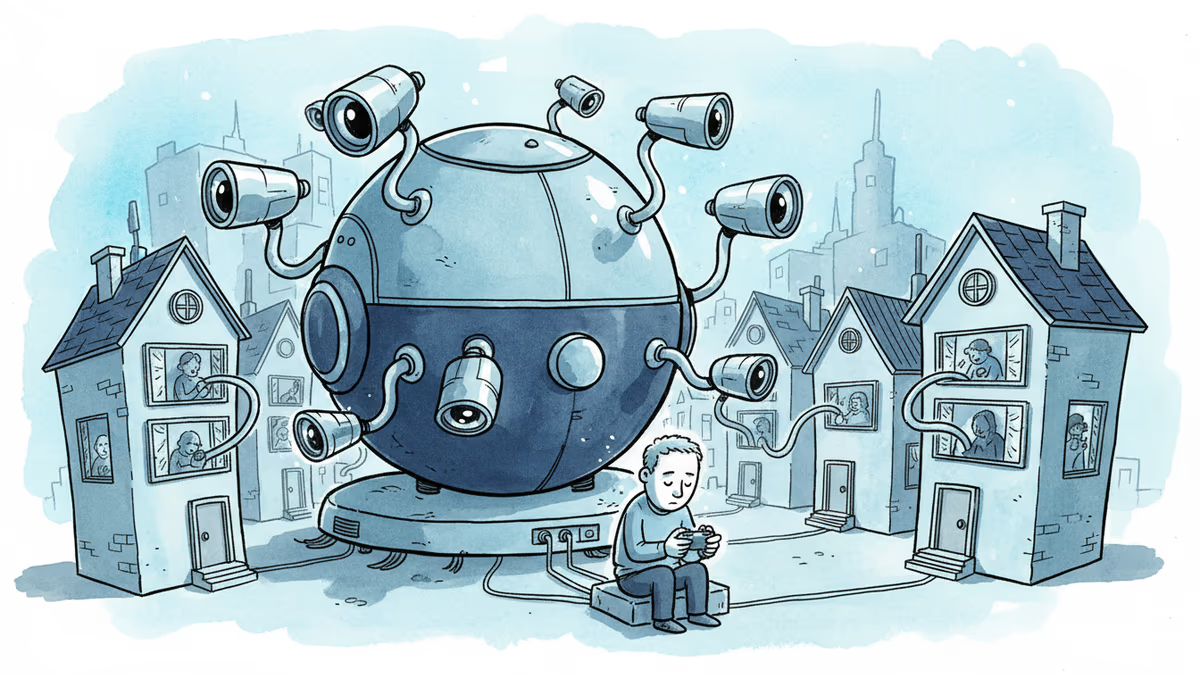
A security researcher discovered he could access 7,000 DJI robot vacuums and peek into strangers' homes. This Valentine's Day revelation exposes the hidden privacy risks of our smart home obsession.
UK Visa Portal, a private immigration service mistaken for an official government site, has been exposing passport scans and selfies of over 100,000 applicants. The breach remains unpatched.
Okta CEO Todd McKinnon on why AI agents need identity management, the SaaSpocalypse threat, and why the kill switch might be the most important button in enterprise tech.
Iran and Israel are hacking civilian security cameras for military reconnaissance. How consumer surveillance devices became weapons of war.
A security researcher discovered he could access 7,000 DJI robot vacuums and peek into strangers' homes. This Valentine's Day revelation exposes the hidden privacy risks of our smart home obsession.
Thoughts
Share your thoughts on this article
Sign in to join the conversation