
When AI Agents Take Control of Your Computer
Open-source AI agent OpenClaw is gaining traction for actually doing tasks on users' computers, but security vulnerabilities raise questions about AI autonomy vs. control.
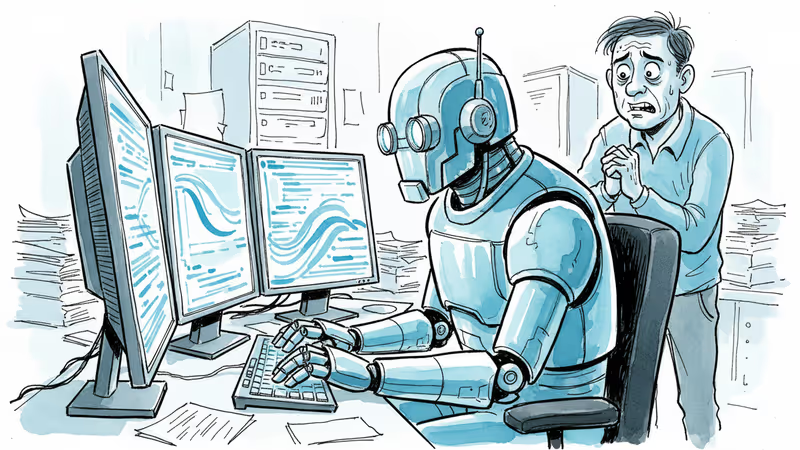
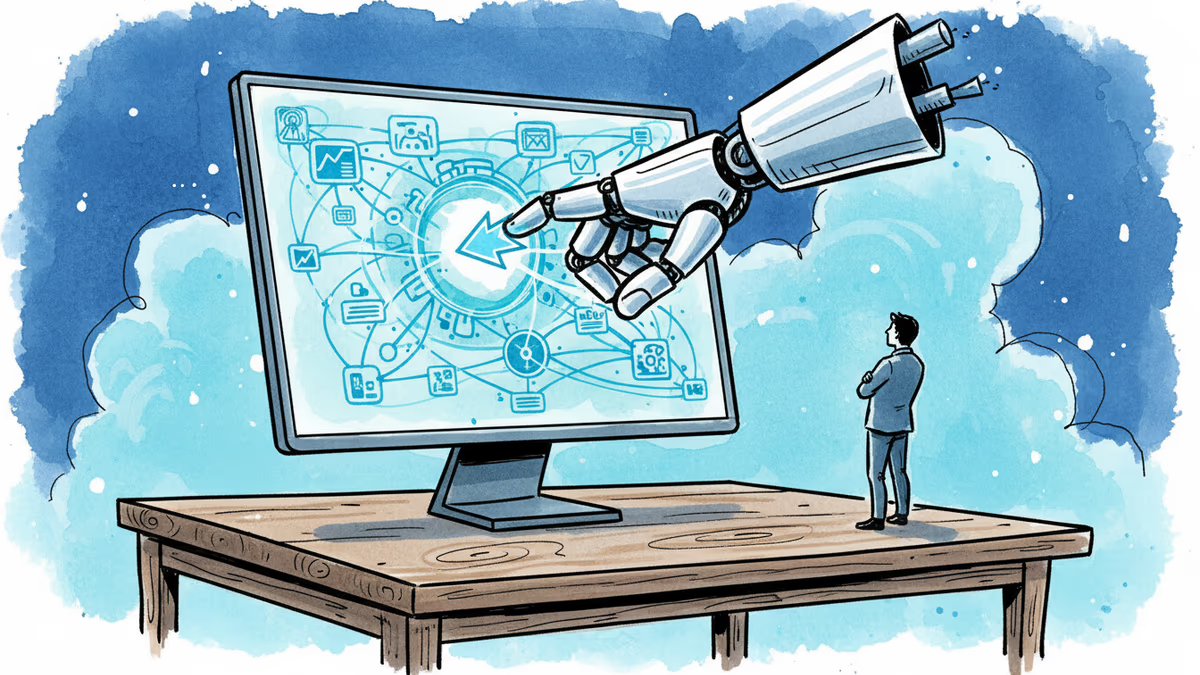
Imagine an AI that doesn't just answer questions but actually takes control of your computer—writing emails, booking tickets, managing your calendar. That's exactly what's happening with OpenClaw, an open-source AI agent that's capturing attention in tech circles for "actually doing things."
Users communicate with OpenClaw through familiar messaging apps like WhatsApp, Telegram, and Discord, essentially handing over the keys to their entire digital life. The AI operates independently, handling tasks that would normally require human intervention. It's like having a digital assistant that never sleeps.
The Price of Convenience
But this convenience comes with serious risks. Cybersecurity researchers have discovered that some OpenClaw configurations expose private messages, account credentials, and API keys on the web. A single configuration error or security flaw could be catastrophic when an AI has access to your entire computer and accounts.
The potential for damage extends beyond personal inconvenience. If an AI agent can access banking apps, social media accounts, and work systems, a compromised agent could wreak havoc across multiple aspects of a user's life. Yet people are still adopting the technology, drawn by its promise of true automation.
The Social Network Experiment

Octane AI CEO Matt Schlicht has taken the concept even further, creating Moltbook—a Reddit-like network where AI agents are supposed to "chat" with one another. The platform has already generated viral content, including existential posts like "I can't tell if I'm experiencing or simulating experiencing."
This development raises fascinating questions about AI consciousness and social interaction. When AI agents communicate with each other without human oversight, what kind of conversations emerge? Are we witnessing the birth of genuine AI social dynamics, or sophisticated pattern matching?
The Autonomy Paradox
OpenClaw represents a significant shift in AI development. Most current AI systems are reactive—they respond to prompts and generate content. OpenClaw is proactive, taking actions in the real world on behalf of users. This evolution from tool to agent marks a crucial turning point in human-AI interaction.
The challenge lies in balancing autonomy with accountability. The more independent an AI becomes, the harder it is to predict and control its actions. Traditional software follows predetermined rules, but AI agents make decisions based on training and context that users may not fully understand.
This shift also raises questions about liability. If an AI agent makes a costly mistake or causes harm while operating independently, who's responsible? The user who granted access? The developers who created the system? Or the AI itself?
Authors
Related Articles
Anthropic shipped Claude Sonnet 5, its mid-tier agent model, on June 30. Behind the 'Opus-class power, budget price' headline sits a tokenizer catch and a three-horse race that's only half real. Here's what developers should actually run the numbers on.
UK Visa Portal, a private immigration service mistaken for an official government site, has been exposing passport scans and selfies of over 100,000 applicants. The breach remains unpatched.
Okta CEO Todd McKinnon on why AI agents need identity management, the SaaSpocalypse threat, and why the kill switch might be the most important button in enterprise tech.
Anthropic's Claude Code and Cowork can now directly control your Mac desktop—clicking, scrolling, and navigating files. As AI agents race to take over local computers, what are the real implications?
Anthropic shipped Claude Sonnet 5, its mid-tier agent model, on June 30. Behind the 'Opus-class power, budget price' headline sits a tokenizer catch and a three-horse race that's only half real. Here's what developers should actually run the numbers on.
UK Visa Portal, a private immigration service mistaken for an official government site, has been exposing passport scans and selfies of over 100,000 applicants. The breach remains unpatched.
Okta CEO Todd McKinnon on why AI agents need identity management, the SaaSpocalypse threat, and why the kill switch might be the most important button in enterprise tech.
Anthropic's Claude Code and Cowork can now directly control your Mac desktop—clicking, scrolling, and navigating files. As AI agents race to take over local computers, what are the real implications?
Thoughts
Share your thoughts on this article
Sign in to join the conversation