
Robot Barista in Seattle Hints at Coffee Industry's Automated Future
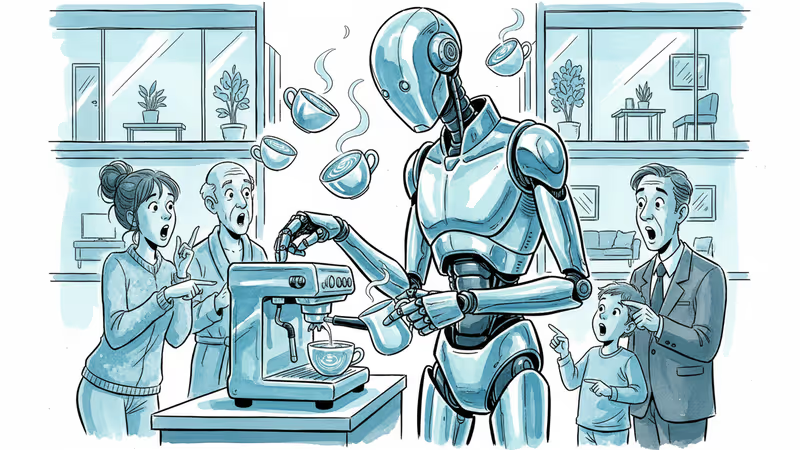
A robot barista named Jarvis at a Seattle luxury apartment complex creates personalized lattes with latte art, showcasing the real-world potential of service automation.
In Seattle's coffee-obsessed landscape, something remarkable is brewing at Hill7, a luxury apartment complex. Here, a robot barista named Jarvis greets residents by name and crafts personalized lattes with rose-flavored syrup—and even latte art. This isn't just a tech demo; it's a glimpse into how automation might reshape one of America's most human-centered service industries.
Beyond the Novelty Factor
What makes Jarvis significant isn't just that it can make coffee—it's that it delivers a genuinely personalized experience. The robot remembers preferences, addresses customers by name, and creates drinks that rival human baristas. This represents a leap from simple vending machines to AI-powered service that could fundamentally change customer expectations.
The Seattle setting adds weight to this development. In Starbucks' hometown, where you can't walk six blocks without passing multiple coffee shops, the fact that residents actively choose robot-made coffee suggests a real shift in consumer acceptance of automated service.
For context, the US coffee shop industry generates over $45 billion annually and employs roughly 1.7 million people. If robot baristas prove viable, the implications extend far beyond one apartment building.
The Economics of Automation
Labor costs represent 25-35% of coffee shop expenses, making automation attractive for business owners facing rising wages and rent. A robot barista doesn't call in sick, doesn't need benefits, and can work 24/7. For chains like Dunkin' or independent shops struggling with thin margins, this could be transformative.
But the economics aren't straightforward. Robot systems require significant upfront investment, ongoing maintenance, and technical support. The question becomes whether the long-term savings justify the initial costs—and whether customers will accept the trade-off.

Early indicators suggest they might. Younger consumers, already comfortable with app-based ordering and contactless payment, seem more open to automated service. The pandemic accelerated this trend, normalizing reduced human interaction in food service.
The Human Element Question
Here's where it gets complicated: coffee culture has always been about more than caffeine. The "third place" concept—coffee shops as community gathering spaces—depends heavily on human connection. Can a robot replicate the barista who remembers your name, asks about your day, or recommends something new?
Jarvis suggests the answer might be yes, at least partially. By handling routine orders efficiently, robots could free human staff to focus on customer engagement, menu innovation, and community building. The model might not be replacement but collaboration.
However, this raises questions about job displacement. While some roles might evolve rather than disappear, the transition won't be painless for current baristas. Retraining and reskilling become crucial considerations as automation advances.
Looking Beyond Coffee
The implications stretch far beyond lattes. If robots can master the nuanced, personalized service of coffee-making, what other service industries are next? Fast-casual dining? Retail? Hotel concierge services?
The Seattle experiment is really a test case for service automation broadly. Success here could accelerate deployment across multiple sectors, while failure might slow the entire movement.
Regulatory questions also loom. How will labor laws adapt? What about health codes? As robots become more prevalent in food service, policymakers will need frameworks that balance innovation with worker protection and food safety.
Authors
Related Articles
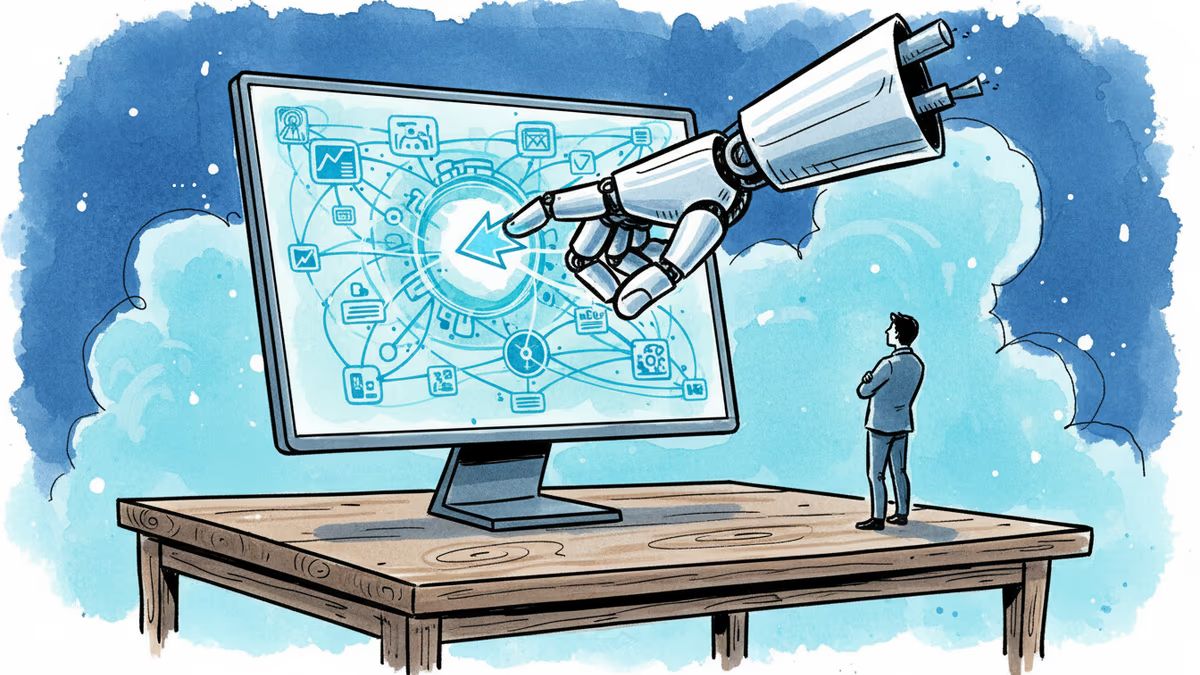
Anthropic's Claude Code and Cowork can now directly control your Mac desktop—clicking, scrolling, and navigating files. As AI agents race to take over local computers, what are the real implications?
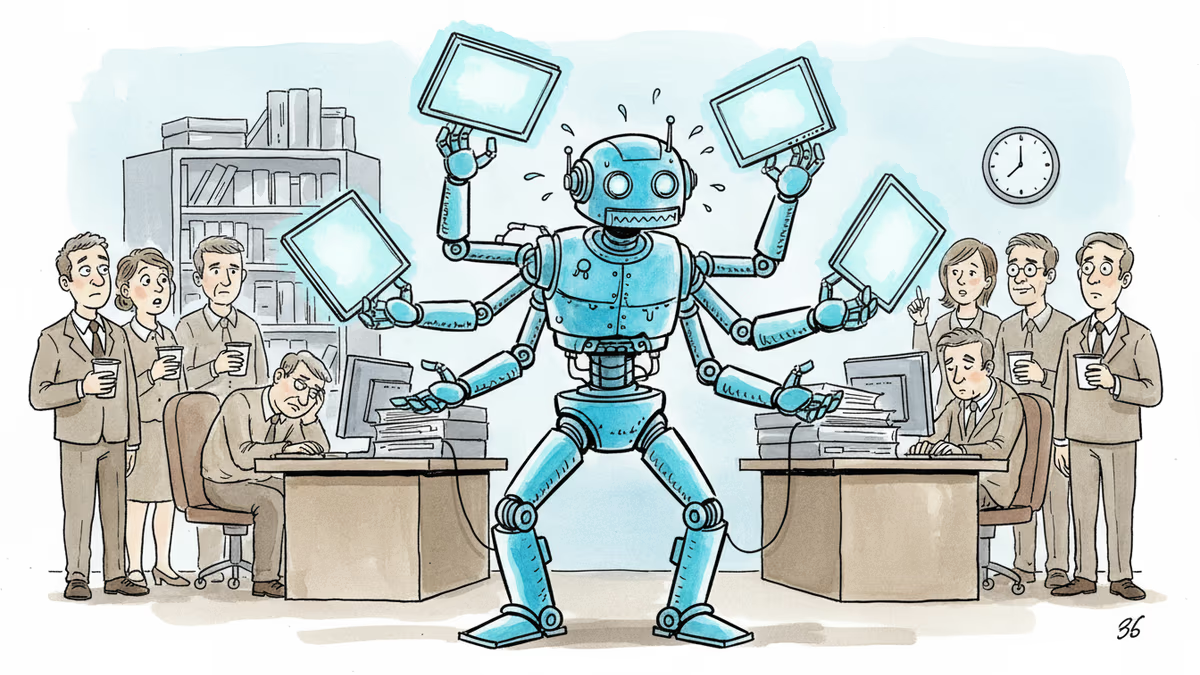
Perplexity launches an AI agent for $200/month that handles complex workflows independently. Is this the future of work automation or an expensive experiment?
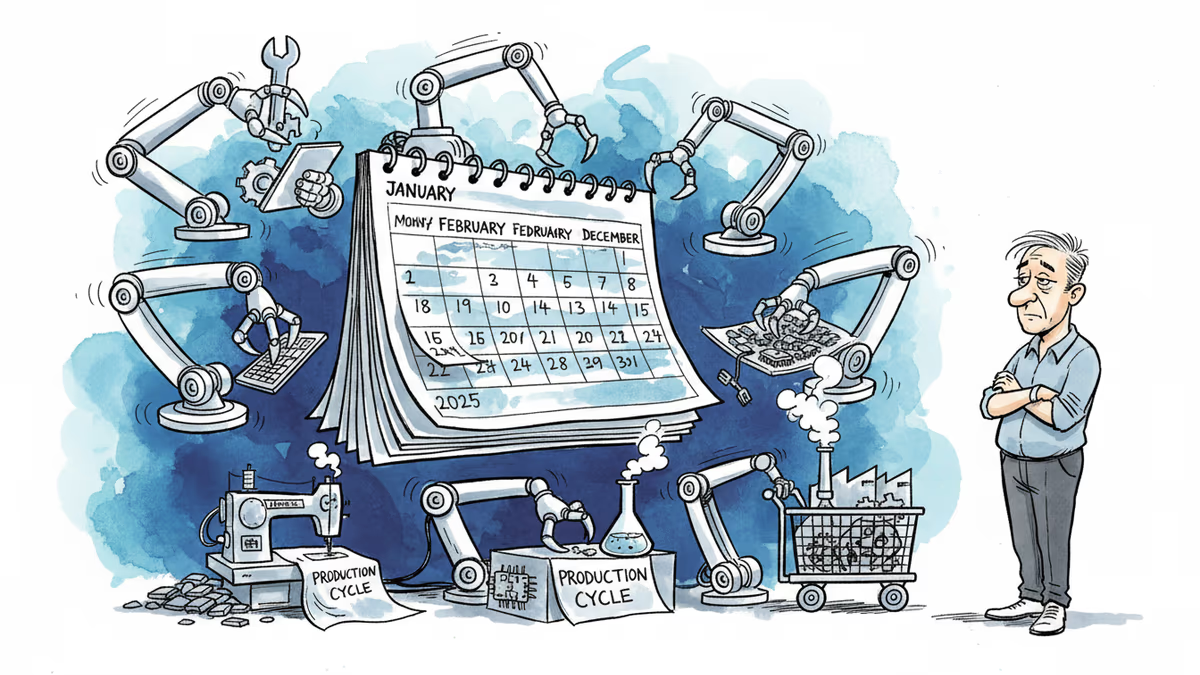
Perplexity's Computer tool orchestrates AI agents to handle long-term projects autonomously. Is this the future of work automation or just clever marketing?
H&R Block's DIY service promises 15-minute tax filing powered by AI. A hands-on review reveals what works, what doesn't, and what it means for the future of professional services.
Anthropic's Claude Code and Cowork can now directly control your Mac desktop—clicking, scrolling, and navigating files. As AI agents race to take over local computers, what are the real implications?
Perplexity launches an AI agent for $200/month that handles complex workflows independently. Is this the future of work automation or an expensive experiment?
Perplexity's Computer tool orchestrates AI agents to handle long-term projects autonomously. Is this the future of work automation or just clever marketing?
H&R Block's DIY service promises 15-minute tax filing powered by AI. A hands-on review reveals what works, what doesn't, and what it means for the future of professional services.
Thoughts
Share your thoughts on this article
Sign in to join the conversation