
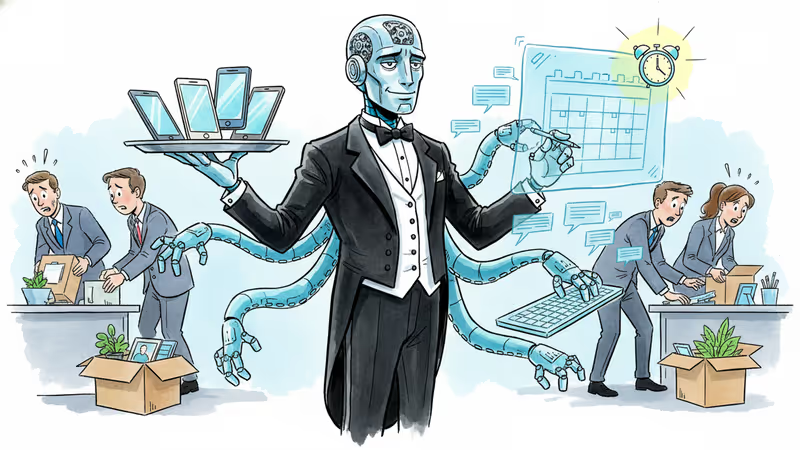
Your Personal AI Butler Just Got Real
Moltbot, an open-source AI agent, lets users automate real tasks through popular messaging apps. But what happens when everyone has their own digital assistant?
Remember when Siri could barely set a timer without misunderstanding you? Those days might be ending faster than we thought. A new open-source AI agent called Moltbot is quietly spreading across tech communities, and unlike most AI assistants that just talk, this one actually does things.
What Makes Moltbot Different
Moltbot (formerly Clawdbot) runs locally on your devices and connects to messaging apps you already use - WhatsApp, Telegram, Signal, Discord, and iMessage. But here's what sets it apart: instead of just answering questions, it performs actual tasks on your behalf.
Federico Viticci from MacStories showcased how he transformed his M4 Mac Mini into a personal assistant that delivers daily audio recaps based on his calendar activity. Other users are sharing stories of Moltbot managing reminders, logging health data, and even handling client communications autonomously.
The tool's open-source nature means developers can customize it extensively, creating personalized workflows that traditional AI assistants simply can't match. Unlike cloud-based services, everything runs locally, giving users complete control over their data and interactions.
The Timing Tells a Story
Moltbot's emergence isn't coincidental. As major tech companies rush to integrate AI into everything, users are growing frustrated with assistants that promise much but deliver little practical value. ChatGPT can write essays, Google Assistant can answer trivia, but neither can seamlessly integrate into your actual workflow.

This frustration has created space for tools like Moltbot that prioritize functionality over flashiness. The fact that it's spreading organically through word-of-mouth rather than marketing campaigns suggests users are genuinely finding value in its capabilities.
The timing also coincides with growing privacy concerns about cloud-based AI services. Running locally means your personal data never leaves your device - a compelling proposition as AI becomes more integrated into daily life.
Beyond the Hype: Real Implications
For productivity enthusiasts, Moltbot represents what many thought AI assistants would become years ago. The ability to delegate actual tasks - not just information retrieval - could fundamentally change how we interact with technology.
But the implications extend beyond individual productivity. If tools like Moltbot become mainstream, we might see a shift in how businesses approach customer service, project management, and routine operations. Why hire someone to manage basic client communications when an AI agent can handle it through existing messaging platforms?
The open-source aspect is equally significant. While Apple, Google, and Amazon control their assistant ecosystems tightly, Moltbot puts customization power directly in users' hands. This could democratize AI automation in ways that closed platforms never could.
However, questions remain about scalability and reliability. Personal anecdotes are promising, but can Moltbot handle complex, mission-critical tasks consistently? And as more users adopt it, will the open-source community be able to maintain and improve it effectively?
Authors
Related Articles

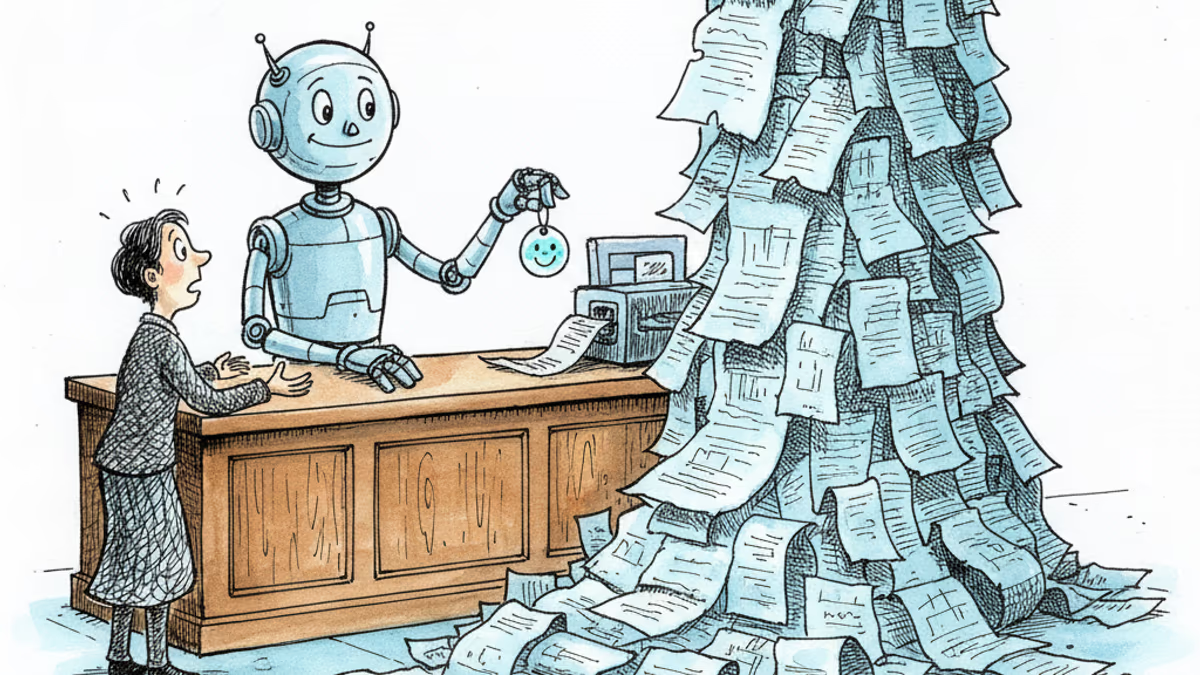
Nvidia shipped roughly a billion RISC-V cores in 2024, then announced it would run CUDA on the open standard. We break down how royalty-free instruction sets and open software stacks are trying to route around CUDA's lock-in. Part 2 of the Semiconductor Sovereignty series.
Anthropic shipped Claude Sonnet 5, its mid-tier agent model, on June 30. Behind the 'Opus-class power, budget price' headline sits a tokenizer catch and a three-horse race that's only half real. Here's what developers should actually run the numbers on.
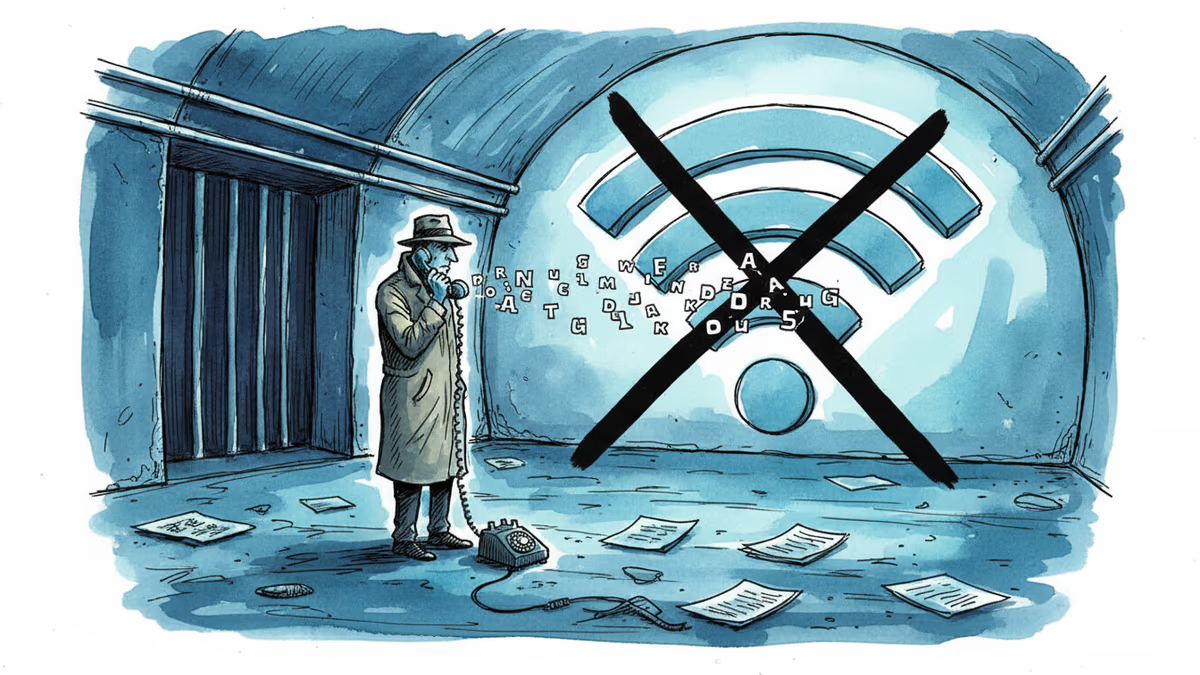
Google quietly launched an offline-first AI dictation app called Eloquent on iOS. Built on Gemma, it cleans up your speech on-device — no internet required. Here's what it signals.
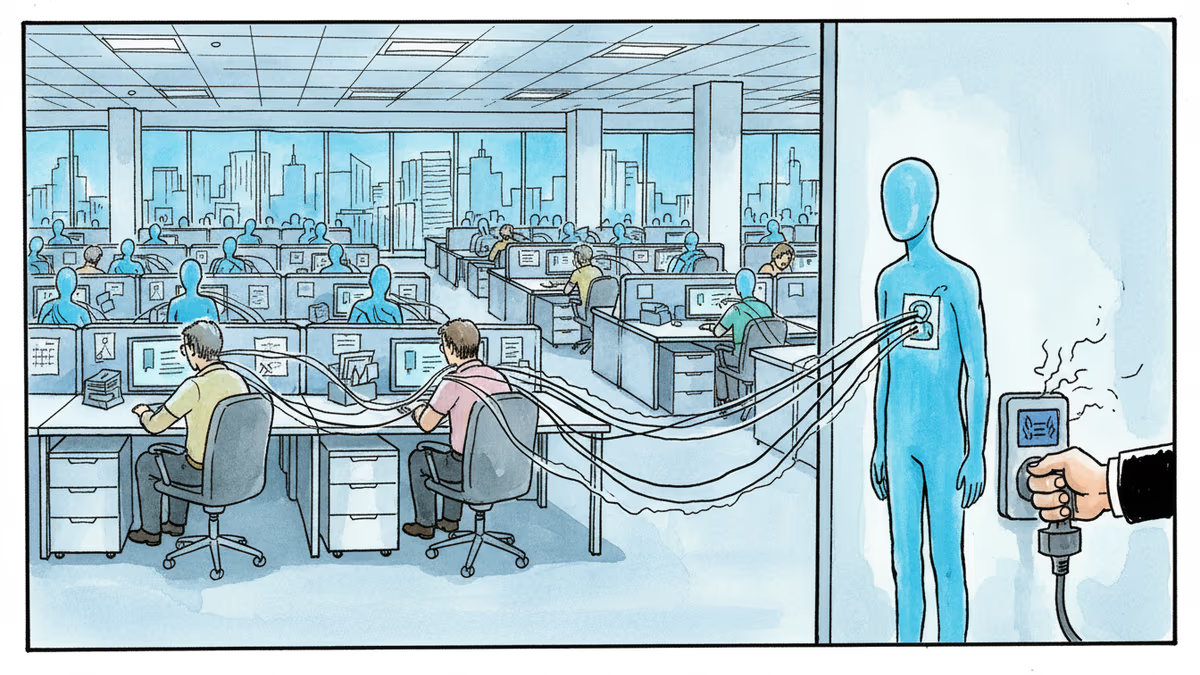
Okta CEO Todd McKinnon on why AI agents need identity management, the SaaSpocalypse threat, and why the kill switch might be the most important button in enterprise tech.
Nvidia shipped roughly a billion RISC-V cores in 2024, then announced it would run CUDA on the open standard. We break down how royalty-free instruction sets and open software stacks are trying to route around CUDA's lock-in. Part 2 of the Semiconductor Sovereignty series.
Anthropic shipped Claude Sonnet 5, its mid-tier agent model, on June 30. Behind the 'Opus-class power, budget price' headline sits a tokenizer catch and a three-horse race that's only half real. Here's what developers should actually run the numbers on.
Google quietly launched an offline-first AI dictation app called Eloquent on iOS. Built on Gemma, it cleans up your speech on-device — no internet required. Here's what it signals.
Okta CEO Todd McKinnon on why AI agents need identity management, the SaaSpocalypse threat, and why the kill switch might be the most important button in enterprise tech.
Thoughts
Share your thoughts on this article
Sign in to join the conversation