

Russian Hackers Weaponized Microsoft Flaw in Just 48 Hours
APT28 hackers reverse-engineered a Microsoft Office vulnerability within 48 hours of patch release, targeting diplomatic and transport organizations across multiple countries with sophisticated stealth techniques.
48 hours. That's how long it took Russian state-backed hackers to reverse-engineer and weaponize a critical Microsoft Office vulnerability after the company released an emergency patch. This lightning-fast turnaround reveals a troubling new reality in cybersecurity: the window between patch and exploitation has virtually disappeared.
Security researchers reported Wednesday that APT28 (also known as Fancy Bear) successfully compromised devices across diplomatic, maritime, and transport organizations in more than half a dozen countries using an exploit for CVE-2026-21509. The speed and sophistication of their response suggests nation-state hacking capabilities have reached a new level of maturity.
The Art of Invisible Infiltration
What makes this campaign particularly concerning isn't just the speed—it's the stealth. The hackers deployed two previously unknown backdoor implants that were encrypted and operated entirely in memory, making them nearly impossible for traditional endpoint protection to detect.
The attack's entry point was equally clever. Using previously compromised government accounts from multiple countries, the hackers sent emails that appeared to come from familiar, trusted sources. Their command and control infrastructure was hidden within legitimate cloud services that are typically allow-listed in sensitive networks—essentially hiding in plain sight.
When Patches Become Roadmaps
Traditionally, security patches were seen as solutions that closed vulnerabilities. But this incident flips that narrative. For sophisticated attackers, patches have become roadmaps that reveal exactly where the weaknesses were. Microsoft's unscheduled security update last month inadvertently provided APT28 with a blueprint for exploitation.

This raises uncomfortable questions about our current security model. If nation-state actors can weaponize vulnerabilities faster than organizations can deploy patches, what does that mean for enterprise security strategies? The old "patch and you're safe" mentality clearly needs rethinking.
The Global Ripple Effect
The targeted sectors—diplomatic, maritime, and transport—aren't random choices. These are critical infrastructure areas that, when compromised, can provide intelligence on trade routes, diplomatic communications, and national security matters. The fact that multiple countries were simultaneously targeted suggests a coordinated intelligence-gathering operation.
For businesses operating in these sectors, this attack demonstrates that being a target isn't about company size or profile—it's about the strategic value of the information you possess. Even smaller organizations in these industries may find themselves in the crosshairs of nation-state actors.
Beyond Traditional Defenses
The encryption and memory-only execution techniques used in this attack highlight the limitations of signature-based security solutions. When malware doesn't touch the disk and constantly changes its appearance, traditional antivirus becomes largely ineffective.
This pushes organizations toward more sophisticated defense strategies: behavioral analysis, zero-trust architectures, and assumption-of-breach models. The question isn't whether you'll be attacked, but how quickly you can detect and respond when it happens.
Authors
Related Articles
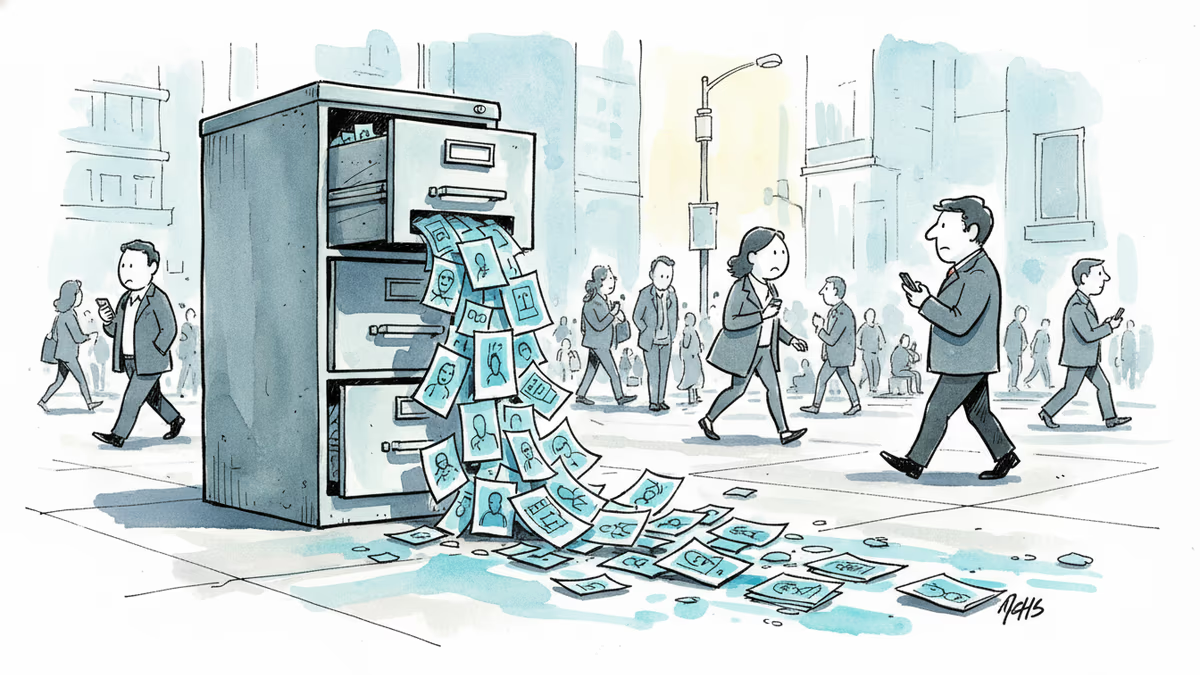
UK Visa Portal, a private immigration service mistaken for an official government site, has been exposing passport scans and selfies of over 100,000 applicants. The breach remains unpatched.
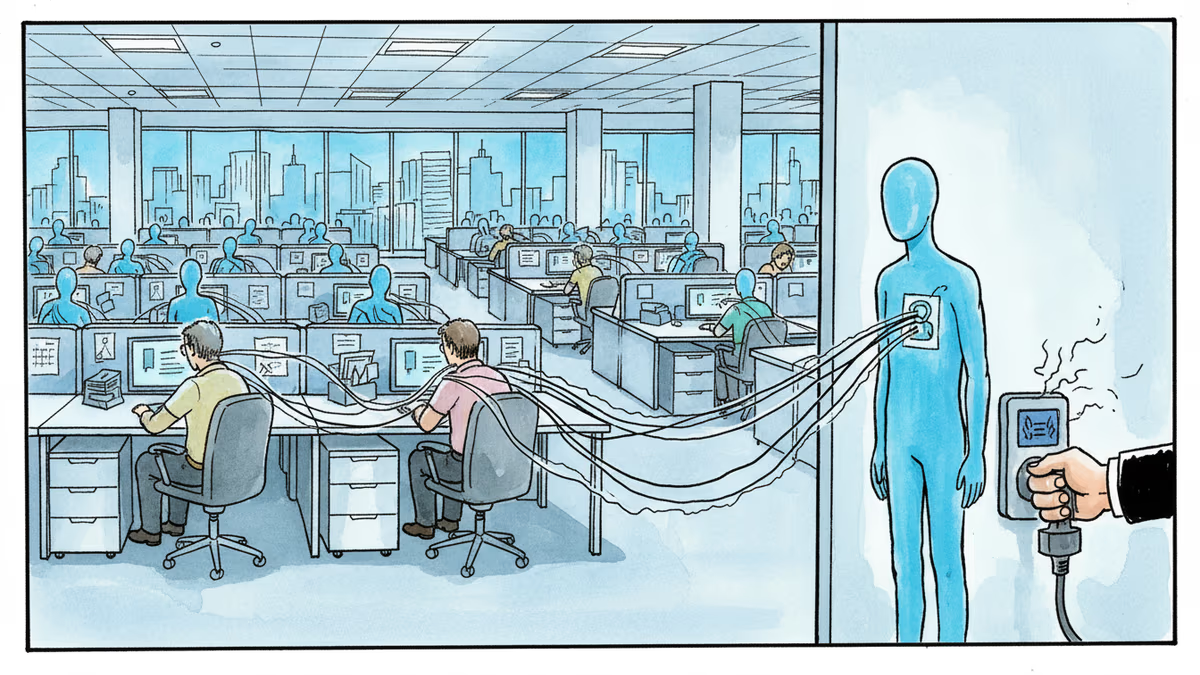
Okta CEO Todd McKinnon on why AI agents need identity management, the SaaSpocalypse threat, and why the kill switch might be the most important button in enterprise tech.
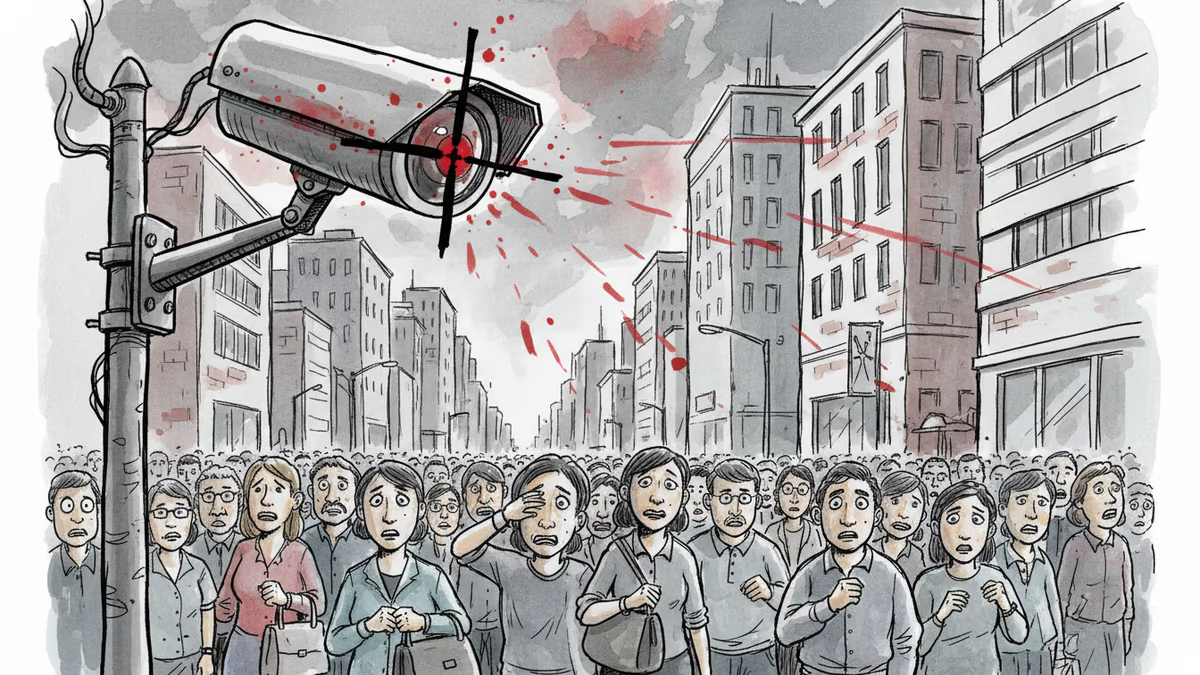
Iran and Israel are hacking civilian security cameras for military reconnaissance. How consumer surveillance devices became weapons of war.
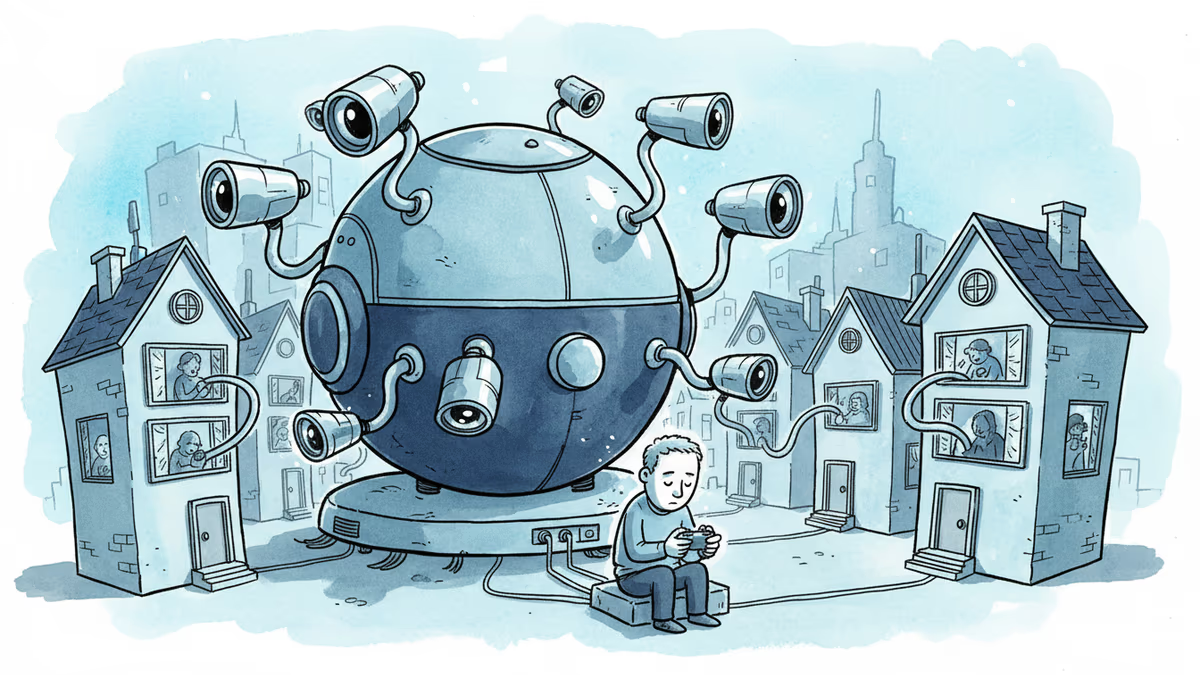
A security researcher discovered he could access 7,000 DJI robot vacuums and peek into strangers' homes. This Valentine's Day revelation exposes the hidden privacy risks of our smart home obsession.
UK Visa Portal, a private immigration service mistaken for an official government site, has been exposing passport scans and selfies of over 100,000 applicants. The breach remains unpatched.
Okta CEO Todd McKinnon on why AI agents need identity management, the SaaSpocalypse threat, and why the kill switch might be the most important button in enterprise tech.
Iran and Israel are hacking civilian security cameras for military reconnaissance. How consumer surveillance devices became weapons of war.
A security researcher discovered he could access 7,000 DJI robot vacuums and peek into strangers' homes. This Valentine's Day revelation exposes the hidden privacy risks of our smart home obsession.
Thoughts
Share your thoughts on this article
Sign in to join the conversation