
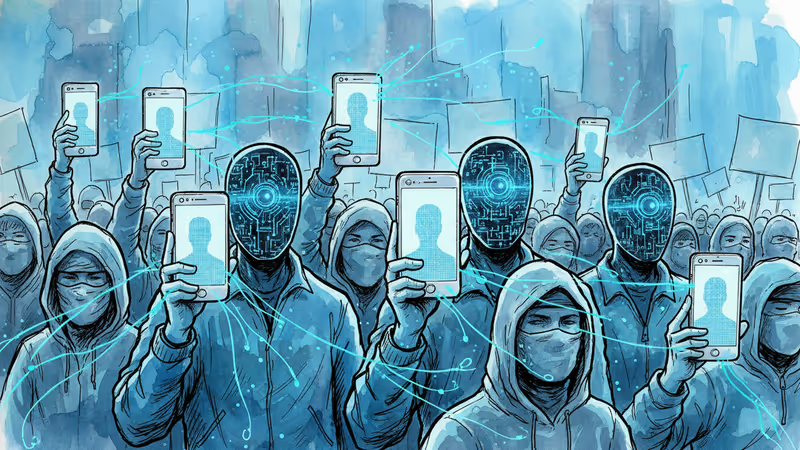
When Tech Giants Become the Eyes of Federal Agents
Trump's Operation Metro Surge floods Minnesota with federal agents using Clearview AI and Palantir surveillance tech to track citizens. A glimpse into the future of tech-enabled authoritarianism.
37-year-old Alex Pretti wasn't supposed to die that day in Minneapolis. He was just an observer, watching as federal agents conducted immigration raids under Trump's Operation Metro Surge. But his death on January 24th has exposed something more troubling than excessive force: the quiet marriage between Silicon Valley surveillance tech and federal power.
The agents who killed Pretti weren't operating blind. They had digital eyes—systems built by Clearview AI and Palantir—tracking protesters, mapping social networks, and predicting where resistance might emerge.
The Surveillance Infrastructure
Operation Metro Surge isn't just about immigration enforcement. It's a testing ground for next-generation policing, where federal agents deploy tools that would make the NSA proud. Clearview AI has scraped over 3 billion photos from the internet, creating a facial recognition database that can identify anyone who's ever posted a selfie. Palantir's analytics platform—originally built for the CIA—now maps the digital footprints of American citizens.
These aren't theoretical capabilities. Federal agents in Minnesota are using them right now, turning smartphones into tracking devices and social media posts into evidence of "suspicious activity." The technology that was supposed to make our lives more convenient has become the infrastructure of surveillance.
Community organizers have responded with their own tech-savvy resistance. They've built mutual aid networks that track ICE operations in real-time, sending encrypted alerts when raids are detected. But they're fighting an asymmetric war—grassroots organizing against billion-dollar surveillance systems.

When Influencers Become Activists
What's caught the Trump administration off-guard is how Pretti's death resonated beyond traditional activist circles. Hobbyist communities and lifestyle influencers—people who usually avoid politics entirely—began speaking out. Their content, amplified by social media algorithms, reached audiences that political organizers never could.
This matters because the Trump administration is obsessed with internet metrics. When apolitical influencers start criticizing federal operations, it creates a narrative problem that can't be dismissed as "radical leftist propaganda." The administration's own social media addiction becomes a vulnerability.
The Normalization Trap
Here's the deeper concern: surveillance infrastructure, once deployed, rarely gets dismantled. What starts as "temporary" enforcement becomes permanent capability. The same facial recognition systems scanning protesters today could tomorrow identify people attending political rallies, visiting certain websites, or associating with "persons of interest."
Clearview AI and Palantir aren't just government contractors—they're reshaping the relationship between technology and state power. They've made mass surveillance scalable, affordable, and algorithmically precise. The question isn't whether this technology will spread, but how quickly.
European regulators have already banned Clearview AI, recognizing the threat to civil liberties. But in the US, the technology continues expanding, protected by national security justifications that make meaningful oversight nearly impossible.
Authors
Related Articles
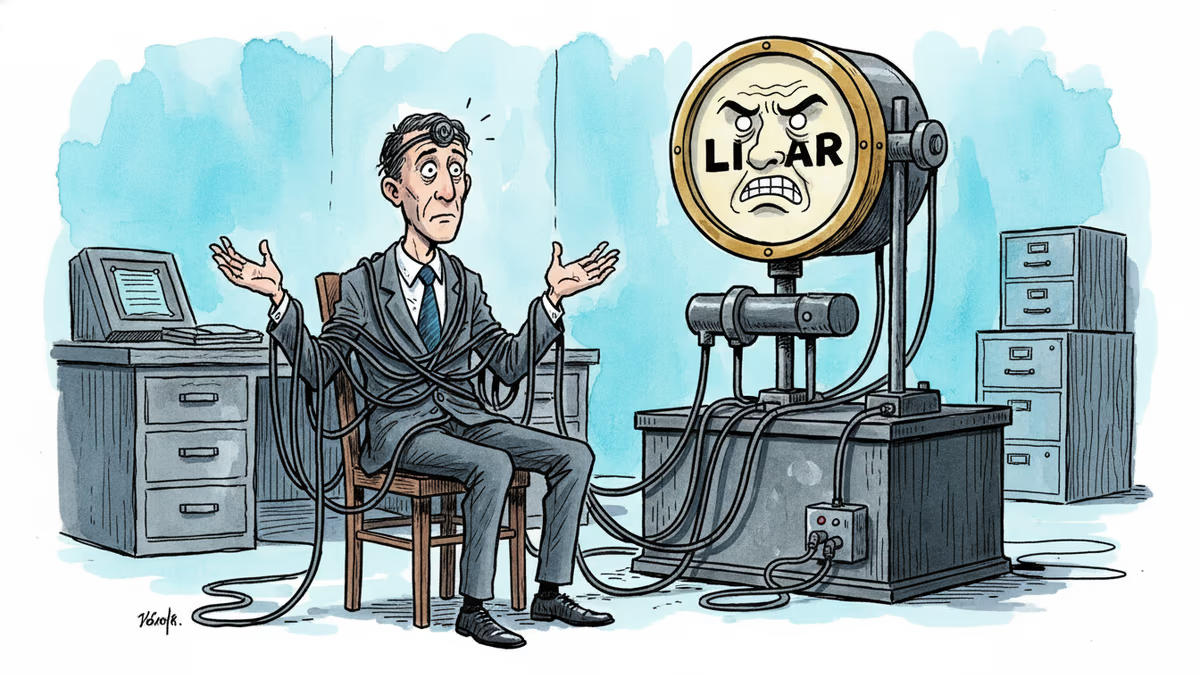
George Maschke passed 11 years of military security clearance, then failed an FBI polygraph. Decades later, the science still doesn't support the test—so why do agencies keep using it?

The same heartbeat reading, DNA sample, or facial scan has radically different legal protections depending on where you live. From 23andMe's bankruptcy to post-Dobbs data weaponization, here's how five legal regimes treat the data your body generates — and why 640 million smartwatch users should care.
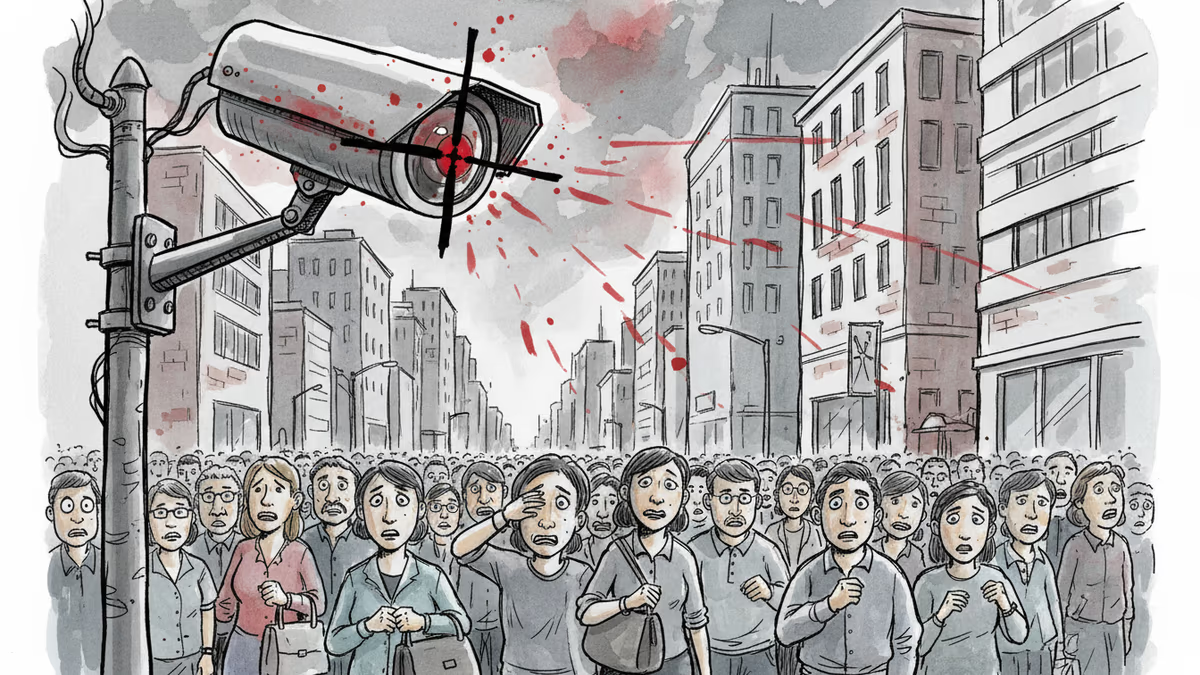
Iran and Israel are hacking civilian security cameras for military reconnaissance. How consumer surveillance devices became weapons of war.
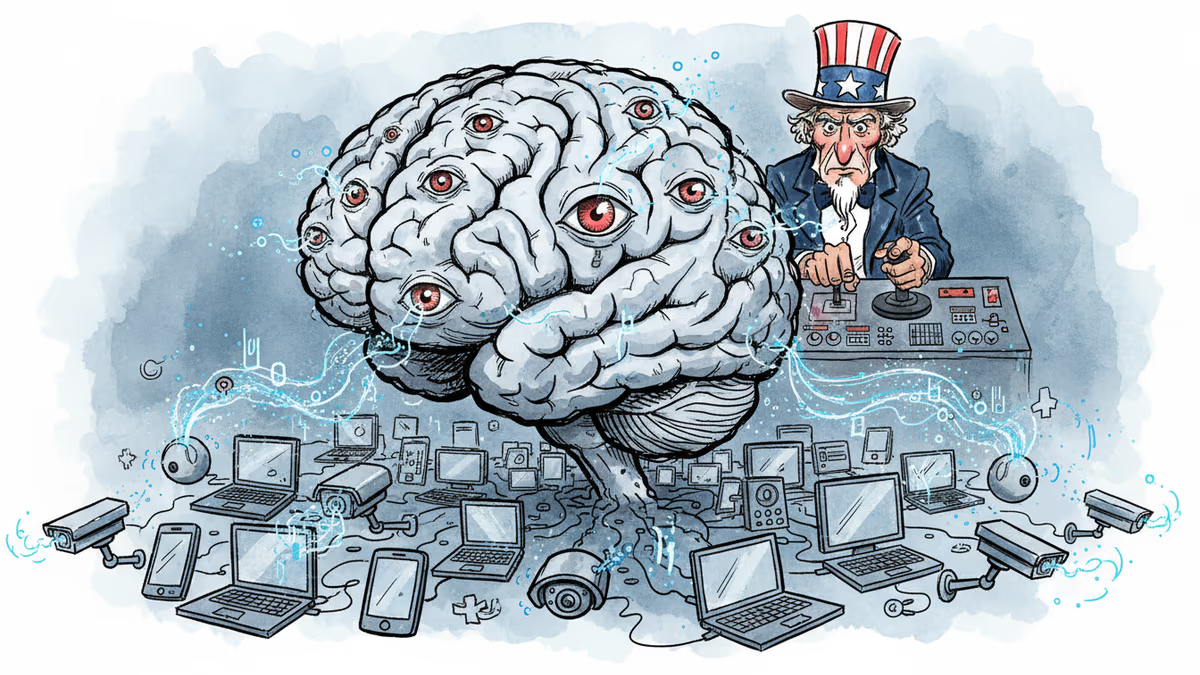
The Pentagon's clash with AI companies exposes a legal gray area around mass surveillance. OpenAI and Anthropic's opposing choices reveal deeper questions about privacy in the AI age.
George Maschke passed 11 years of military security clearance, then failed an FBI polygraph. Decades later, the science still doesn't support the test—so why do agencies keep using it?
The same heartbeat reading, DNA sample, or facial scan has radically different legal protections depending on where you live. From 23andMe's bankruptcy to post-Dobbs data weaponization, here's how five legal regimes treat the data your body generates — and why 640 million smartwatch users should care.
Iran and Israel are hacking civilian security cameras for military reconnaissance. How consumer surveillance devices became weapons of war.
The Pentagon's clash with AI companies exposes a legal gray area around mass surveillance. OpenAI and Anthropic's opposing choices reveal deeper questions about privacy in the AI age.
Thoughts
Share your thoughts on this article
Sign in to join the conversation