
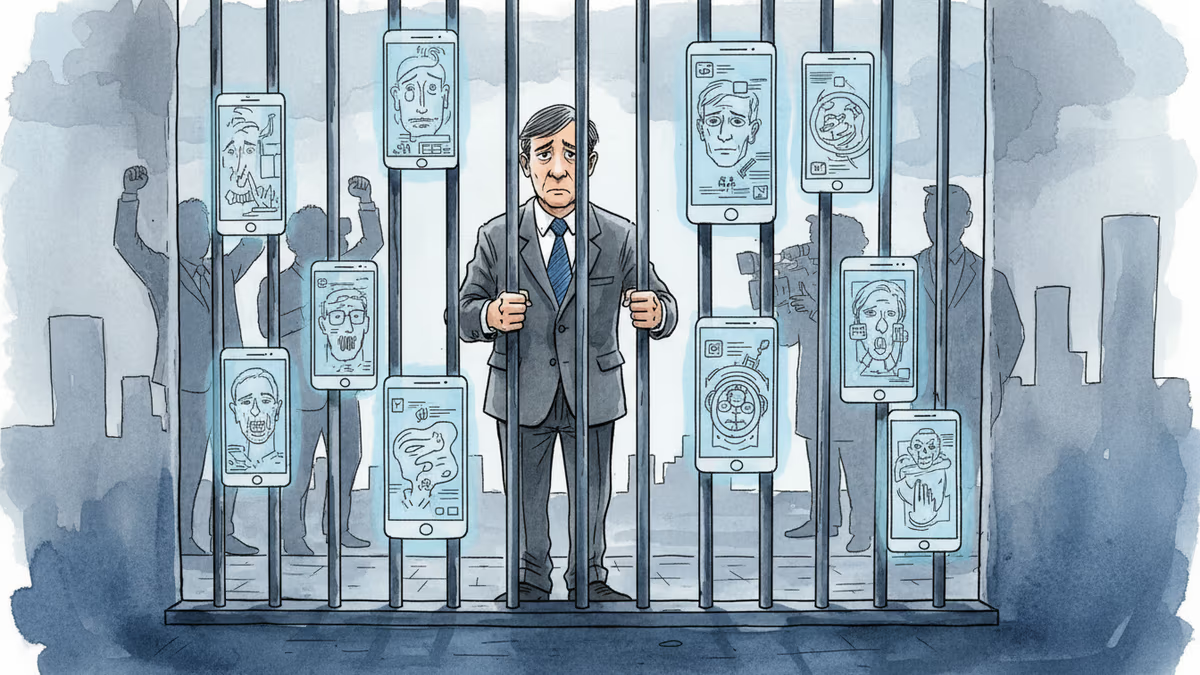
First Spyware Maker Sentenced to Prison - What This Means
Greek court sentences Intellexa founder to 8 years for illegal wiretapping. First time a spyware maker faces prison for technology misuse, setting precedent for the industry.
8 Years That Changed Everything
A Greek court made history Thursday, sentencing Tal Dilian, founder of spyware collective Intellexa, to eight years in prison for illegal wiretapping and privacy violations. It's the first time a spyware maker has faced jail time for the misuse of their technology.
Dilian wasn't alone in the dock. His business partner Sara Aleksandra Fayssal Hamou, former deputy Felix Bitzios, and linked company owner Yiannis Lavranos all received sentences for their roles in what became known as "Greek Watergate" - a 2022 scandal that exposed systematic surveillance of politicians, journalists, businesspeople, and military officials.
The weapon of choice? Intellexa's Predator spyware, capable of turning any smartphone into a surveillance device.
The Surveillance Web That Caught Everyone
The scope of the Greek surveillance operation was staggering. Politicians plotting campaigns, journalists investigating stories, business leaders making deals - all potentially under digital surveillance. The Greek government allegedly used Predator to wiretap phones across the power structure.

This wasn't a targeted operation against specific threats. It was wholesale surveillance of the kind that civil liberties advocates have long warned about. The $12 billion annual spyware market has grown precisely because governments want this capability - and companies like Intellexa have been happy to provide it.
The U.S. government took notice. In 2024, it sanctioned Intellexa and several linked companies, along with Dilian and Hamou, specifically for targeting Americans including government officials and journalists.
Industry Reckoning or Isolated Incident?
For years, spyware makers have hidden behind a simple defense: "We just make the tools." Like selling guns or encryption software, they've argued that responsibility lies with the user, not the manufacturer.
This verdict challenges that logic directly. If you know your technology is being used to violate human rights and democratic norms - and you continue selling anyway - you bear some responsibility for the consequences.
But the practical impact remains unclear. The court stayed the sentence pending appeal, meaning Dilian walks free for now. And the spyware market continues growing, with new players emerging as fast as old ones face sanctions.
Cybersecurity experts note that this case could influence how other surveillance technology companies operate. "It's not just spyware," says one privacy advocate. "Any company selling powerful surveillance tools needs to think harder about due diligence and end-use monitoring."
Authors
Related Articles

UK Visa Portal, a private immigration service mistaken for an official government site, has been exposing passport scans and selfies of over 100,000 applicants. The breach remains unpatched.
Tinder now rewards users who scan their irises at a World orb with free in-app boosts. As AI agents flood dating apps, 'being human' is becoming a verified status — and a business model.
Wisconsin Governor Tony Evers vetoed an age verification bill for adult sites, citing privacy concerns. With 25+ states going the other way, the debate cuts to the heart of online freedom vs. child protection.
Okta CEO Todd McKinnon on why AI agents need identity management, the SaaSpocalypse threat, and why the kill switch might be the most important button in enterprise tech.
UK Visa Portal, a private immigration service mistaken for an official government site, has been exposing passport scans and selfies of over 100,000 applicants. The breach remains unpatched.
Tinder now rewards users who scan their irises at a World orb with free in-app boosts. As AI agents flood dating apps, 'being human' is becoming a verified status — and a business model.
Wisconsin Governor Tony Evers vetoed an age verification bill for adult sites, citing privacy concerns. With 25+ states going the other way, the debate cuts to the heart of online freedom vs. child protection.
Okta CEO Todd McKinnon on why AI agents need identity management, the SaaSpocalypse threat, and why the kill switch might be the most important button in enterprise tech.
Thoughts
Share your thoughts on this article
Sign in to join the conversation