
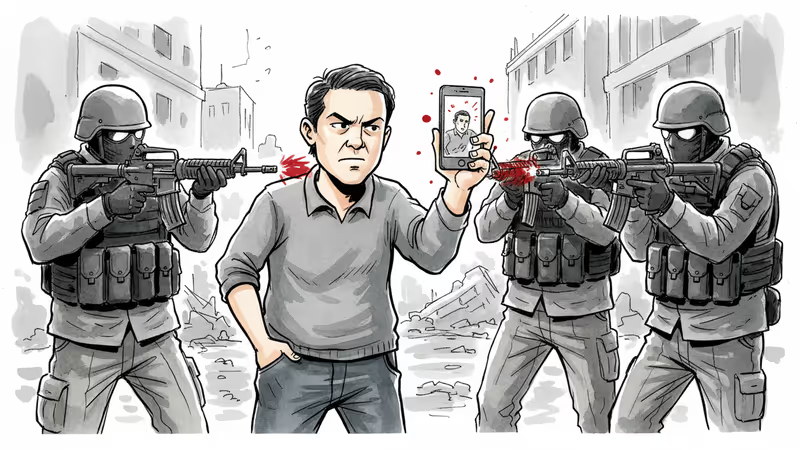
When Filming ICE Becomes a Life-or-Death Decision
Two Americans died filming ICE agents in Minneapolis, but their footage exposed the truth. The deadly paradox of citizen oversight in Trump's America.
In January 2026, two Americans were killed while documenting Immigration and Customs Enforcement operations in Minneapolis. Renee Nicole Good was acting as a legal observer while her wife recorded federal immigration agents. Alex Pretti was holding a phone, filming the agents who would soon take his life.
Yet here's the paradox: while the mere act of observation became deadly for these victims, video also documented their murders and is now holding federal agents accountable. This is the impossible choice facing US residents as they decide whether to resist—and record—ICE's expanding operations.
The Camera as Target
"Unfortunately, there is no way to film 'safely' right now," says Trevor Timm, cofounder of the Freedom of the Press Foundation. "Everyone may be taking a risk because of how aggressive and brazen and outright illegal ICE's conduct has been."
Alex Pretti was killed partly because he was filming ICE—an absolute tragedy. But his shooting was captured from half a dozen angles because other people were also filming. That footage immediately exposed the "egregious lies" the Trump administration was spreading about the incident.
This tension has existed for over two decades as smartphones made video documentation a pivotal tool for activists exposing injustice. Despite the First Amendment protecting the right to record government operators in public spaces, people with cameras are increasingly targeted by federal agents.
When Documentation Becomes "Violence"
Trump administration officials have attempted to reframe this constitutional right as criminal activity. In July, Department of Homeland Security secretary Kristi Noem called documenting federal agents "violence," claiming it constitutes "doxing" and "videotaping them where they're at."
DHS spokesperson Tricia McLaughlin told WIRED that "videoing our officers in an effort to dox them and reveal their identities is a federal crime and a felony." Yet by DHS's own questionable definition, ICE agents are "doxing" themselves simply by working in public.

This rhetoric represents a direct threat to anyone recording ICE agents—whether legal observers, activists, or reporters, says Jackie Zammuto, associate director at Witness, a nonprofit using video to fight human rights violations.
The Power and Peril of Documentation
"Video documentation has the power to expose abuses, to help call for accountability, and to challenge official narratives," Zammuto explains. "At the same time, we're absolutely seeing an increase of documenters being targeted—including journalists who are marked as journalists—even when they're doing it legally, even when they're respecting orders from the police."
The risks are massive, but so is the potential impact. Independent journalist Ken Klippenstein shared footage showing what appears to be an ICE agent scanning a legal observer's car, telling them: "We have a nice little database, and now you're considered a domestic terrorist. So have fun with that."
Yet experts say there are practical ways to document authority figures more safely while preserving the radical act of pointing cameras at power.
Survival Guide for Citizen Journalists
Before filming: Use an alternative or burner phone to protect privacy. Turn off biometrics—Face ID and fingerprint unlocking—and use only passwords or PINs. Officials need warrants to compel passcodes but can more easily force biometric unlocks.
While filming: Start recording immediately and keep cameras rolling. Film horizontally to capture more of the scene. Focus on agents themselves to document badges, clothing, license plates, and other identifying features. Show clear compliance with orders while stating: "I am exercising my First Amendment right to observe and document this interaction."
After filming: Pause before posting to social media. Consider who appears in the video and potential risks to them. Blur bystanders' faces, scrub metadata, and create backups. Share directly with media outlets, investigators, or civil society groups when appropriate.
The Authentication Challenge
With AI-generated videos becoming commonplace, authentic documentation faces new challenges. Experts recommend filming slow 360-degree pans to show full surroundings, capturing nearby landmarks or street signs, and even filming smartphone home screens showing time and date to help verify authenticity.
Continuous filming without stopping makes it harder for authorities to claim footage has been manipulated or edited.
Authors
Related Articles
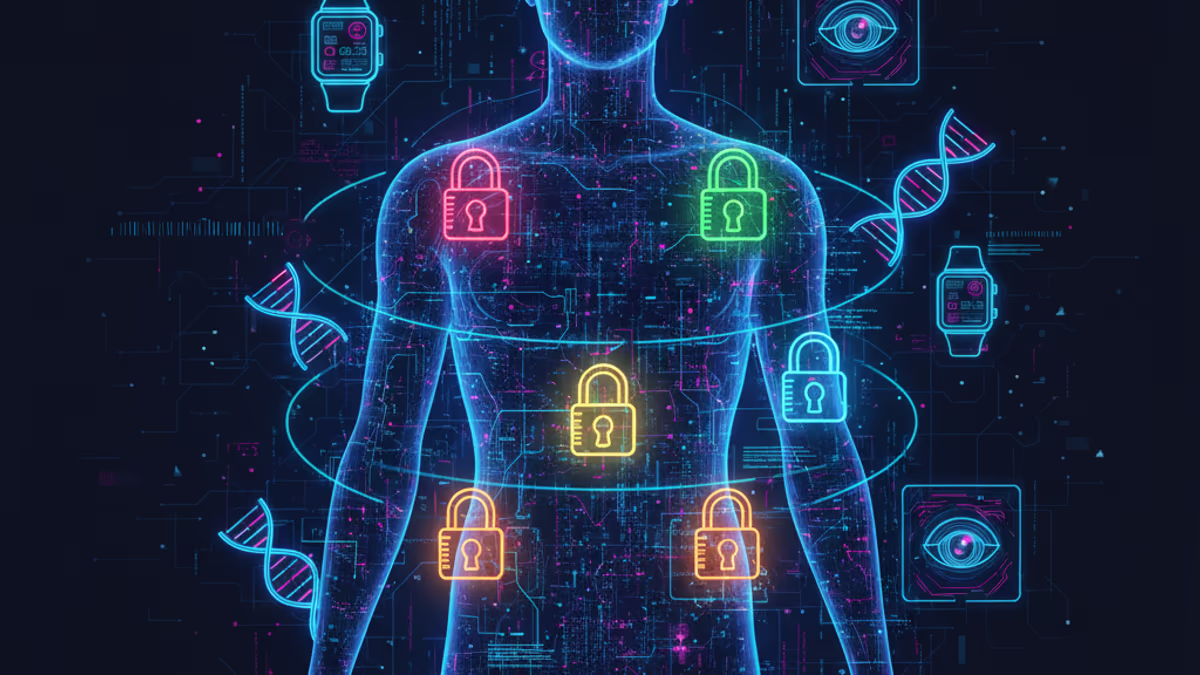
The same heartbeat reading, DNA sample, or facial scan has radically different legal protections depending on where you live. From 23andMe's bankruptcy to post-Dobbs data weaponization, here's how five legal regimes treat the data your body generates — and why 640 million smartwatch users should care.
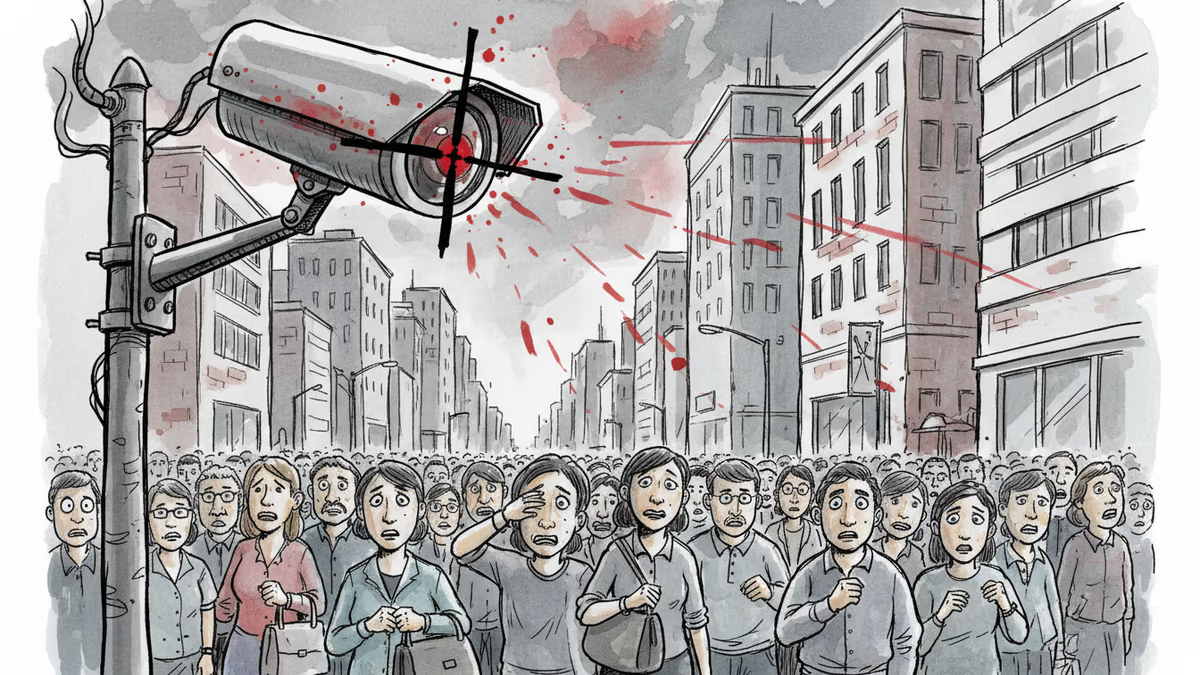
Iran and Israel are hacking civilian security cameras for military reconnaissance. How consumer surveillance devices became weapons of war.
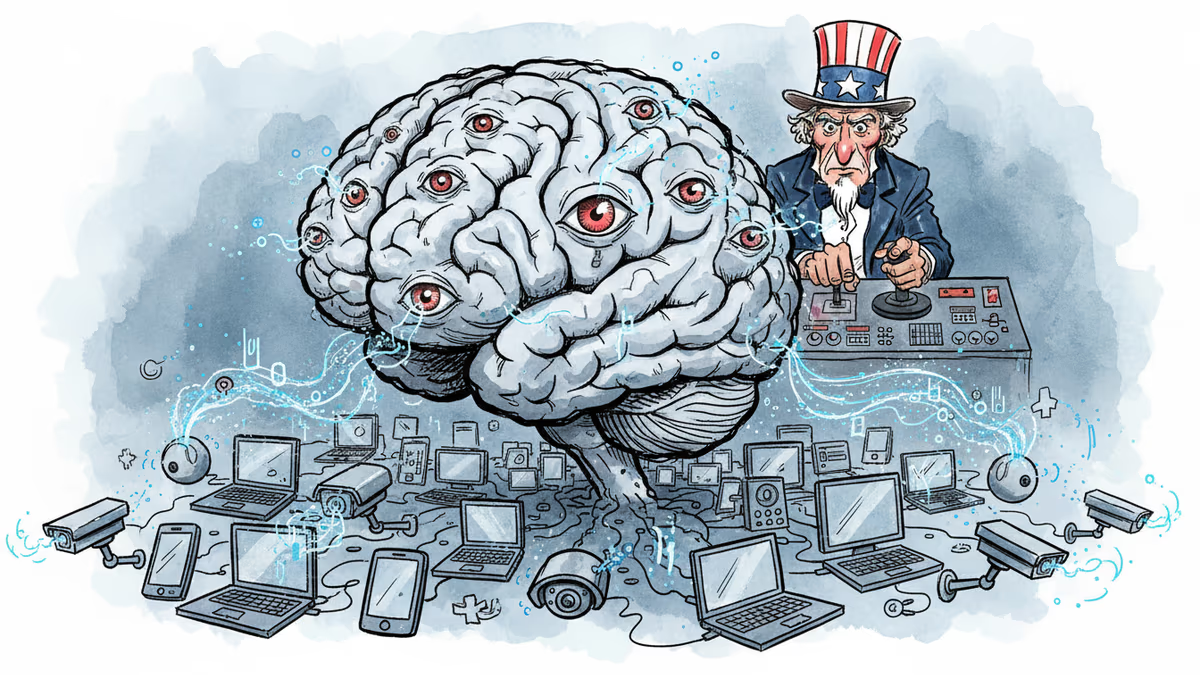
The Pentagon's clash with AI companies exposes a legal gray area around mass surveillance. OpenAI and Anthropic's opposing choices reveal deeper questions about privacy in the AI age.
DHS agents used false pretenses to enter Columbia University housing and detain a student, raising questions about campus autonomy and government overreach in the digital age
The same heartbeat reading, DNA sample, or facial scan has radically different legal protections depending on where you live. From 23andMe's bankruptcy to post-Dobbs data weaponization, here's how five legal regimes treat the data your body generates — and why 640 million smartwatch users should care.
Iran and Israel are hacking civilian security cameras for military reconnaissance. How consumer surveillance devices became weapons of war.
The Pentagon's clash with AI companies exposes a legal gray area around mass surveillance. OpenAI and Anthropic's opposing choices reveal deeper questions about privacy in the AI age.
DHS agents used false pretenses to enter Columbia University housing and detain a student, raising questions about campus autonomy and government overreach in the digital age
Thoughts
Share your thoughts on this article
Sign in to join the conversation