

Federal Agents Lied Their Way Into a Dorm Room
DHS agents used false pretenses to enter Columbia University housing and detain a student, raising questions about campus autonomy and government overreach in the digital age
When "Missing Person" Becomes Code for Campus Raid
At 3 AM Thursday morning, Department of Homeland Security agents talked their way into a Columbia University residential building by claiming they were searching for a "missing person." They weren't. According to the university's official statement, the federal agents "made misrepresentations to gain entry" before detaining neuroscience researcher Ellie Aghayeva.
The detained student isn't just any graduate researcher. Aghayeva has built a following of over 100,000 across Instagram and TikTok, where she's known for pro-Palestinian activism. The Columbia Daily Spectator first reported her identity.
This wasn't a routine immigration check. This was federal agents lying to university staff to access private student housing—a move that's sending shockwaves through higher education circles nationwide.
The University Fights Back
Columbia University didn't mince words in its response. "Our understanding at this time is that the federal agents made misrepresentations to gain entry," the statement reads. Translation: they lied.
The university's pushback reveals a deeper tension brewing between academic institutions and federal enforcement. Campus autonomy—the idea that universities maintain some independence from government interference—has been a cornerstone of American higher education since the 1960s.

But that autonomy is being tested under the Trump administration's expanded immigration enforcement. If federal agents can fabricate emergencies to access student housing, what's to stop them from raiding classrooms, libraries, or student organizations?
Legal experts are already questioning the constitutionality of the entry method. "Using deception to gain access to private property raises serious Fourth Amendment concerns," notes civil rights attorney Sarah Chen. "This sets a dangerous precedent for campus raids."
The Influencer Factor: When Followers Become Targets
Aghayeva's case highlights a new reality: social media influence can make you a target. Her 100,000+ followers weren't just consuming academic content—they were engaging with her political activism around Palestinian rights.
This raises uncomfortable questions about the intersection of digital influence and government scrutiny. Are content creators with political messages now subject to enhanced surveillance? Does having a large following make your activism more threatening to authorities?
The timing isn't coincidental. The Trump administration has ramped up immigration enforcement while simultaneously expressing concerns about "foreign influence" on campus activism. Aghayeva, a permanent resident, falls into a gray area where immigration status meets political expression.
For Gen Z activists who've built their movements on social platforms, this case sends a chilling message: your online presence might be building a file against you.
What happens when your follower count becomes evidence against you?
Authors
Related Articles

Two Americans died filming ICE agents in Minneapolis, but their footage exposed the truth. The deadly paradox of citizen oversight in Trump's America.
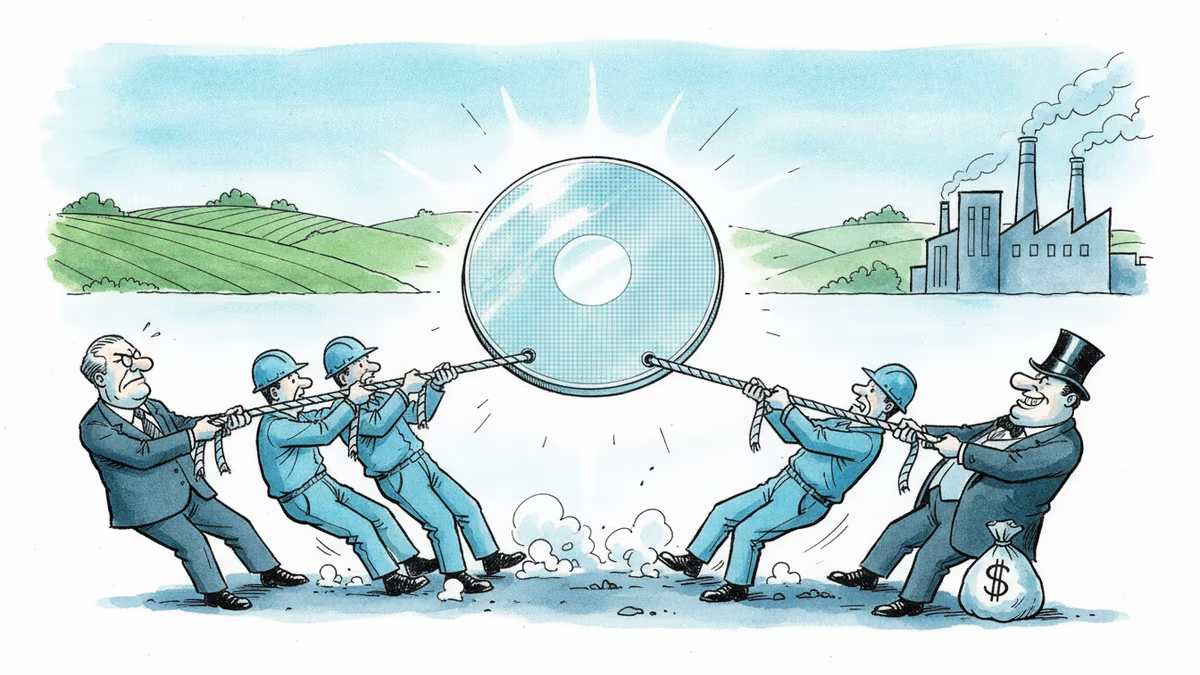
Samsung Electronics' union branch revealed that 84% of survey respondents oppose the government's roughly $290 billion (₩400 trillion) semiconductor megaproject in Gwangju. Government, management, the union and shareholders are all reading the same national project in sharply different ways.

Nvidia shipped roughly a billion RISC-V cores in 2024, then announced it would run CUDA on the open standard. We break down how royalty-free instruction sets and open software stacks are trying to route around CUDA's lock-in. Part 2 of the Semiconductor Sovereignty series.
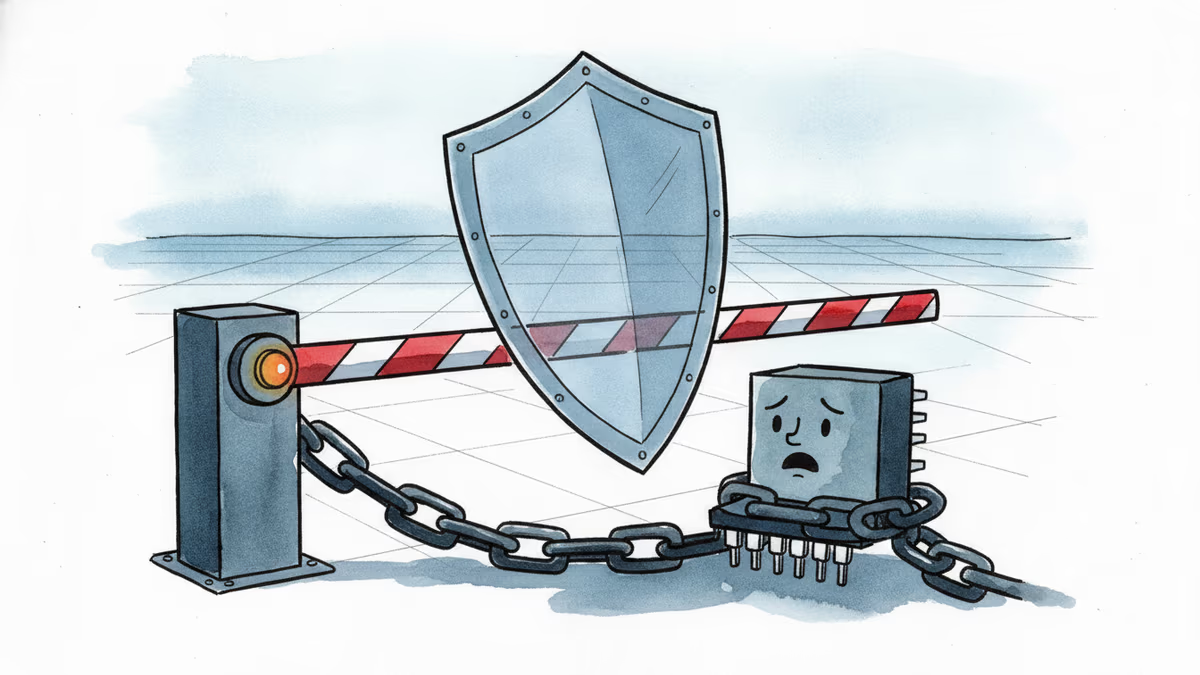
US AI-chip export controls split into three layers in the first half of 2026 — January easing, a May crackdown on circumvention, and a pending bill. Nvidia erased China from its guidance and still posted a record $81.6 billion quarter. A look at the export policy that both shields and cages it.
Two Americans died filming ICE agents in Minneapolis, but their footage exposed the truth. The deadly paradox of citizen oversight in Trump's America.
Samsung Electronics' union branch revealed that 84% of survey respondents oppose the government's roughly $290 billion (₩400 trillion) semiconductor megaproject in Gwangju. Government, management, the union and shareholders are all reading the same national project in sharply different ways.
Nvidia shipped roughly a billion RISC-V cores in 2024, then announced it would run CUDA on the open standard. We break down how royalty-free instruction sets and open software stacks are trying to route around CUDA's lock-in. Part 2 of the Semiconductor Sovereignty series.
US AI-chip export controls split into three layers in the first half of 2026 — January easing, a May crackdown on circumvention, and a pending bill. Nvidia erased China from its guidance and still posted a record $81.6 billion quarter. A look at the export policy that both shields and cages it.
Thoughts
Share your thoughts on this article
Sign in to join the conversation