
When Legal Gun Ownership Becomes a Death Sentence
Frame-by-frame video analysis reveals federal agents fired 11 shots at Alex Pretti, challenging official claims of self-defense in a case that questions civil liberties
11 Shots That Shattered the Self-Defense Narrative
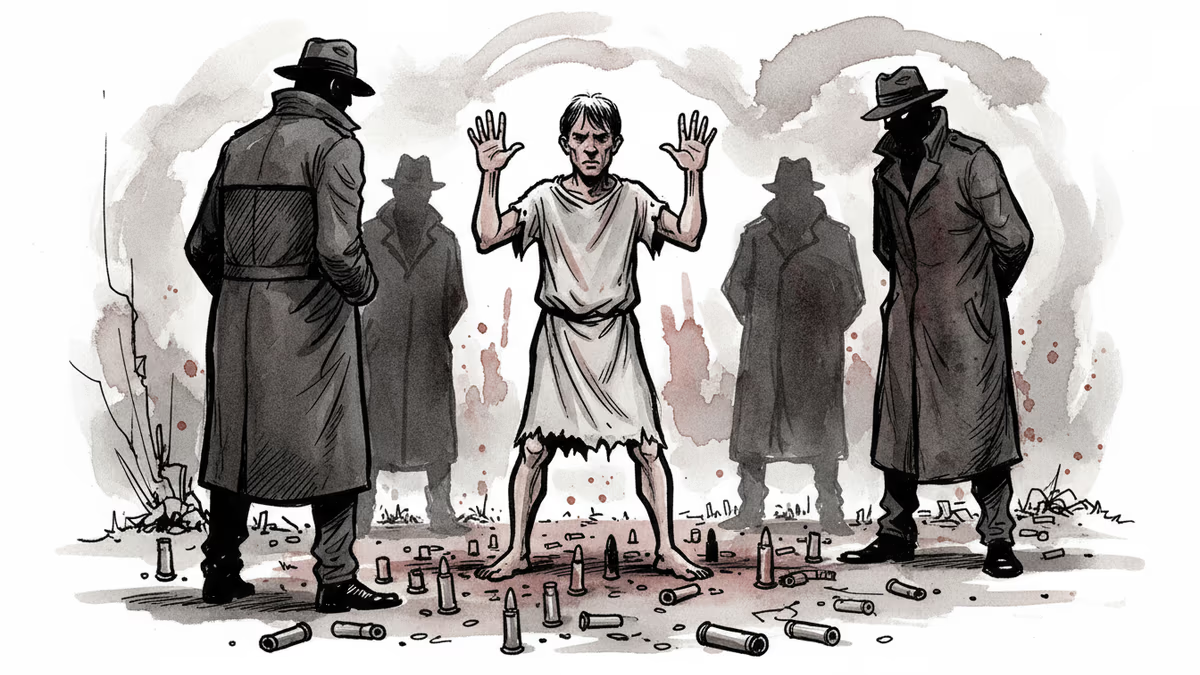
One hand raised, phone in the other. That's how Alex Pretti appeared in the final moments before federal agents tackled him to the ground. An agent spotted and removed his holstered gun. Then came the first shot. A second followed. Nine more bullets found their target as Pretti lay motionless.
The New York Times' frame-by-frame analysis of eyewitness footage tells a different story than the Trump administration's official account. Border Patrol agent Jesus Ochoa and CBP officer Raymundo Gutierrez claimed self-defense. But the video evidence suggests something far more troubling.
The Paradox of Legal Gun Ownership
Here's the uncomfortable truth: Pretti was legally carrying his firearm. He had every constitutional right to bear arms. Yet that very right became the justification for 11 shots fired in his direction.
The agents' defense rests on a simple premise: they saw a gun, felt threatened, and responded accordingly. But the video shows Pretti never reached for his weapon. His hands were visible, one holding a phone, the other raised in what appears to be a gesture of compliance.
This raises a fundamental question about the Second Amendment. If legal gun ownership itself can be construed as a threat worthy of lethal force, what does that mean for millions of law-abiding gun owners across America?

When Rights Collide with Reality
Civil liberties advocates see this case as a textbook example of how constitutional rights can be weaponized against citizens. The American Civil Liberties Union has long argued that law enforcement's "officer safety" doctrine has been stretched beyond recognition, essentially nullifying other constitutional protections.
But law enforcement defenders argue differently. They point to the split-second decisions officers must make, the inherent dangers of their job, and the reasonable assumption that an armed individual poses a potential threat. From their perspective, waiting to see if someone reaches for their weapon could mean the difference between going home alive or in a body bag.
The investigation by ProPublica adds another layer of complexity. Federal agents, not local police, were involved. This wasn't a routine traffic stop gone wrong, but a federal operation where the rules of engagement should theoretically be clearer, the training more extensive.
The Accountability Gap
What makes this case particularly significant is the quality of evidence available. Unlike many police shooting incidents that rely on conflicting witness accounts or incomplete body camera footage, this case has clear video documentation analyzed by professional journalists.
Yet even with this level of evidence, the official narrative remains unchanged. The agents acted in self-defense. Case closed. This pattern—clear evidence contradicting official accounts, followed by institutional protection of officers—has become disturbingly familiar in American policing.
Authors
Related Articles
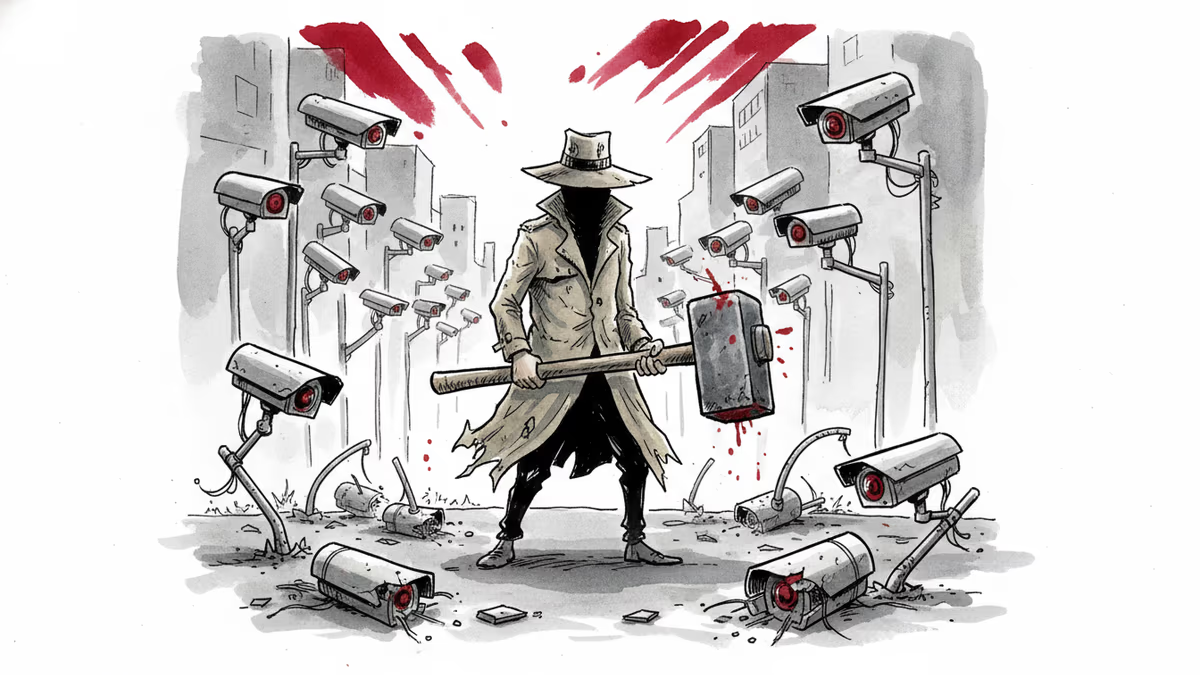
Citizens across the US are destroying Flock surveillance cameras amid immigration enforcement concerns. A grassroots resistance movement is challenging the $7.5B surveillance startup.
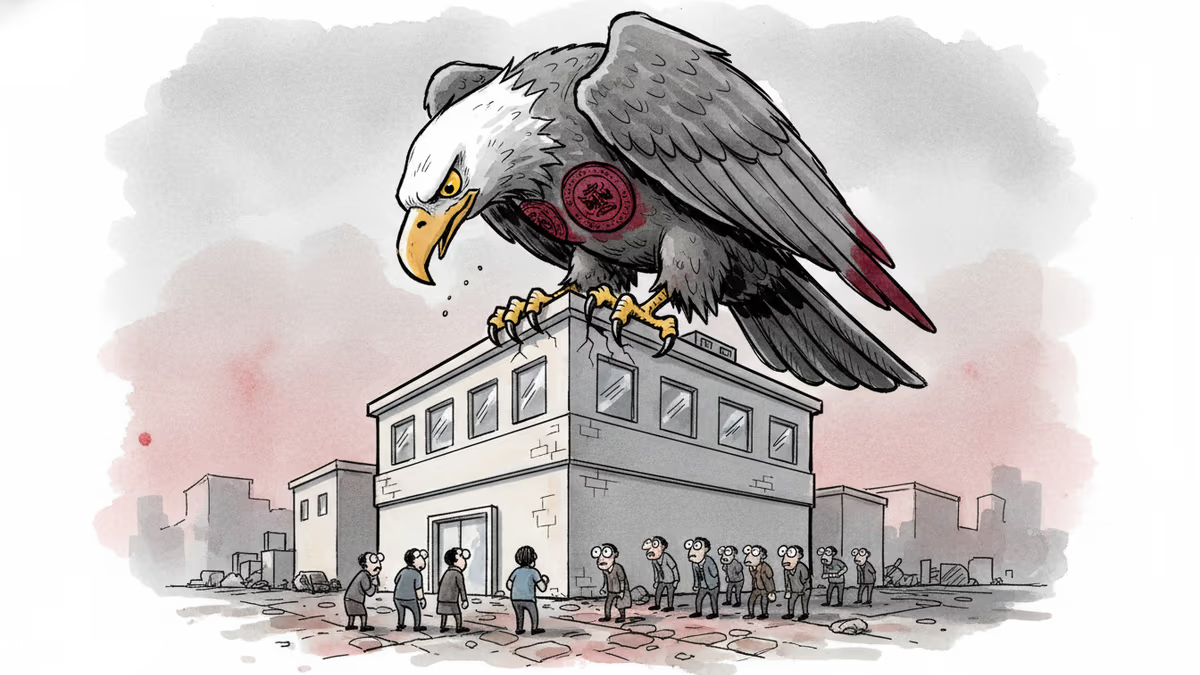
ICE's secret plan to expand into 150+ office spaces across America, sharing buildings with medical offices and small businesses, raises questions about transparency versus security in government operations.
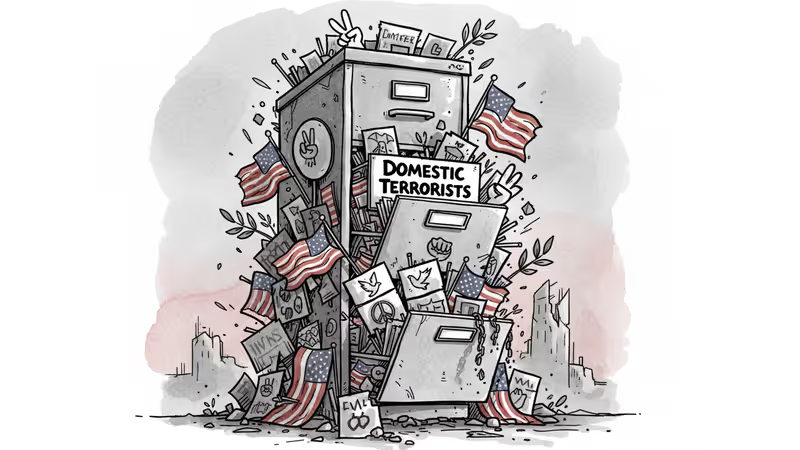
Senator Edward Markey demands ICE confirm or deny existence of database tracking US citizens who protest immigration enforcement. Constitutional violations alleged.
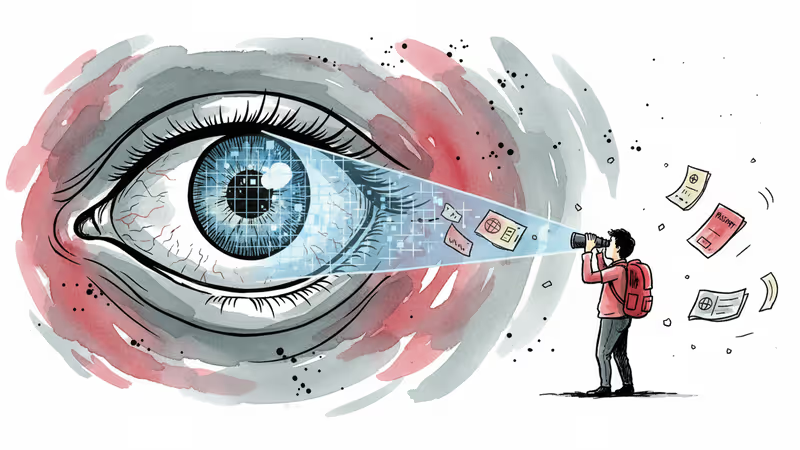
Minnesota resident loses Global Entry and TSA Precheck after observing immigration agents, who used facial recognition to identify her. A new frontier in government surveillance accountability.
Citizens across the US are destroying Flock surveillance cameras amid immigration enforcement concerns. A grassroots resistance movement is challenging the $7.5B surveillance startup.
ICE's secret plan to expand into 150+ office spaces across America, sharing buildings with medical offices and small businesses, raises questions about transparency versus security in government operations.
Senator Edward Markey demands ICE confirm or deny existence of database tracking US citizens who protest immigration enforcement. Constitutional violations alleged.
Minnesota resident loses Global Entry and TSA Precheck after observing immigration agents, who used facial recognition to identify her. A new frontier in government surveillance accountability.
Thoughts
Share your thoughts on this article
Sign in to join the conversation