
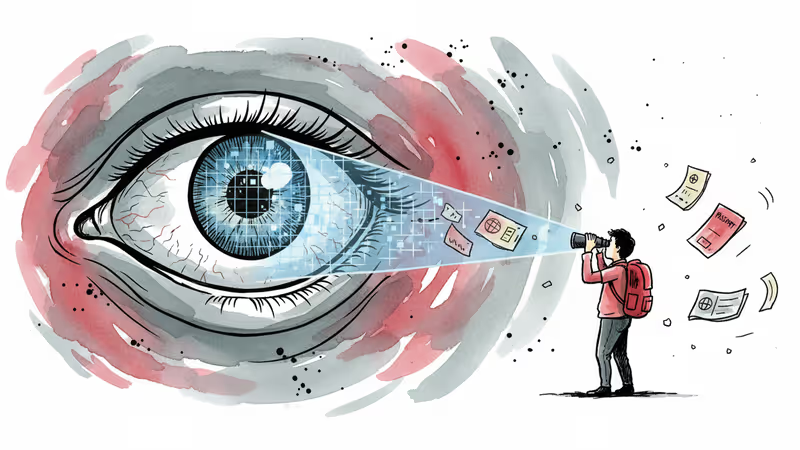
Facial Recognition Strips Citizen of Travel Privileges After Government Observation
Minnesota resident loses Global Entry and TSA Precheck after observing immigration agents, who used facial recognition to identify her. A new frontier in government surveillance accountability.
Watching the watchers just became a risky proposition. Nicole Cleland, a Minnesota resident, lost her expedited airport screening privileges just three days after observing federal immigration agents—who then used facial recognition technology to identify her.
The case reveals a troubling new dynamic: citizens who monitor government activity may find themselves monitored in return, with immediate consequences for their daily lives.
From Observer to Target
Cleland, a 56-year-oldTarget Corporation director from Richfield, volunteers with a group that tracks potential Immigration and Customs Enforcement (ICE) and Customs and Border Protection (CBP) vehicles in her neighborhood. On January 10, she spotted what appeared to be federal agents in a white Dodge Ram and decided to follow at a safe distance.
Her concern was legitimate: she feared a local apartment building might be raided. Along with another observer in a separate vehicle, Cleland maintained surveillance until federal agents blocked her path with multiple vehicles.
Then came the revelation that would reshape her understanding of government capabilities. An agent told Cleland directly that he had used facial recognition technology to identify her. Three days later, both her Global Entry and TSA Precheck privileges were revoked.
The Surveillance State in Action
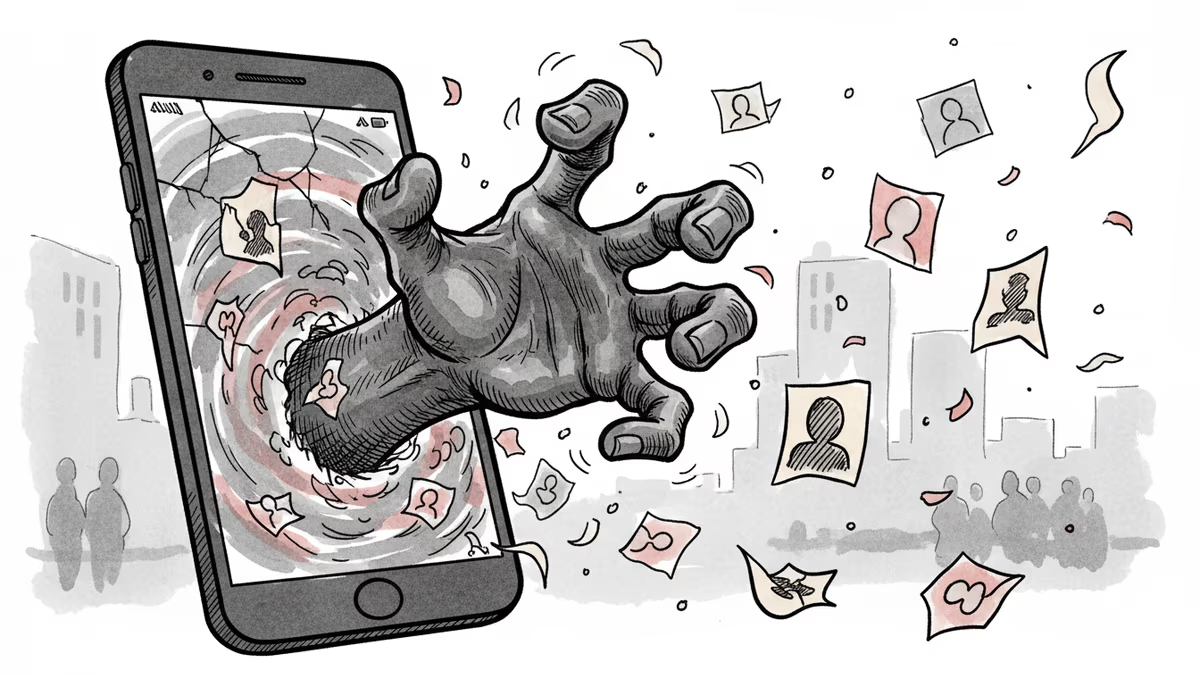
This incident illuminates how facial recognition technology has evolved beyond airports and borders into a tool for monitoring everyday citizen activity. The technology that was supposed to catch terrorists and criminals is now being deployed against citizens exercising their constitutional right to observe government operations.

What makes Cleland's case particularly significant is that she broke no laws. She observed government activity from public spaces, maintaining a safe distance. Yet this lawful activity triggered a surveillance response that resulted in the loss of government benefits.
The implications extend far beyond one person's travel convenience. If observing government activity can result in immediate penalties, what does this mean for investigative journalists, civil rights activists, or ordinary citizens concerned about government overreach?
The Accountability Paradox
Cleland's experience highlights a fundamental imbalance in modern surveillance. While government agencies can identify, track, and penalize citizens in real-time, citizens have limited visibility into how these systems operate or recourse when they're used against them.
The facial recognition identification happened without a warrant, probable cause, or even suspicion of criminal activity. The subsequent revocation of travel privileges occurred without due process or explanation. This creates a chilling effect: citizens may think twice before exercising their right to monitor government activity.
Consider the broader implications. If facial recognition can identify protesters, journalists, or activists in real-time, and if that identification can trigger immediate consequences, we're looking at a surveillance infrastructure that could fundamentally alter the balance between government power and citizen oversight.
The Technology We Didn't Ask For
Facial recognition deployment by government agencies has largely occurred without public debate or explicit consent. Citizens going about their daily lives—shopping, commuting, attending events—are being catalogued in databases they never knew existed.
Cleland's case suggests these databases are now being cross-referenced with watchlists, travel privileges, and potentially other government benefits. The citizen who observes becomes the observed, and the observed can quickly become the penalized.
This represents a significant escalation in surveillance capabilities. Previous generations of government monitoring required significant resources and targeted deployment. Today's facial recognition systems can identify and flag individuals automatically, creating a surveillance net that captures everyone while targeting specific behaviors or associations.
Authors
Related Articles
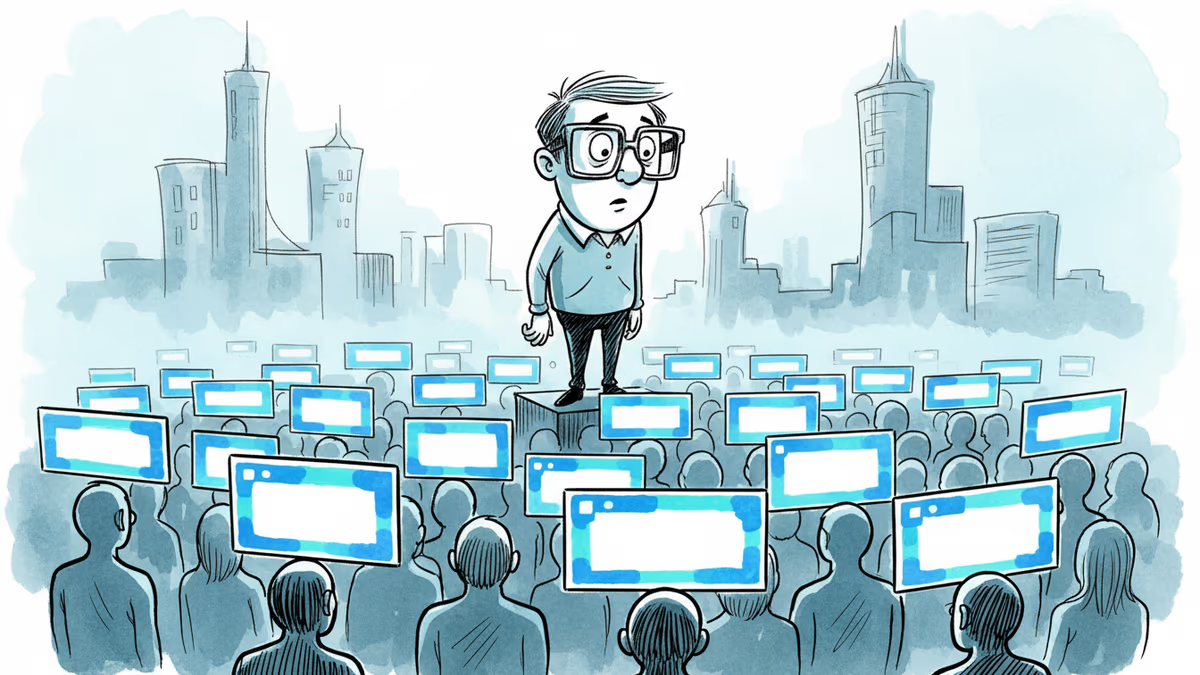
Meta's Ray-Ban smart glasses now feature facial recognition, marking a pivotal moment in everyday surveillance technology. The convenience vs privacy dilemma has officially begun.
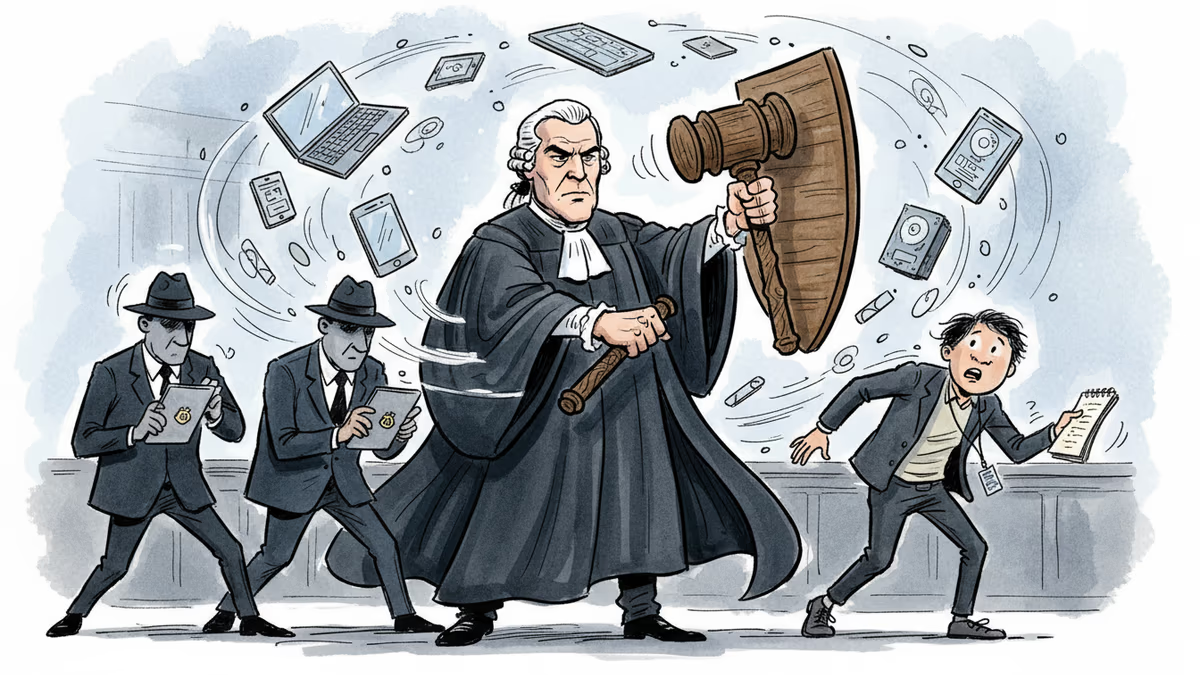
Federal court takes control of Washington Post reporter's seized devices after DOJ omitted key journalist protections from warrant. A new precedent for press freedom vs national security.
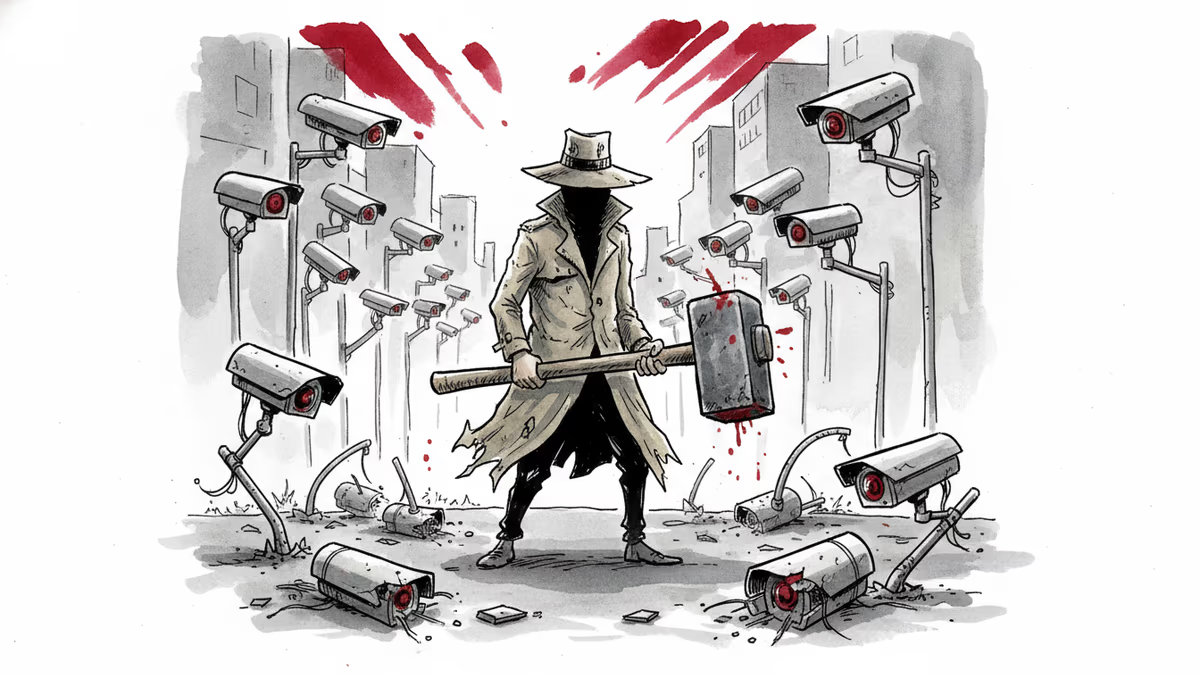
Citizens across the US are destroying Flock surveillance cameras amid immigration enforcement concerns. A grassroots resistance movement is challenging the $7.5B surveillance startup.
DHS sent hundreds of subpoenas to Google, Meta, Reddit to unmask anti-ICE accounts. No judge approval needed. Your anonymous criticism might not be so anonymous.
Meta's Ray-Ban smart glasses now feature facial recognition, marking a pivotal moment in everyday surveillance technology. The convenience vs privacy dilemma has officially begun.
Federal court takes control of Washington Post reporter's seized devices after DOJ omitted key journalist protections from warrant. A new precedent for press freedom vs national security.
Citizens across the US are destroying Flock surveillance cameras amid immigration enforcement concerns. A grassroots resistance movement is challenging the $7.5B surveillance startup.
DHS sent hundreds of subpoenas to Google, Meta, Reddit to unmask anti-ICE accounts. No judge approval needed. Your anonymous criticism might not be so anonymous.
Thoughts
Share your thoughts on this article
Sign in to join the conversation