
When Courts Don't Trust Government with Reporters' Phones
Federal court takes control of Washington Post reporter's seized devices after DOJ omitted key journalist protections from warrant. A new precedent for press freedom vs national security.
When the Government Can't Be Trusted
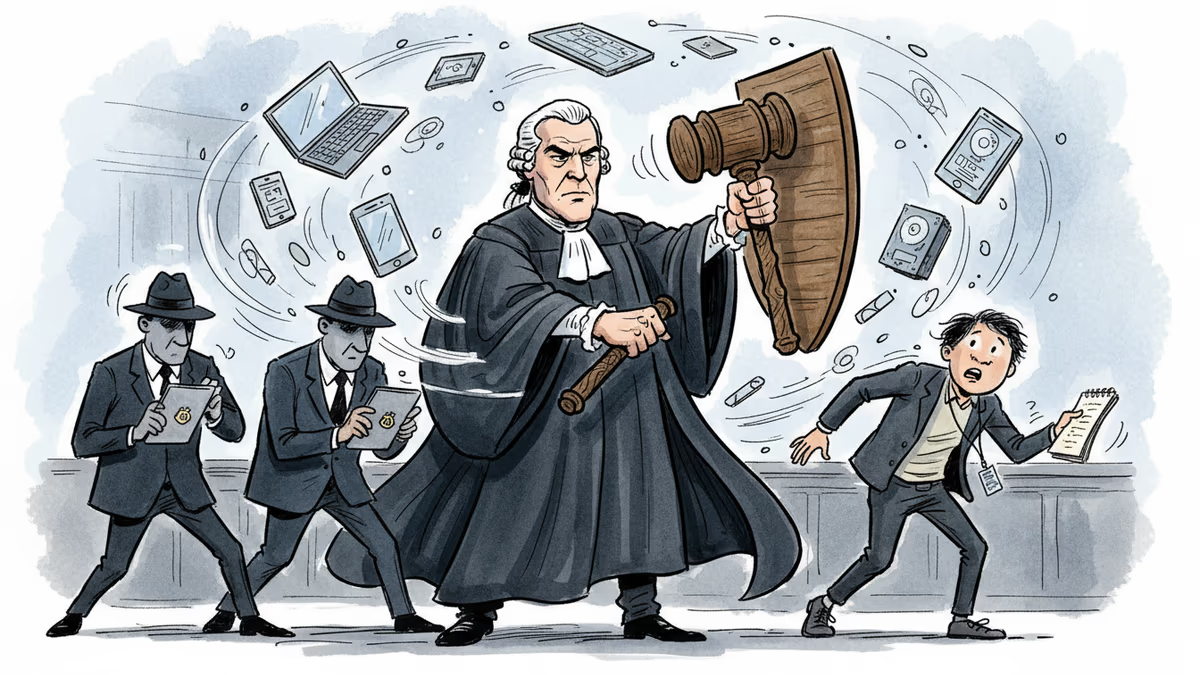
A federal court just declared it doesn't trust the Department of Justice. At least when it comes to searching journalists' devices. US Magistrate Judge William Porter announced yesterday that his court will personally oversee the search of Washington Post reporter Hannah Natanson's seized electronics—because the DOJ can't be trusted to do it fairly.
This extraordinary decision came six weeks after FBI agents raided Natanson's Virginia home, seizing phones and computers in connection with a leak investigation. The problem? Government prosecutors allegedly hid crucial information when applying for the search warrant.
The 40-Year-Old Law They 'Forgot'
Judge Porter's criticism centers on a 1980 federal law that strictly limits searches of journalists' work materials. The Privacy Protection Act exists precisely to prevent fishing expeditions through reporters' sources and notes. Yet prosecutors somehow failed to mention this law in their warrant application.
"Had the court been aware of this statute, the warrant might have been different," Porter acknowledged. It's hard to believe seasoned federal prosecutors simply forgot about a four-decade-old press protection law. More likely, they hoped the judge wouldn't notice.
The Post and Natanson requested immediate return of the devices, but Porter chose a middle path. Instead of trusting the government to self-police, he revoked their authority to examine the seized data and established court oversight of the entire process.
The New Rules of Engagement
This case represents more than prosecutorial oversight—it's redrawing the boundaries between press freedom and national security investigations. The government needs to identify the source who leaked classified information to Natanson. But journalists argue that exposing sources would chill all future whistleblowing.

From law enforcement's perspective, classified leaks threaten national security and must be prosecuted. They have legitimate reasons to pursue the investigation. From the press's viewpoint, aggressive searches of journalists' devices create a chilling effect that undermines democracy's need for government accountability.
This tension isn't unique to America. Similar conflicts play out worldwide whenever governments investigate leaks. The question becomes: who watches the watchers when they're watching the press?
Why Courts Are Stepping In
Judge Porter's decision to personally oversee the search sends a powerful message about institutional trust. By explicitly stating the DOJ cannot be trusted with this task, he's acknowledging what press advocates have long argued: law enforcement agencies have inherent conflicts of interest when investigating journalism.
The court-supervised approach aims to extract only materials relevant to the criminal case while protecting everything else—sources, story development, personal communications. It's a surgical approach versus the government's preferred sledgehammer method.
This precedent could reshape how leak investigations proceed. Other courts may follow Porter's lead, demanding more oversight when press freedoms are at stake. It represents a judicial check on prosecutorial power that's been largely absent from recent leak cases.
The Broader Implications
Beyond this specific case, Porter's decision highlights growing tensions between transparency and security in democratic societies. Technology has made it easier than ever for governments to surveil journalists, but also easier for whistleblowers to expose wrongdoing.
The 1980 Privacy Protection Act was written for a different era—before smartphones contained entire digital lives, before encrypted communications, before the modern surveillance state. Courts are now grappling with how analog-era protections apply to digital-age investigations.
Meanwhile, journalists face an impossible choice: protect sources and risk prosecution, or comply with investigations and lose credibility with future whistleblowers. The stakes extend far beyond any individual case.
Authors
Related Articles
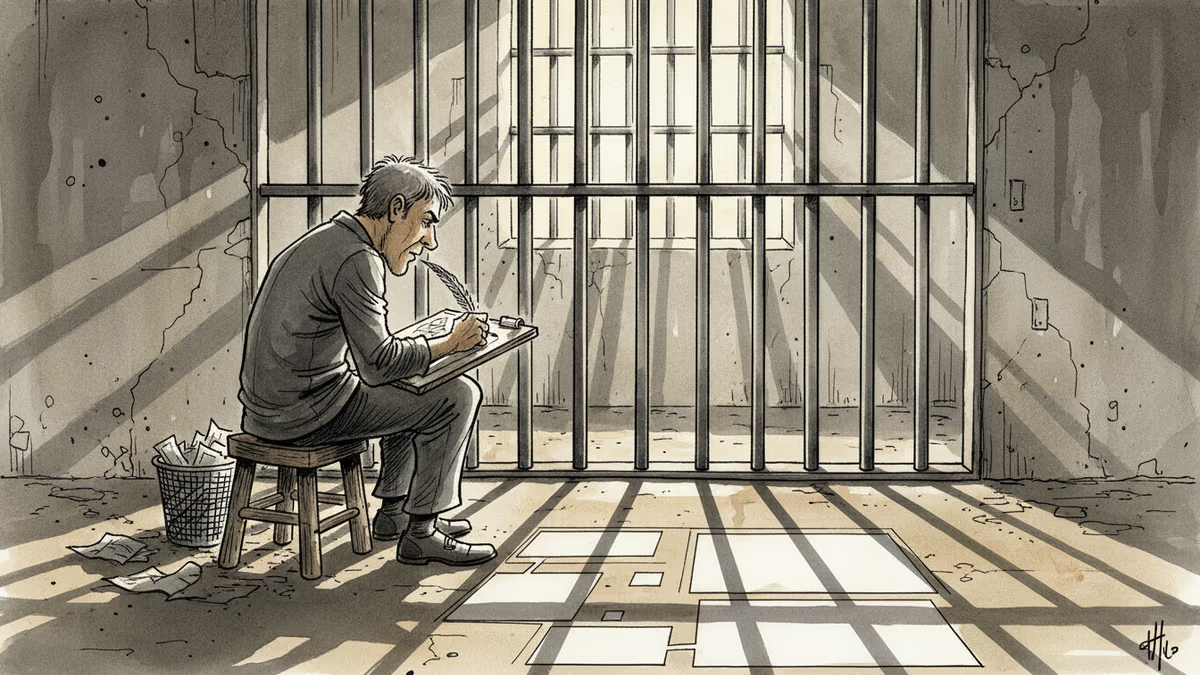
Journalist Danny Fenster turned his Myanmar prison experience into a graphic story. Some truths can only be told through art.
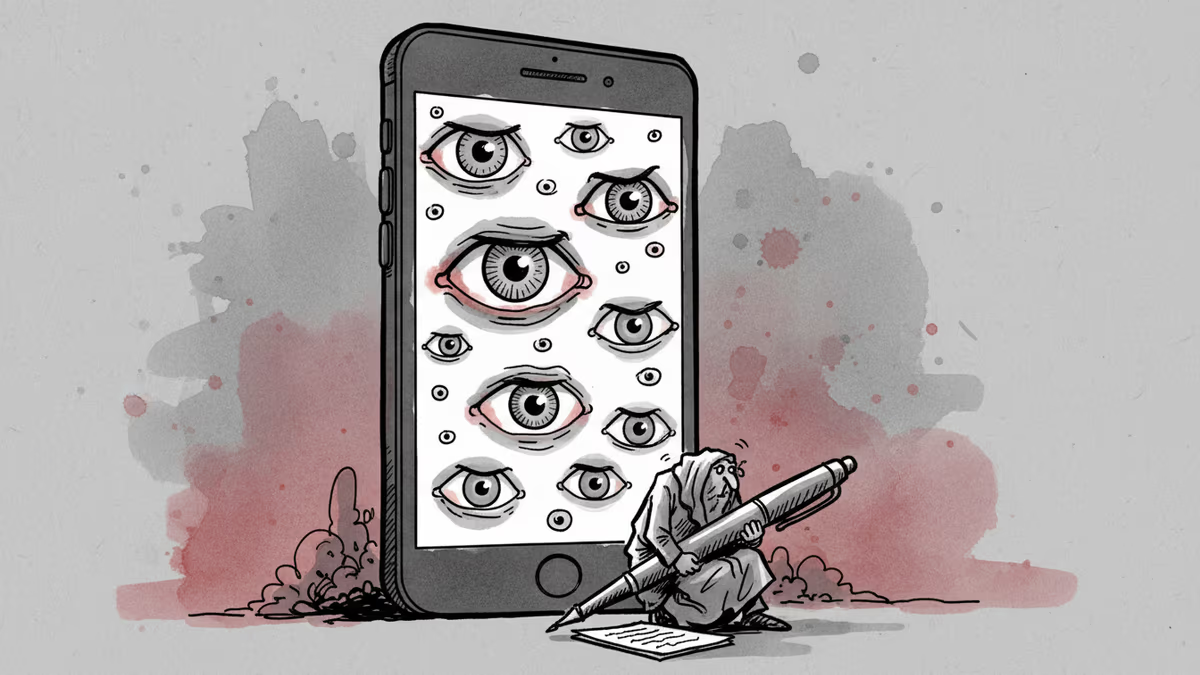
An Angolan journalist's phone was hacked by sanctioned spyware maker Intellexa. Why are banned surveillance tools still thriving globally?
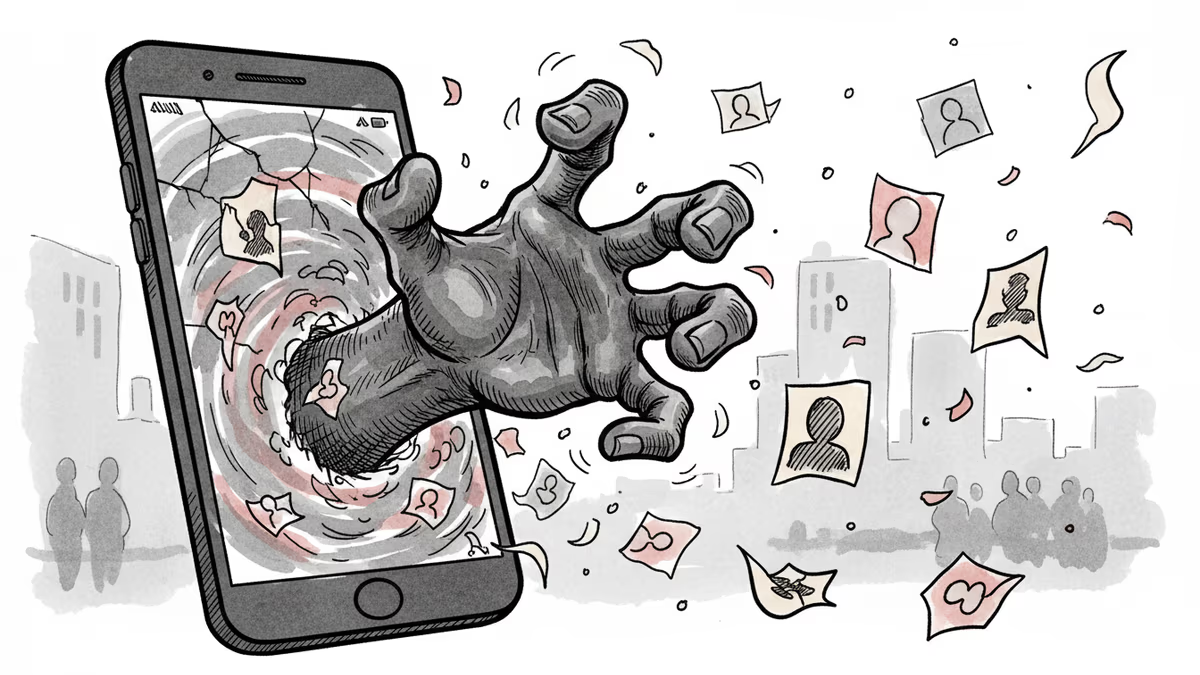
DHS sent hundreds of subpoenas to Google, Meta, Reddit to unmask anti-ICE accounts. No judge approval needed. Your anonymous criticism might not be so anonymous.
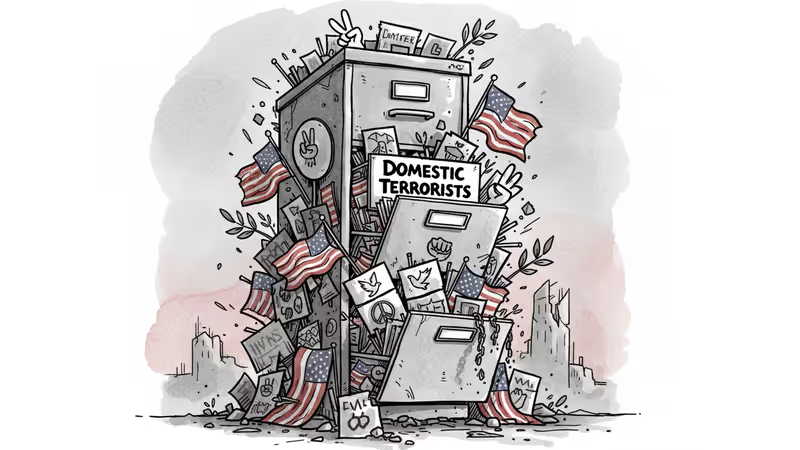
Senator Edward Markey demands ICE confirm or deny existence of database tracking US citizens who protest immigration enforcement. Constitutional violations alleged.
Journalist Danny Fenster turned his Myanmar prison experience into a graphic story. Some truths can only be told through art.
An Angolan journalist's phone was hacked by sanctioned spyware maker Intellexa. Why are banned surveillance tools still thriving globally?
DHS sent hundreds of subpoenas to Google, Meta, Reddit to unmask anti-ICE accounts. No judge approval needed. Your anonymous criticism might not be so anonymous.
Senator Edward Markey demands ICE confirm or deny existence of database tracking US citizens who protest immigration enforcement. Constitutional violations alleged.
Thoughts
Share your thoughts on this article
Sign in to join the conversation