
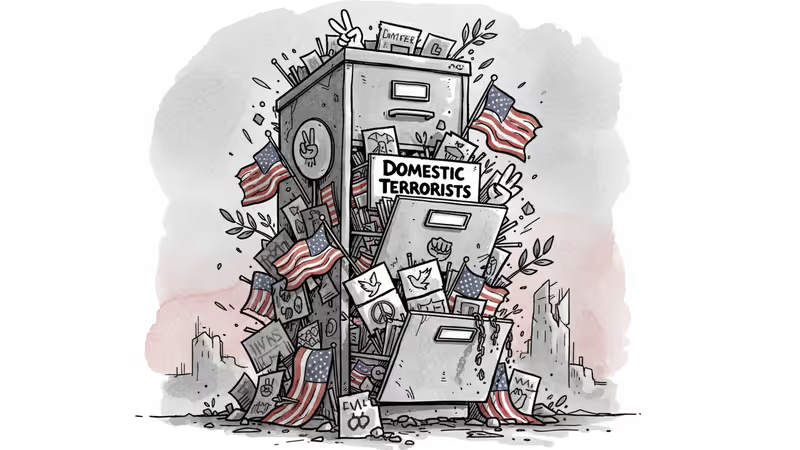
Is the US Government Building a 'Domestic Terrorist' Database of Protesters?
Senator Edward Markey demands ICE confirm or deny existence of database tracking US citizens who protest immigration enforcement. Constitutional violations alleged.
What if attending a peaceful protest could land you in a government database labeled as a "domestic terrorist"? That's exactly what may be happening in America right now, according to explosive allegations from Congress.
Senator Demands Answers on Secret Database
Senator Edward J. Markey (D-Mass.) fired off a letter yesterday to Acting ICE Director Todd Lyons, demanding confirmation or denial of a shocking claim: that the government is building a "domestic terrorists" database containing information on US citizens who protest ICE's immigration crackdown.
"ICE officers and senior Trump administration officials have repeatedly suggested that the Department of Homeland Security is building a 'domestic terrorists' database comprising information on US citizens protesting ICE's actions in recent weeks," Markey wrote. If such a database exists, he warned, "it would constitute a grave and unacceptable constitutional violation."
The senator didn't mince words: shut it down immediately and delete everything.
First Amendment Under Fire
Creating a database of peaceful protesters would be a "shocking violation of the First Amendment and abuse of power," Markey argued. But his criticism went deeper than constitutional law—he compared such tactics to "the kinds of tactics the United States rightly condemns in authoritarian governments such as China and Russia."

That's a damning indictment. When a US senator says American law enforcement is adopting authoritarian playbooks, it signals something fundamental has shifted in how the government views dissent.
The implications are staggering. If confirmed, this database would essentially criminalize the act of peaceful protest—a cornerstone of democratic society. It transforms citizens exercising their constitutional rights into suspected terrorists in the eyes of federal law enforcement.
The Digital Panopticon
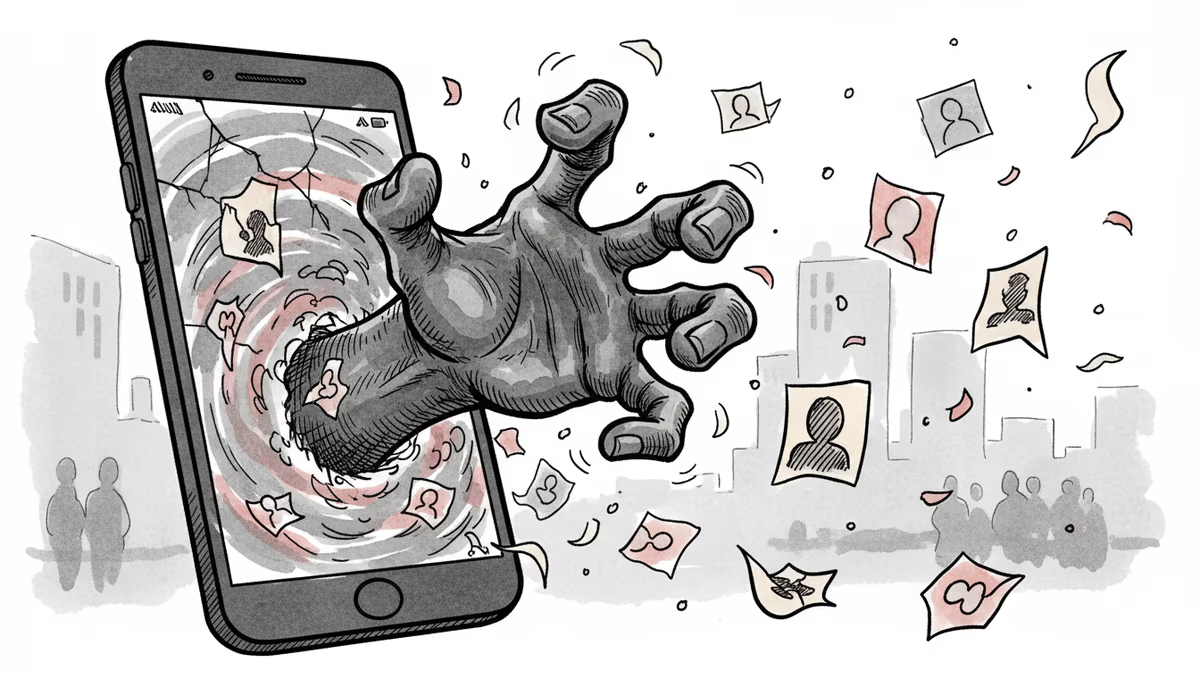
This controversy highlights how surveillance has evolved in the digital age. Unlike the crude monitoring tools of previous eras, modern governments can now aggregate vast amounts of data from multiple sources: social media posts, location tracking, facial recognition at protests, and digital communications.
The result? A comprehensive profile of anyone who dares to dissent. Your political views, associations, and activities can be catalogued, cross-referenced, and stored indefinitely. The chilling effect on free speech and assembly is obvious—who wants to risk being labeled a "domestic terrorist" for holding a sign?
This isn't just an American problem. Democratic governments worldwide are grappling with the tension between security and liberty in an age where data collection is cheap, easy, and comprehensive.
Beyond Left vs. Right
While this particular case involves immigration protests, the precedent cuts across political lines. Today it might be immigration activists; tomorrow it could be gun rights advocates, environmental protesters, or any group that challenges government policy.
The question isn't whether you agree with ICE's immigration enforcement—it's whether you believe peaceful protest should land citizens on a terrorist watch list. That's a principle that transcends partisan politics and goes to the heart of what kind of society we want to live in.
Authors
Related Articles
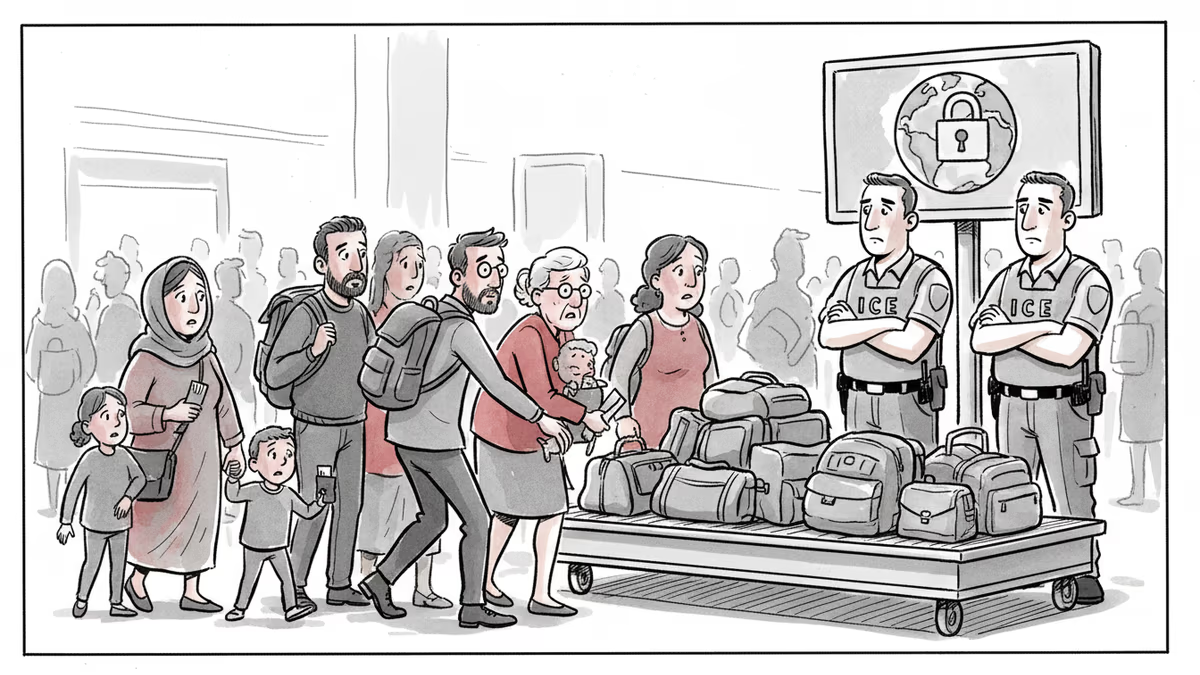
ICE agents have been deployed to 14 US airports, officially to fill TSA staffing gaps during the government shutdown. But the line between security assistance and immigration enforcement is blurring fast.
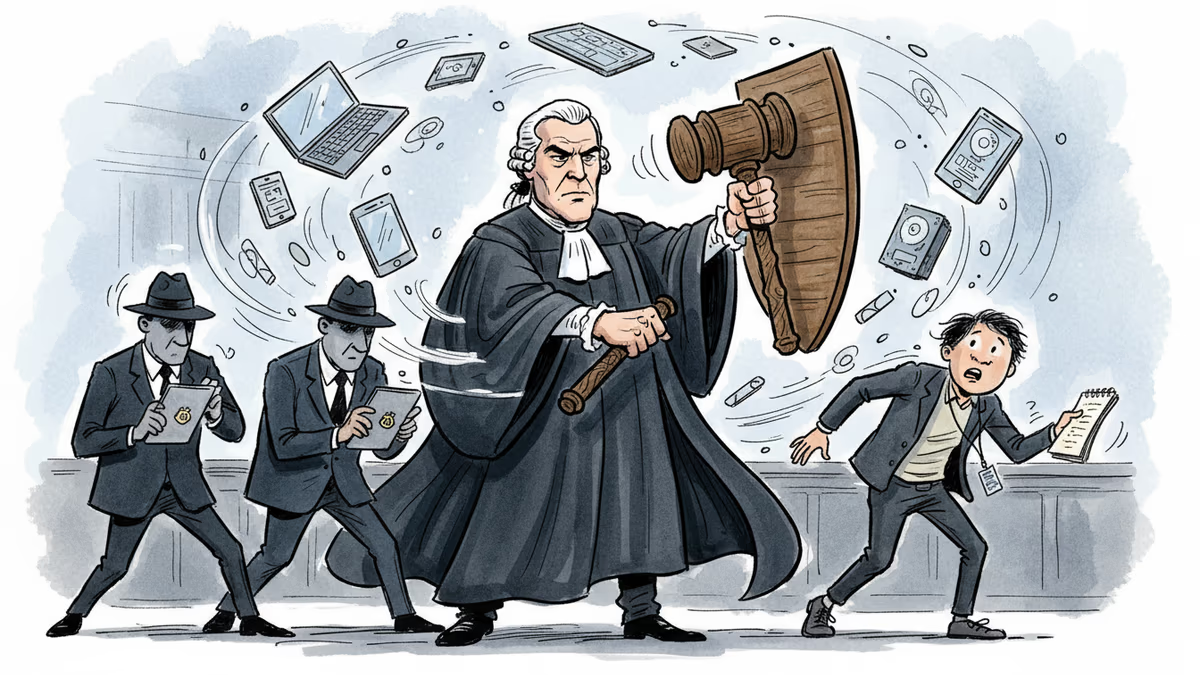
Federal court takes control of Washington Post reporter's seized devices after DOJ omitted key journalist protections from warrant. A new precedent for press freedom vs national security.
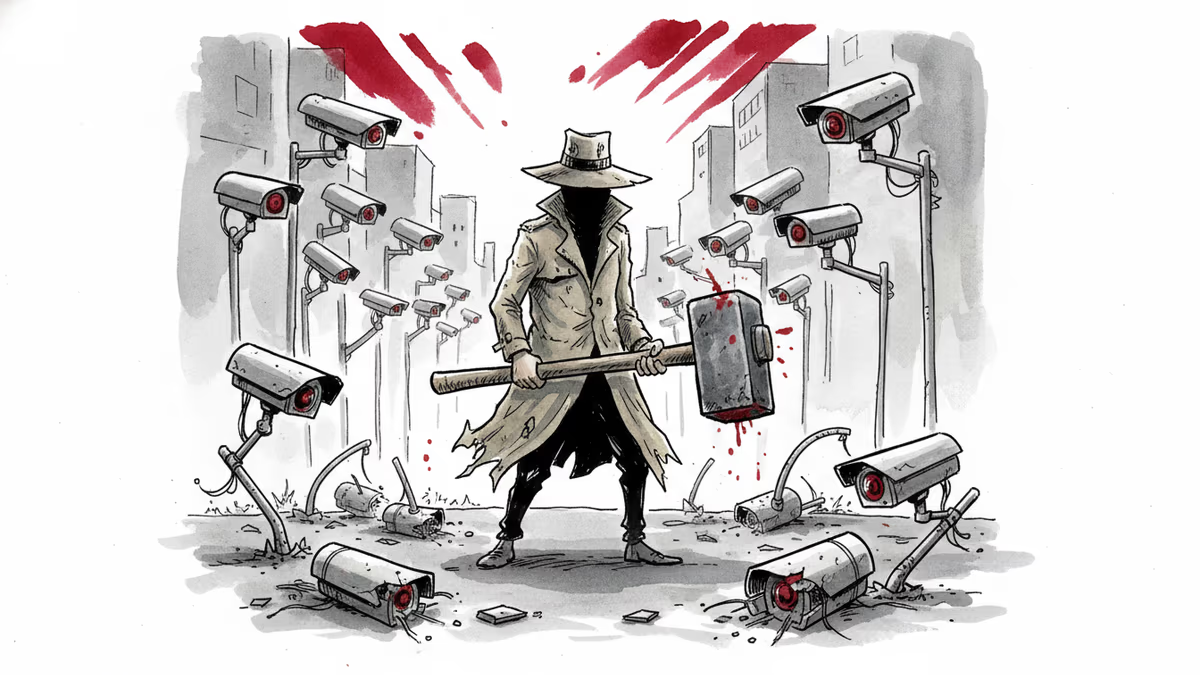
Citizens across the US are destroying Flock surveillance cameras amid immigration enforcement concerns. A grassroots resistance movement is challenging the $7.5B surveillance startup.
DHS sent hundreds of subpoenas to Google, Meta, Reddit to unmask anti-ICE accounts. No judge approval needed. Your anonymous criticism might not be so anonymous.
ICE agents have been deployed to 14 US airports, officially to fill TSA staffing gaps during the government shutdown. But the line between security assistance and immigration enforcement is blurring fast.
Federal court takes control of Washington Post reporter's seized devices after DOJ omitted key journalist protections from warrant. A new precedent for press freedom vs national security.
Citizens across the US are destroying Flock surveillance cameras amid immigration enforcement concerns. A grassroots resistance movement is challenging the $7.5B surveillance startup.
DHS sent hundreds of subpoenas to Google, Meta, Reddit to unmask anti-ICE accounts. No judge approval needed. Your anonymous criticism might not be so anonymous.
Thoughts
Share your thoughts on this article
Sign in to join the conversation