
Why ICE Agents at the Olympics Have Italians Furious
With a week until the 2026 Milano Cortina Winter Olympics, US ICE agents and Qatari security forces in Italy spark controversy. What this reveals about modern Olympic security.
With less than a week until the 2026 Milano Cortina Winter Olympics, the headlines aren't about athletic prowess or medal predictions. Instead, Italy finds itself grappling with a security controversy that's exposing deeper tensions about sovereignty, safety, and international cooperation.
The ICE Presence That Nobody Asked For
Last week, the US Department of Homeland Security confirmed that Immigration and Customs Enforcement agents would accompany the American delegation to Milan. Their stated mission? Working with State Department teams "to vet and mitigate risks from transnational criminal organizations" – not immigration enforcement, officials stressed.
But timing matters in politics. The announcement came just days after ICE agents shot and killed Alex Pretti and Renee Nicole Good during operations in the US, sparking fresh outrage about the agency's tactics. Milan's mayor, Giuseppe Sala, didn't mince words, telling local radio that the agents were "not welcome" in his city.
The Italian government's response has been tellingly divided. Interior Minister Matteo Piantedosi claimed ignorance about ICE's presence while simultaneously defending it. Prime Minister Giorgia Meloni, a frequent Trump ally, has remained conspicuously silent.
Qatar's Uninvited Security Detail
The controversy extends beyond American agents. On January 27th, a cargo plane landed at Milan's Malpensa Airport carrying over 100 Qatari public security officers, 20 camouflage SUVs, and 3 snowmobiles. The convoy then drove through Milan's city center, past the iconic Duomo and San Siro stadium, where Friday's opening ceremony will unfold.

Here's the twist: Qatar has zero athletes competing in the Winter Games. Their elite security team is there because of a cooperation agreement Piantedosi signed during a September visit to Qatar. Their mandate includes "monitoring locations, providing rapid response capabilities, and supporting preventive measures" – vague language that's raised eyebrows given Qatar's documented history of LGBTQ+ persecution.
When Olympics Meet Geopolitics
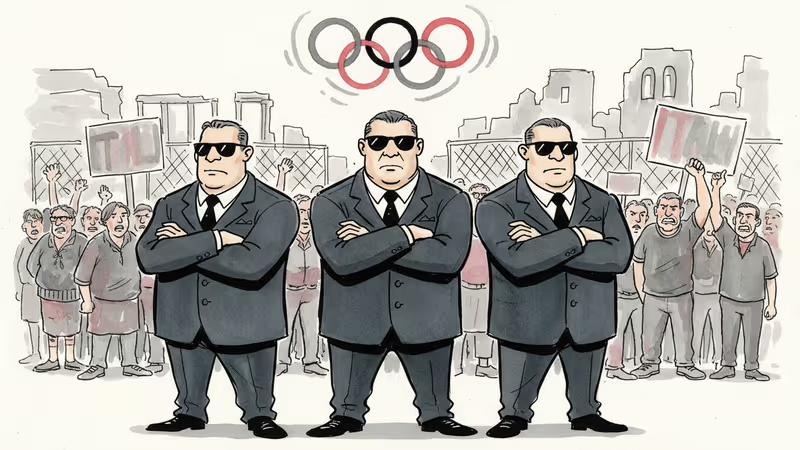
Saturday saw hundreds of Milanese gather in Piazza XXV Aprile, holding signs reading "No ICE in Milano" and "ICE Out Now." The protest highlighted a fundamental tension: while Italy has deployed over 6,000 security personnel for the Games, foreign security forces operating on Italian soil feel different to many citizens.
The ICE agents won't work with Italian law enforcement but will focus on protecting the US contingent, including Vice President JD Vance and Secretary of State Marco Rubio. Think suit-and-tie operatives rather than the masked, militarized agents making headlines in American cities.
The Bigger Security Question
This isn't just about Milan or even these Olympics. It reflects how major international events have become testing grounds for new forms of security cooperation – and the friction that creates. When does legitimate protection cross into unwelcome intervention? Who decides what level of foreign security presence is acceptable?
The Italian government's mixed messages suggest they're navigating competing pressures: maintaining relationships with powerful allies while respecting public sentiment. Meloni's silence is particularly telling, caught between her Trump alliance and growing domestic opposition.
Authors
Related Articles
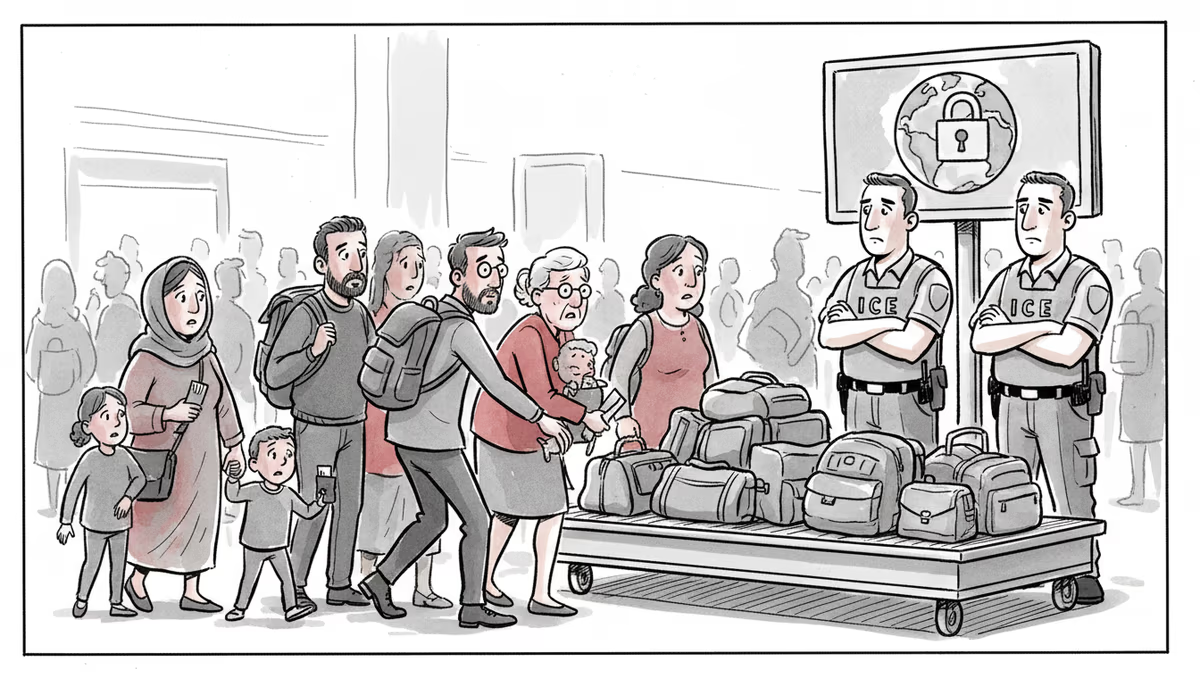
ICE agents have been deployed to 14 US airports, officially to fill TSA staffing gaps during the government shutdown. But the line between security assistance and immigration enforcement is blurring fast.

Google handed over a student's personal data to ICE without judicial approval, raising questions about Big Tech's role in government surveillance and user protection.

Palantir CEO Alex Karp finally responded to weeks of internal pressure about ICE contracts, but his hour-long video raised more questions than answers

Over 880 Google employees and contractors demand the company disclose and cancel immigration enforcement contracts, sparking debate over tech's moral responsibilities.
ICE agents have been deployed to 14 US airports, officially to fill TSA staffing gaps during the government shutdown. But the line between security assistance and immigration enforcement is blurring fast.
Google handed over a student's personal data to ICE without judicial approval, raising questions about Big Tech's role in government surveillance and user protection.
Palantir CEO Alex Karp finally responded to weeks of internal pressure about ICE contracts, but his hour-long video raised more questions than answers
Over 880 Google employees and contractors demand the company disclose and cancel immigration enforcement contracts, sparking debate over tech's moral responsibilities.
Thoughts
Share your thoughts on this article
Sign in to join the conversation