

ICE Wants Your Ad Data for Surveillance
US Immigration and Customs Enforcement seeks commercial advertising technology and location data to support investigations, blurring lines between marketing and government surveillance.
Every app you open, every website you visit, every location you carry your phone to—all of it creates a digital trail that companies monetize through advertising. Now, that same data trail might become a government surveillance tool.
US Immigration and Customs Enforcement (ICE) posted a request for information in the Federal Register on Friday, seeking details about "commercial Big Data and Ad Tech" products that would "directly support investigations activities." It's the first time ICE has explicitly mentioned "ad tech" in such a filing, marking a new frontier in how tools built for selling you products could be repurposed for tracking you down.
When Marketing Becomes Surveillance
ICE frames the request around managing "increasing volumes of criminal, civil, and regulatory, administrative documentation from numerous internal and external sources." The agency wants to survey existing tools that can help analyze this information, specifically looking for products "comparable to large providers of investigative data and legal/risk analytics."
More tellingly, ICE says it's "seeking to understand the current state of Ad Tech compliant and location data services available to federal investigative and operational entities, considering regulatory constraints and privacy expectations."
The language is deliberately vague. ICE doesn't specify which regulations or privacy standards would apply, nor does it name specific vendors or services it's eyeing. But the implications are clear: the same technology that knows you're in the market for running shoes could soon help federal agents know exactly where you are.
In response to WIRED's inquiry, ICE stressed that this was purely for "information and planning purposes." The agency said it uses technology to support investigations and arrest criminals "all while respecting civil liberties and privacy interests." But critics might question how much those interests are actually protected when commercial surveillance infrastructure gets repurposed for law enforcement.
The Infrastructure Already Exists
ICE isn't starting from scratch. The agency already has extensive relationships with data companies and surveillance technology providers. It uses a customized version of Palantir's Gotham investigative tool, rebranded as the "Investigative Case Management" system. Within that system, a tool called FALCON helps ICE "store, search, analyze, and visualize volumes of existing information" about current and former investigations.

The agency has also purchased mobile location data through Webloc, a tool sold by Penlink. This allows ICE to collect information about mobile phones used within specific areas during particular time periods. Users can filter devices by how their location was gathered—"GPS, WiFi, or IP address"—or by their "Apple and Android advertising identifiers," according to 404 Media reporting.
In recent years, ICE has also licensed software from Venntel, a data broker subsidiary of Gravy Analytics that collects and sells consumer location data. ICE's Enforcement and Removal Operations division used Venntel's software "to access/gain information to accurately identify digital devices."
The Federal Trade Commission alleged in 2024 that Venntel sold sensitive consumer location data without proper consent for both commercial and government purposes. The FTC subsequently barred both Gravy Analytics and Venntel "from selling, disclosing, or using sensitive location data except in limited circumstances involving national security or law enforcement."
Surveillance Meets Resistance
The timing of ICE's request is notable. It comes amid escalating federal response to protests in Minneapolis against immigration enforcement operations carried out jointly by ICE and Customs and Border Protection. On Saturday morning, 37-year-old Minneapolis resident Alex Pretti was shot and killed by a CBP officer as federal agents attempted to detain him. He may have been filming the officers prior to the shooting.
This incident highlights the real-world stakes of expanded surveillance capabilities. When protest activity can be tracked through the same ad tech infrastructure that follows your shopping habits, the line between commercial convenience and political repression becomes dangerously thin.
The Broader Implications
ICE's interest in ad tech represents more than just another government contract opportunity. It signals a fundamental shift in how personal data flows between the commercial and law enforcement sectors. The same location data that helps retailers understand foot traffic patterns could help immigration agents predict where to conduct raids.
The advertising technology ecosystem was built on the premise that personal data collection serves commercial interests—showing you relevant ads, improving user experiences, optimizing business operations. But once that data exists, it becomes available for other purposes, regardless of the original intent.
Every click, every swipe, every step you take with your phone creates data. The question isn't whether that data will be used for surveillance—it's whether we'll have any say in how.
Authors
Related Articles
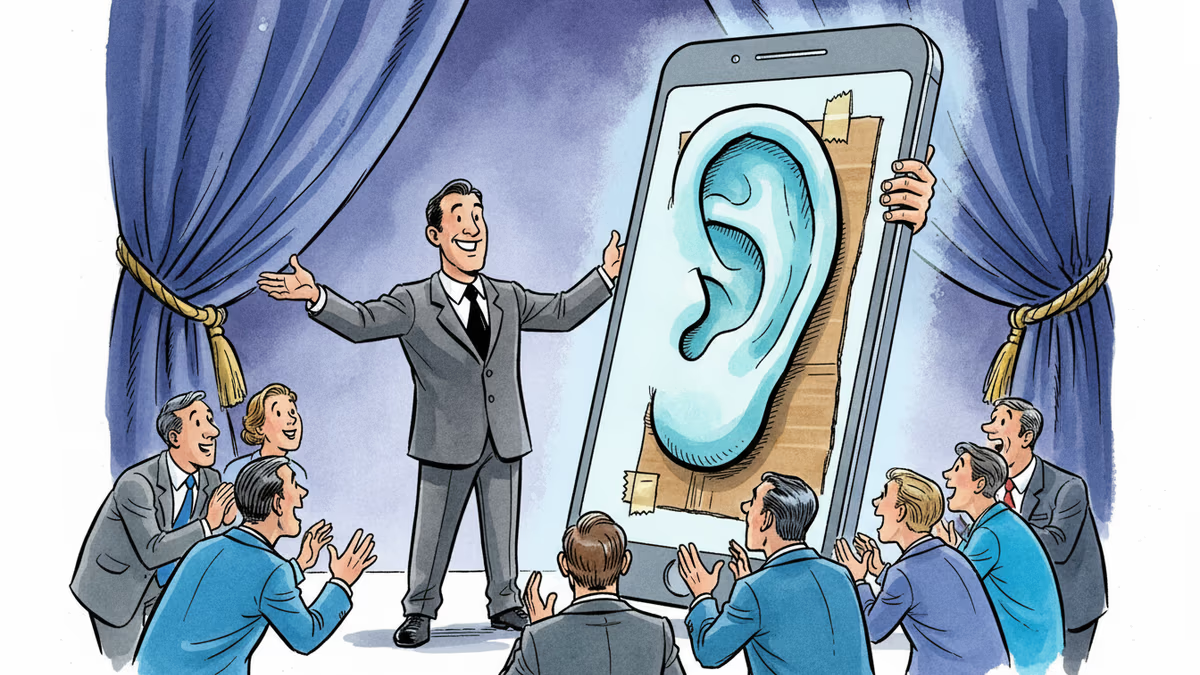
The FTC fined Cox Media and two ad firms $930,000 — not for actually eavesdropping on users, but for falsely claiming they could. The case raises uncomfortable questions about surveillance capitalism.

A Utah woman was sentenced to life in prison partly because of her Google searches and deleted texts. The Kouri Richins case reveals how digital footprints have become the courtroom's most reliable witness.
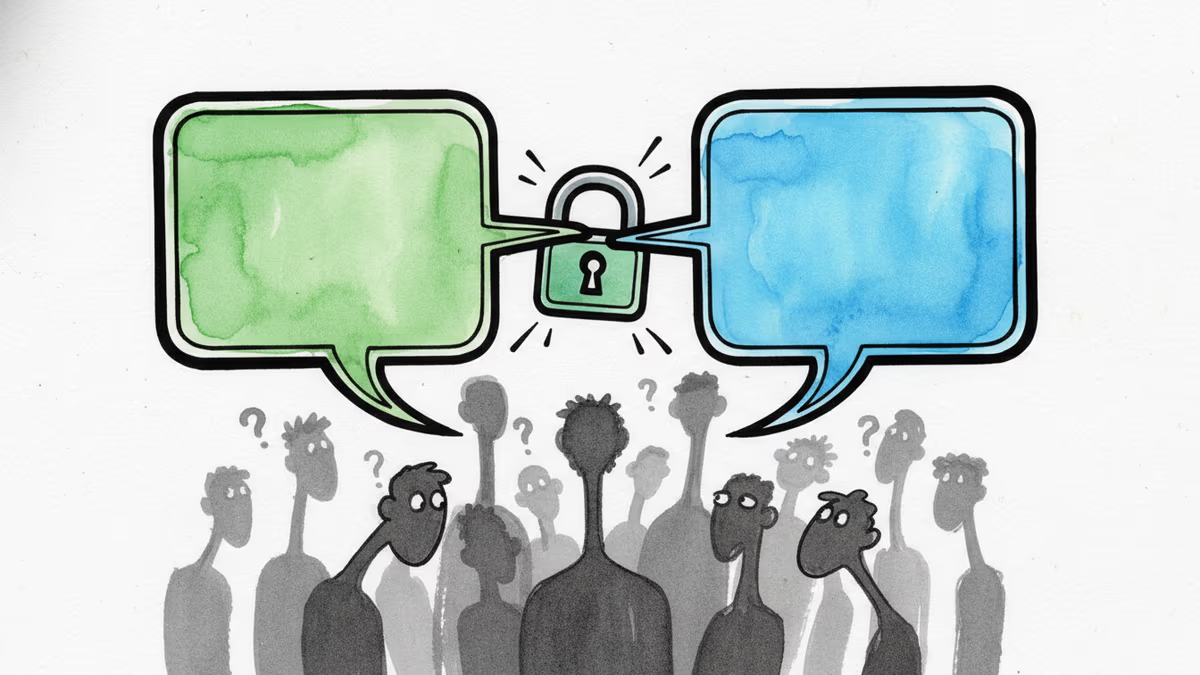
After 15 years of fragmented mobile messaging, Apple and Google are rolling out end-to-end encrypted RCS messaging between iPhones and Android devices. Here's what changed, why it took so long, and what it means for your privacy.
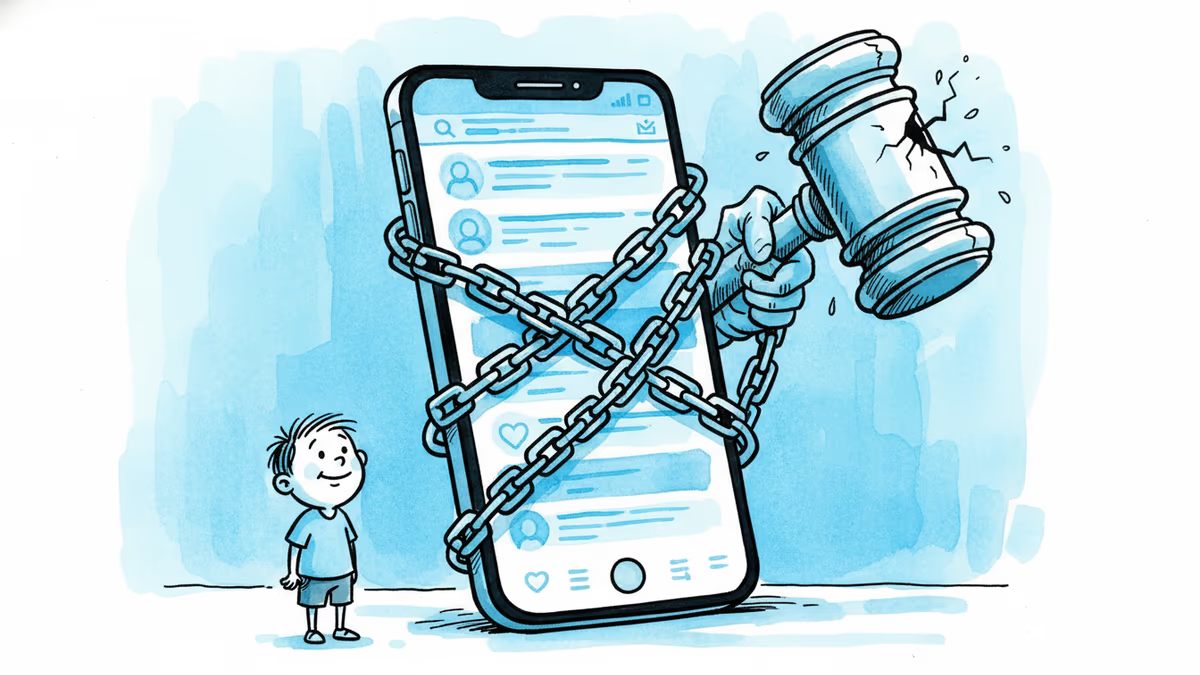
New Mexico already won $375 million from Meta. Now it wants something harder to give: a court order forcing Facebook, Instagram, and WhatsApp to redesign themselves. A three-week trial starts Monday.
The FTC fined Cox Media and two ad firms $930,000 — not for actually eavesdropping on users, but for falsely claiming they could. The case raises uncomfortable questions about surveillance capitalism.
A Utah woman was sentenced to life in prison partly because of her Google searches and deleted texts. The Kouri Richins case reveals how digital footprints have become the courtroom's most reliable witness.
After 15 years of fragmented mobile messaging, Apple and Google are rolling out end-to-end encrypted RCS messaging between iPhones and Android devices. Here's what changed, why it took so long, and what it means for your privacy.
New Mexico already won $375 million from Meta. Now it wants something harder to give: a court order forcing Facebook, Instagram, and WhatsApp to redesign themselves. A three-week trial starts Monday.
Thoughts
Share your thoughts on this article
Sign in to join the conversation