

When ICE Ignores Warrants and Microsoft Hands Over Your Keys
Federal agencies are bypassing constitutional protections through warrantless raids and cloud-stored encryption keys, raising questions about digital privacy and Fourth Amendment rights.
Your laptop is encrypted. Your doors are locked. Your constitutional rights should protect you. But this week's revelations suggest that federal agencies have found creative ways around all three.
Immigration and Customs Enforcement is conducting warrantless raids on homes across Minneapolis, according to a new whistleblower complaint—despite recent federal court rulings declaring such actions unconstitutional. Meanwhile, Microsoft confirmed it regularly hands over BitLocker encryption keys to law enforcement upon request, giving cops full access to what users thought were their privately encrypted computers.
These aren't isolated incidents. They're part of a broader pattern where federal agencies circumvent traditional warrant requirements through technological backdoors and aggressive enforcement tactics.
The Warrant-Free Enforcement Surge
ICE agents have been breaking down doors in Minneapolis without judge-signed warrants, relying instead on administrative warrants that lack the same constitutional protections. The practice continues even as federal courts have ruled such warrantless home entries violate the Fourth Amendment.
The agency isn't stopping there. Customs and Border Protection is seeking "quantum sensors" capable of detecting fentanyl, tied to an "AI database"—expanding surveillance capabilities under the guise of drug enforcement. Meanwhile, the Federal Aviation Administration has created no-fly zones around "Department of Homeland Security facilities in mobile assets," effectively preventing drone journalism from documenting enforcement operations.
This enforcement surge comes as ICE plans to build a deportation network spanning Minnesota and four other states. Despite DHS claims that naming agents publicly constitutes "doxing," a WIRED review found agents frequently identifying themselves on LinkedIn.
Your Encrypted Data Isn't Really Yours

The Microsoft revelation strikes at the heart of digital privacy assumptions. When you encrypt your hard drive with BitLocker, you might reasonably expect that only you can decrypt it. But if you follow Microsoft's recommendation to store your recovery key in the cloud—which most users do for convenience—you're unknowingly creating a law enforcement backdoor.
Microsoft receives about 20 requests per year for BitLocker keys from law enforcement and "often complies," according to company statements to Forbes. The only protection? Storing your key locally instead of in Microsoft's cloud—something most users never consider.
This practice extends beyond individual cases. A researcher discovered an unsecured database containing 149 million login credentials linked to everything from Gmail and Facebook to government systems worldwide. The database, likely populated by info-stealing malware, was accessible to anyone on the internet before being taken offline.
The Surveillance State Goes Mobile
TikTok has begun collecting precise location data following its sale to US investors—a reminder that ownership changes can dramatically alter privacy policies overnight. Meanwhile, the Department of Government Efficiency (DOGE) may have misused Social Security Administration data, sharing it through unauthorized Cloudflare servers with groups seeking to "overturn election results in certain states."
Even clothing retailer Under Armour is investigating claims that 72 million customer records were leaked online, including names, emails, birthdates, and purchase histories.
The pattern extends globally. Iranian state television was hijacked by anti-regime hackers who aired protest messages for up to 10 minutes, demonstrating how surveillance infrastructure can be turned against authoritarian governments—though such tactics remain rare exceptions.
The Privacy Paradox
These developments reveal a fundamental tension in modern digital life. We encrypt our devices for security, store recovery keys in the cloud for convenience, and assume constitutional protections will prevent abuse. Yet each convenience creates new vulnerabilities.
The medical sector offers a stark example: people are avoiding healthcare due to concerns about ad-tech surveillance and ICE enforcement activities. When surveillance fears affect basic medical care, the chilling effect on civil liberties becomes impossible to ignore.
Authors
Related Articles
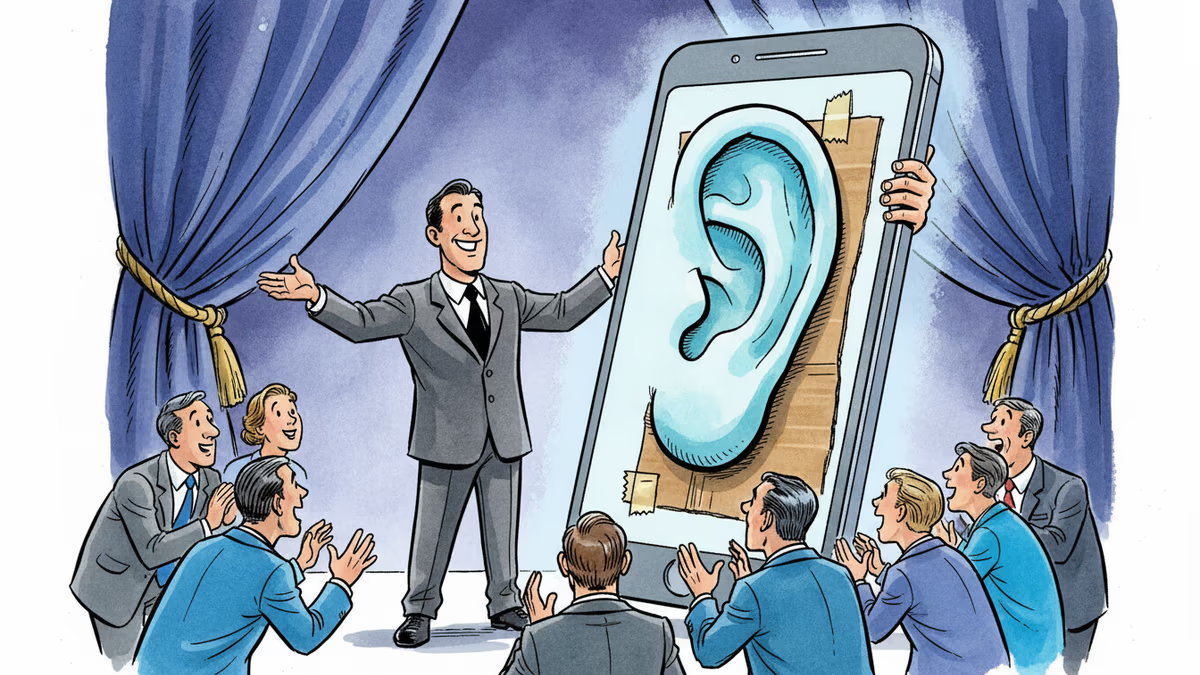
The FTC fined Cox Media and two ad firms $930,000 — not for actually eavesdropping on users, but for falsely claiming they could. The case raises uncomfortable questions about surveillance capitalism.
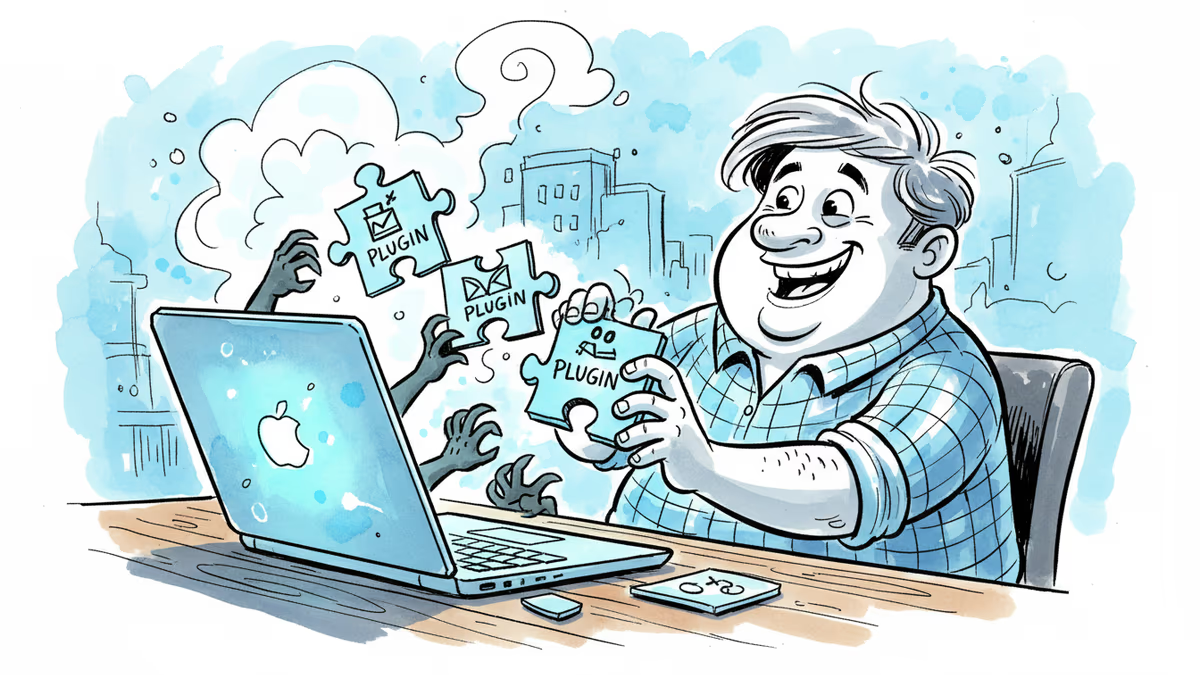
GitHub confirmed hackers stole data from 3,800 internal repositories via a poisoned VS Code extension. Here's why developer tools are now the most dangerous attack surface in tech.
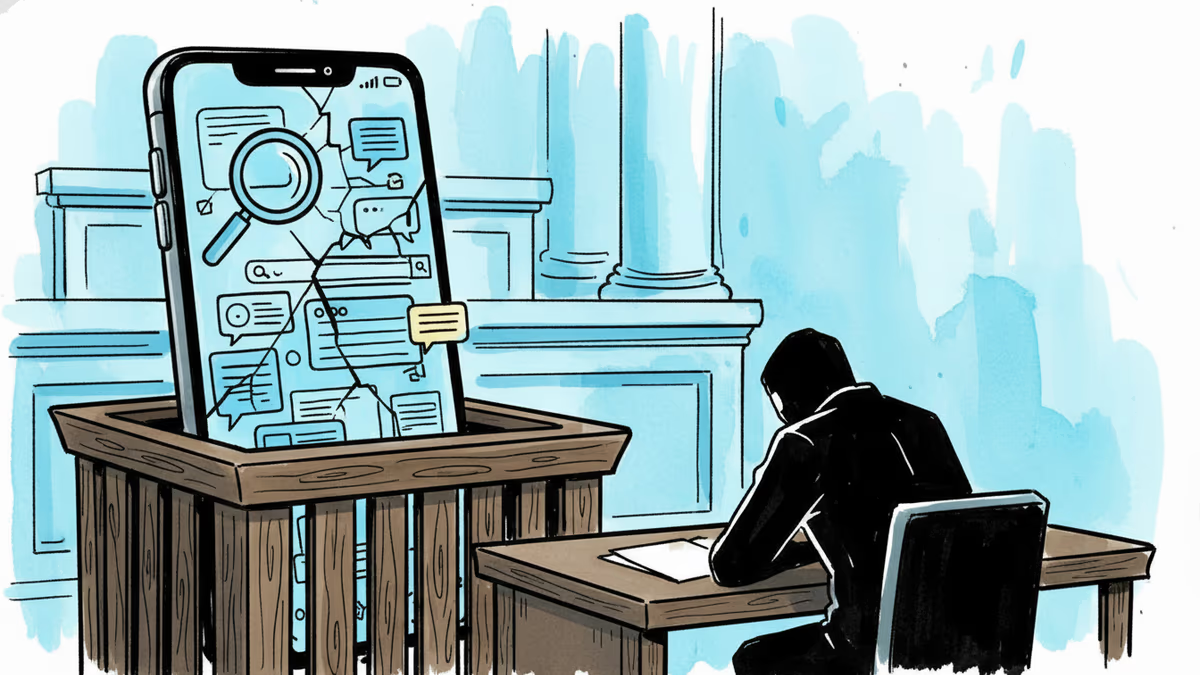
A Utah woman was sentenced to life in prison partly because of her Google searches and deleted texts. The Kouri Richins case reveals how digital footprints have become the courtroom's most reliable witness.
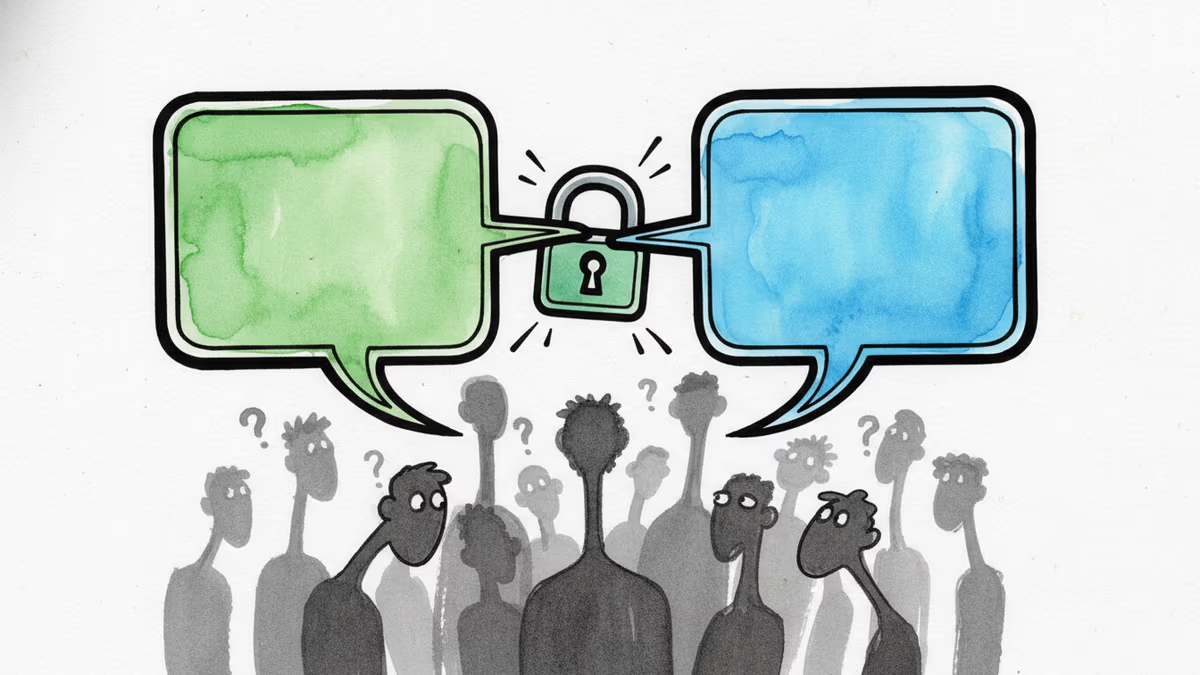
After 15 years of fragmented mobile messaging, Apple and Google are rolling out end-to-end encrypted RCS messaging between iPhones and Android devices. Here's what changed, why it took so long, and what it means for your privacy.
The FTC fined Cox Media and two ad firms $930,000 — not for actually eavesdropping on users, but for falsely claiming they could. The case raises uncomfortable questions about surveillance capitalism.
GitHub confirmed hackers stole data from 3,800 internal repositories via a poisoned VS Code extension. Here's why developer tools are now the most dangerous attack surface in tech.
A Utah woman was sentenced to life in prison partly because of her Google searches and deleted texts. The Kouri Richins case reveals how digital footprints have become the courtroom's most reliable witness.
After 15 years of fragmented mobile messaging, Apple and Google are rolling out end-to-end encrypted RCS messaging between iPhones and Android devices. Here's what changed, why it took so long, and what it means for your privacy.
Thoughts
Share your thoughts on this article
Sign in to join the conversation