
Microsoft's Next Xbox Will Break the Console Playbook
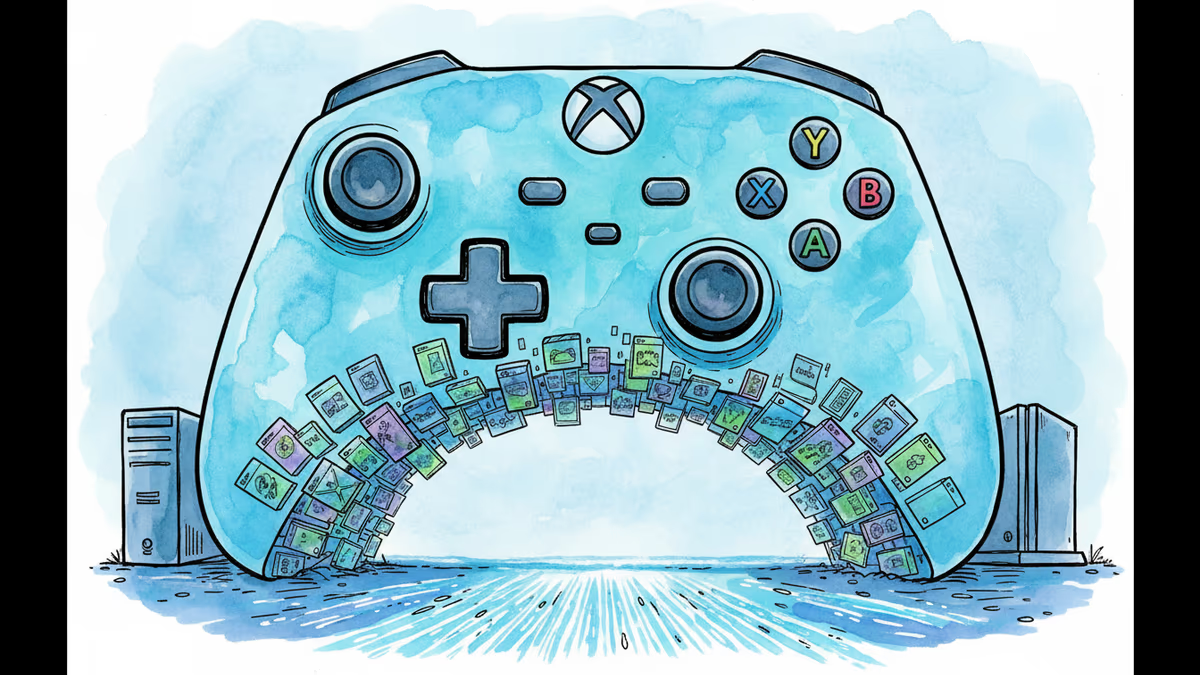
Microsoft hints that Project Helix will play both Xbox and PC games, potentially ending the console walled garden era. What does this mean for gaming?
Twenty-three years after the original Xbox launched, Microsoft is ready to tear down the walls it helped build. The company's next-generation console, codenamed Project Helix, will "play your Xbox and PC games," according to newly appointed Gaming EVP Asha Sharma. This isn't just a spec bump—it's a fundamental reimagining of what a console can be.
The Helix Gambit
Sharma's Thursday social media announcement was deliberately vague but strategically precise. Speaking ahead of next week's Game Developers Conference, she promised to discuss Microsoft's "commitment to the return of Xbox" with developers and partners. The phrasing matters: this isn't about catching up to Sony or Nintendo anymore. It's about redefining the game entirely.
The timing aligns with Microsoft's broader platform strategy. After bringing Xbox exclusives to PlayStation and Nintendo Switch, the company is now betting that the future belongs to ecosystem players, not hardware gatekeepers. Project Helix represents the logical next step: why limit Xbox to Xbox games when you can offer everything?
Industry Reactions Split

Gamers are divided. PC enthusiasts see the promise of accessing their Steam libraries from the living room without building a dedicated gaming rig. Console purists worry about losing the curated, optimized experience that made Xbox special in the first place.
Competitors are watching closely. Sony might double down on PlayStation exclusivity, positioning itself as the "true console" alternative. Valve could leverage its Steam Deck success to re-enter the living room gaming market. Nintendo remains in its own lane, but even they're not immune to platform convergence pressures.
Developers face a different calculus. Broader compatibility means larger potential audiences, but also more complex optimization challenges. The promise of "write once, play anywhere" has burned the industry before.
The Technical Reality Check
Sharma's statement leaves room for multiple interpretations. PC game support could mean full Windows compatibility, limited to Game Pass streaming, or restricted to Microsoft's Xbox PC SDK titles. Each approach carries different implications for performance, user experience, and market positioning.
But industry insiders suggest Microsoft is serious about a Windows-based console. With Xbox hardware sales lagging behind PlayStation, the company's pivot toward software and services makes strategic sense. Why compete on hardware margins when you can dominate on platform reach?
Authors
Related Articles

GitHub confirmed hackers stole data from 3,800 internal repositories via a poisoned VS Code extension. Here's why developer tools are now the most dangerous attack surface in tech.
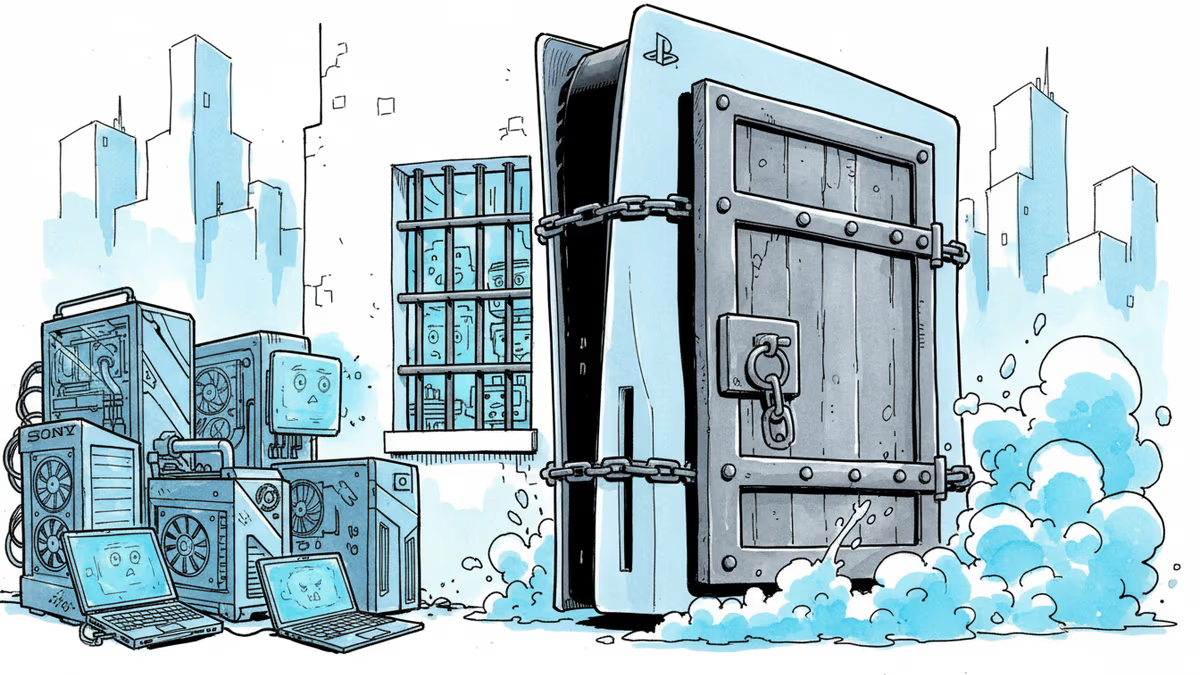
Sony is pulling its major single-player PlayStation games from PC. After six years of multiplatform expansion, the reversal raises hard questions about exclusivity, hardware sales, and who really controls gaming's future.

Emails revealed in the Musk v. Altman trial show Microsoft executives were deeply skeptical of OpenAI in 2017–2018. What actually changed their minds?
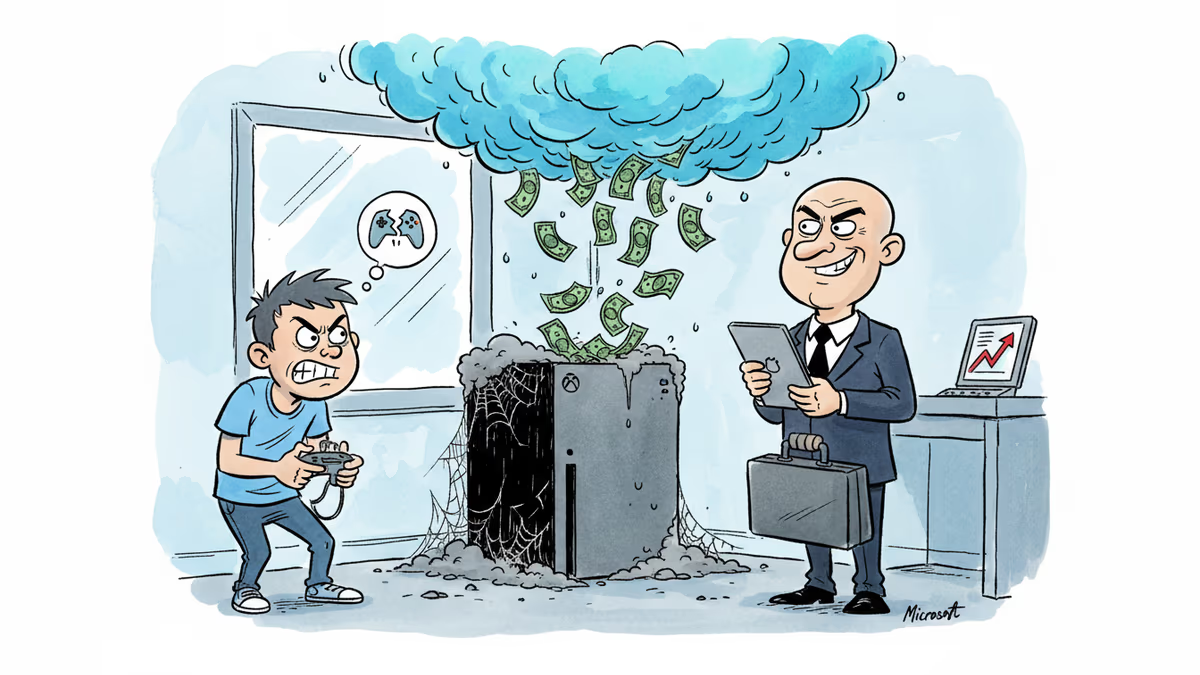
Xbox hardware revenue dropped 33% in Q1 2026, yet Microsoft posted $82.9B in total revenue. What this tells us about the future of gaming—and who actually loses.
GitHub confirmed hackers stole data from 3,800 internal repositories via a poisoned VS Code extension. Here's why developer tools are now the most dangerous attack surface in tech.
Sony is pulling its major single-player PlayStation games from PC. After six years of multiplatform expansion, the reversal raises hard questions about exclusivity, hardware sales, and who really controls gaming's future.
Emails revealed in the Musk v. Altman trial show Microsoft executives were deeply skeptical of OpenAI in 2017–2018. What actually changed their minds?
Xbox hardware revenue dropped 33% in Q1 2026, yet Microsoft posted $82.9B in total revenue. What this tells us about the future of gaming—and who actually loses.
Thoughts
Share your thoughts on this article
Sign in to join the conversation